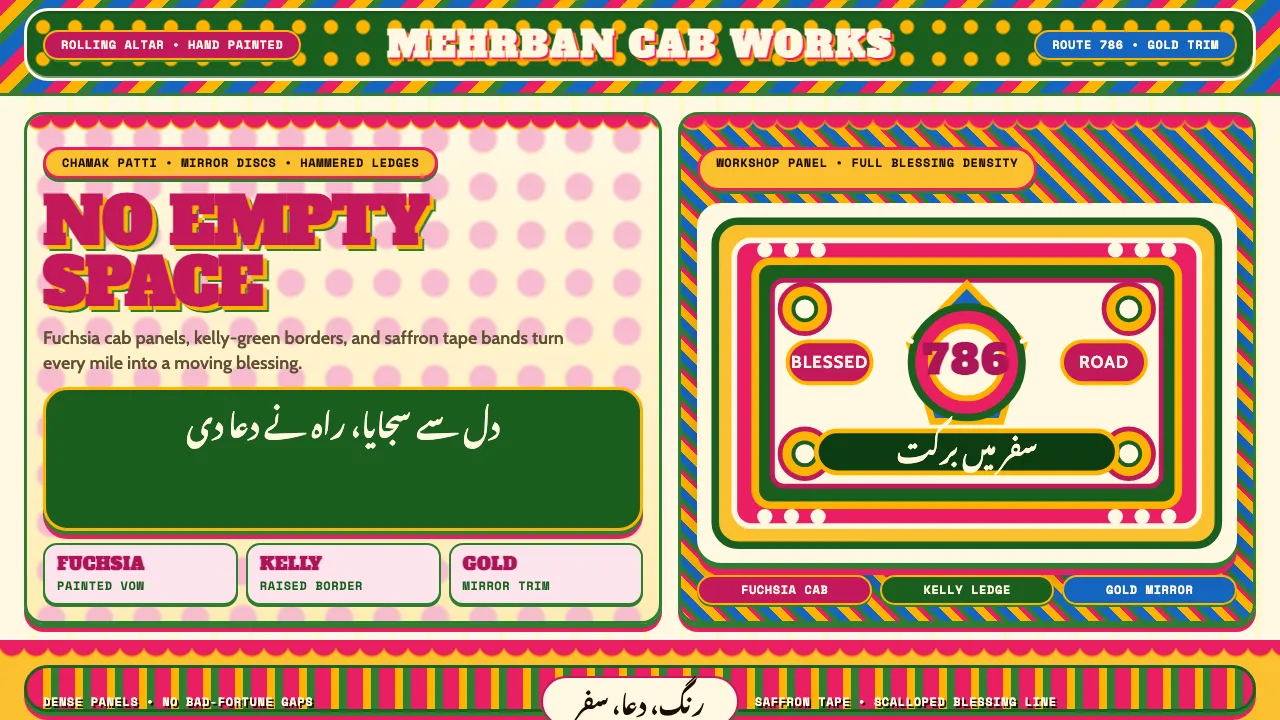
About Pakistani Truck Art
Pakistani truck art is rolling folk maximalism. Since the 1950s, lorry drivers in Karachi, Rawalpindi, and Quetta have commissioned hand-painted murals, chamak-patti reflective-tape mosaics, mirror-work, and hammered metal panels covering every inch of their Bedford and Hino trucks — each cab a moving altar to its driver.
The aesthetic says *"there is no empty space where blessing could fit instead."* Peacocks, tigers, Bollywood actresses, Quranic calligraphy, and romantic Urdu couplets crowd dense panels in fuchsia, kelly green, and gold. Master Haider Ali of Karachi — exhibited at the Smithsonian Folklife Festival in 2002 — remains the tradition's most internationally recognized practitioner.
- Origin
- Pakistan (Karachi, Rawalpindi, Peshawar, Quetta workshops)
- Era
- 1950s–present; peak commercial flourishing 1970s–2000s
- Key figures
- Haider Ali · Ustad Hussain · Ali Salman Anchan · Jamal J. Elias
- Movements
- South Asian folk vehicle decoration · Sufi devotional visual culture · post-Partition urban craft economies
Pakistani Truck Art design spec
Colors
Typography
The other 11 sections — buttons, cards, spacing, motion, techniques and more — open once you unlock. Download the DESIGN.md or send it to your AI in one click. Unlock once, yours forever.
Sign up nowStyles similar to Pakistani Truck Art
Also inspired by crafts & folk art, with a close feel.
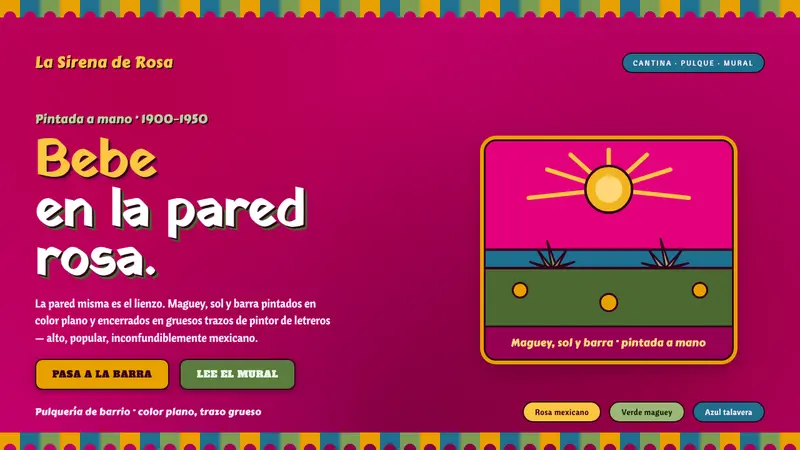 Mexican Pulquería MuralThe wall is the canvas. Hot rosa-mexicano plaster, maguey green and marigold in folk lettering.
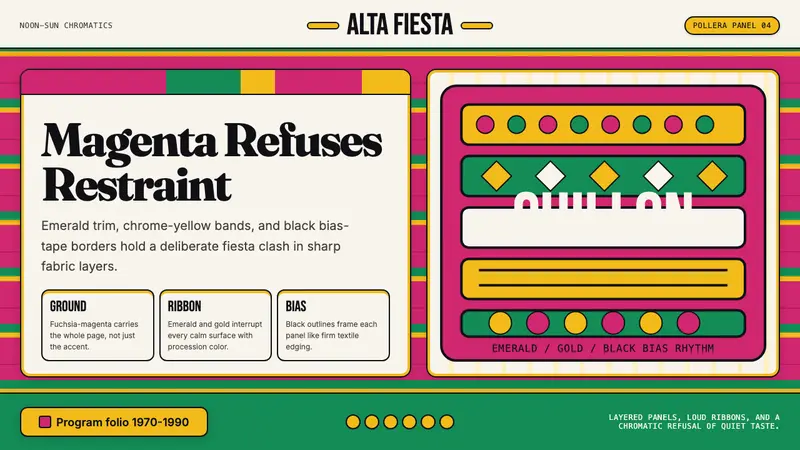 Bolivian Pollera Fiesta MagentaChromatic defiance. Magenta ground, emerald bands and black outlines clash like fiesta trim.
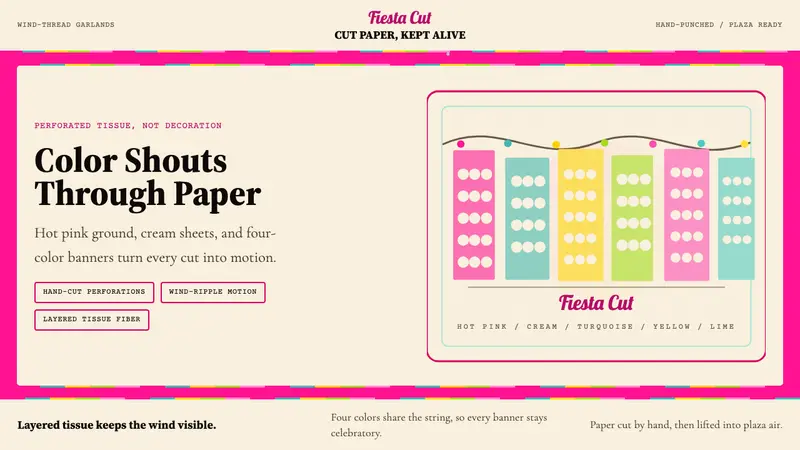 Mexican Papel Picado TissueFiesta cut paper. Hot pink, turquoise, yellow banners and hand-cut perforations.
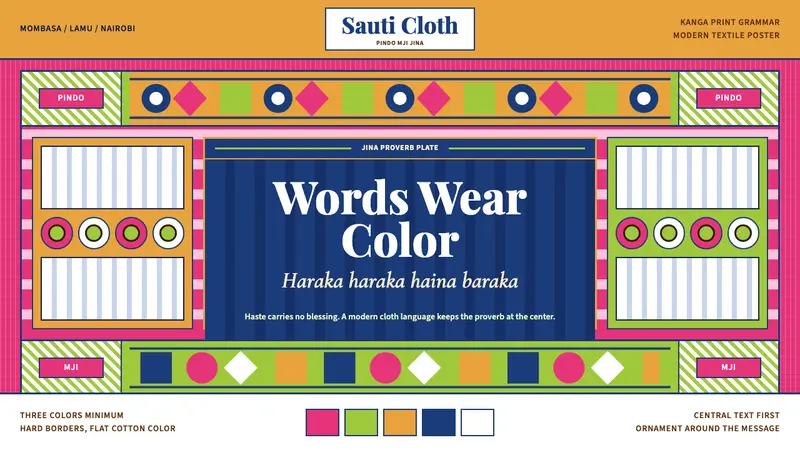 Kenyan Kanga PrintText speaks first. Hot pink ground, lime pindo border, indigo italic proverb plate.