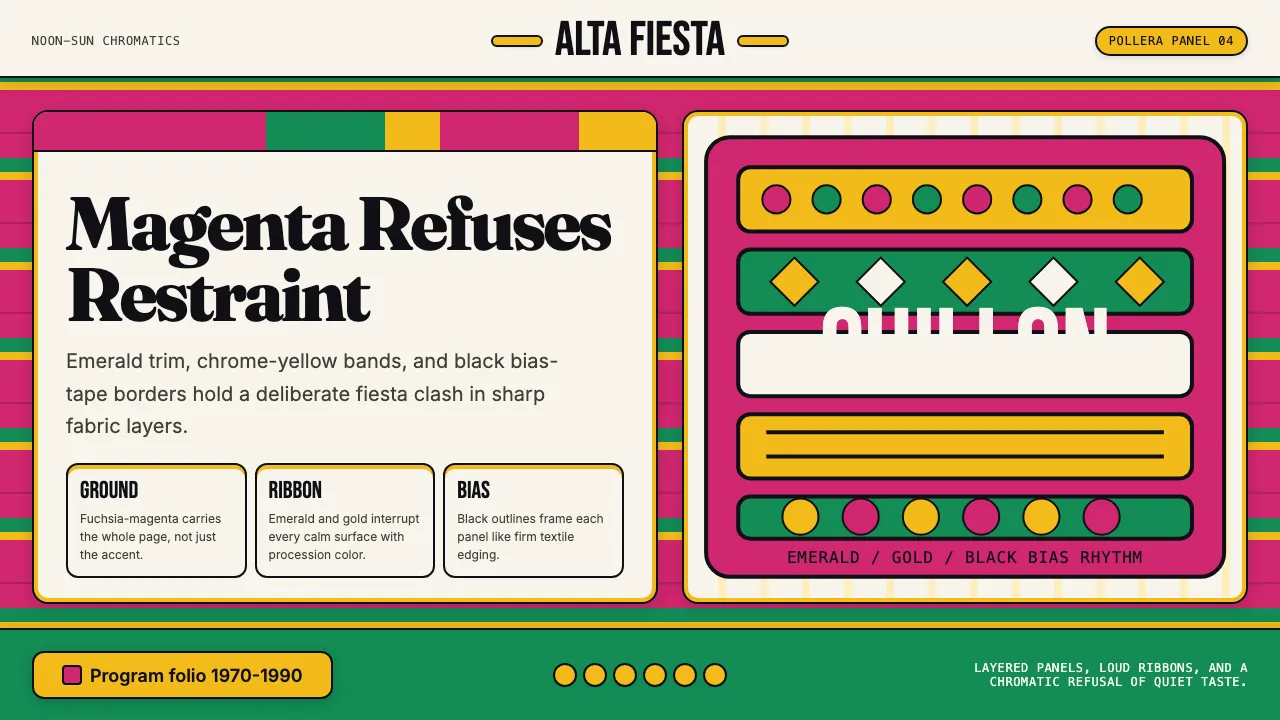
About Bolivian Pollera Fiesta Magenta
The pollera fiesta aesthetic draws from the deliberately loud, clashing palettes of Aymara celebration dress in Bolivia's highland cities. After the 1952 revolution, tailor families on La Paz's Avenida Buenos Aires began stitching polleras in fuchsia-magenta grounds trimmed with emerald, chrome yellow, and black bias tape — a chromatic refusal of mestizo restraint. This design system captures that noon-sun Carnaval intensity: magenta dominates the page itself, cards float as off-white pollera panels outlined in black, and every accent surface carries the gold-ribbon shimmer of fiesta trim.
- Origin
- La Paz, Oruro, Cochabamba, Bolivia
- Era
- 1960s–present; peak fiesta-pollera intensity 1970s–1990s
- Key figures
- Luisa Dörr · Eliana Paco Paredes · Rosario Aguilar · Andrés Gómez Vela
- Movements
- post-1952 Aymara fashion revival · cholita paceña visual identity · Oruro Carnaval
Bolivian Pollera Fiesta Magenta design spec
Colors
Typography
The other 11 sections — buttons, cards, spacing, motion, techniques and more — open once you unlock. Download the DESIGN.md or send it to your AI in one click. Unlock once, yours forever.
Sign up nowStyles similar to Bolivian Pollera Fiesta Magenta
Also inspired by crafts & folk art, with a close feel.
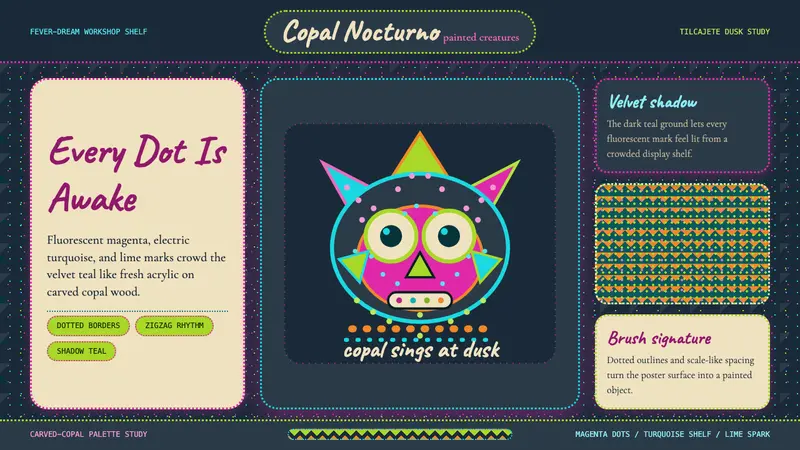 Mexican Alebrije Oaxaca (Linares 1936)Fever craft glows. Velvet teal carries magenta dots, turquoise zigzags, and Caveat script.
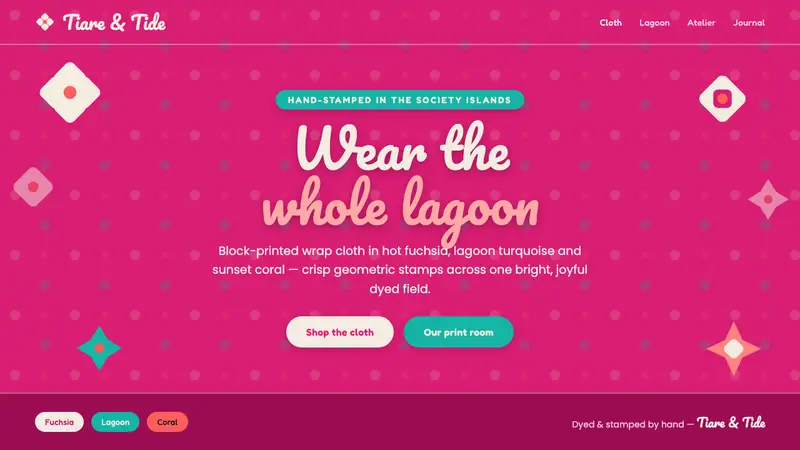 Tahitian Pareu PrintWear the whole lagoon. White hibiscus block-printed on hot-fuchsia cloth, with turquoise and coral.
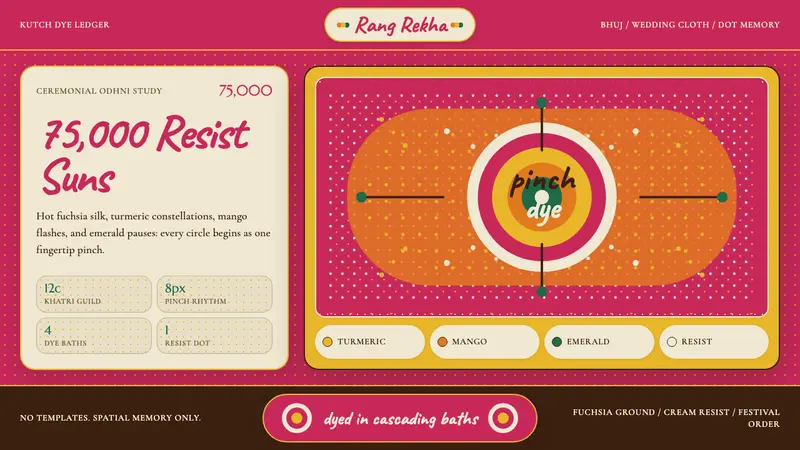 Gujarati Bandhani Tie-DyeFestival precision. Fuchsia cloth, turmeric dot constellations, Caveat lettering.
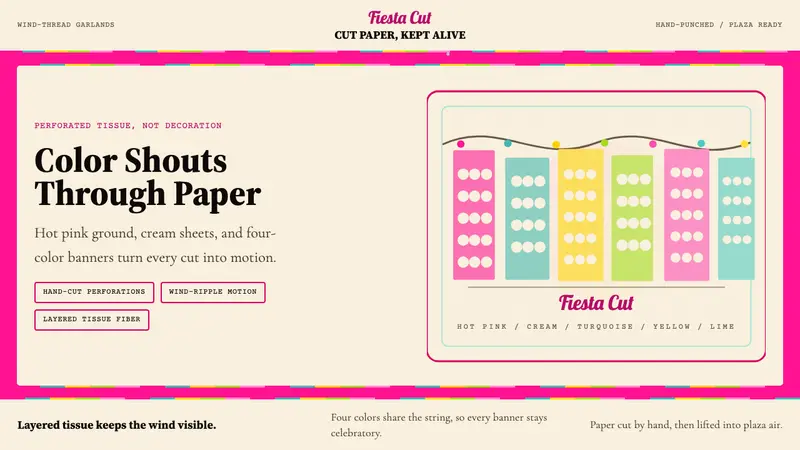 Mexican Papel Picado TissueFiesta cut paper. Hot pink, turquoise, yellow banners and hand-cut perforations.