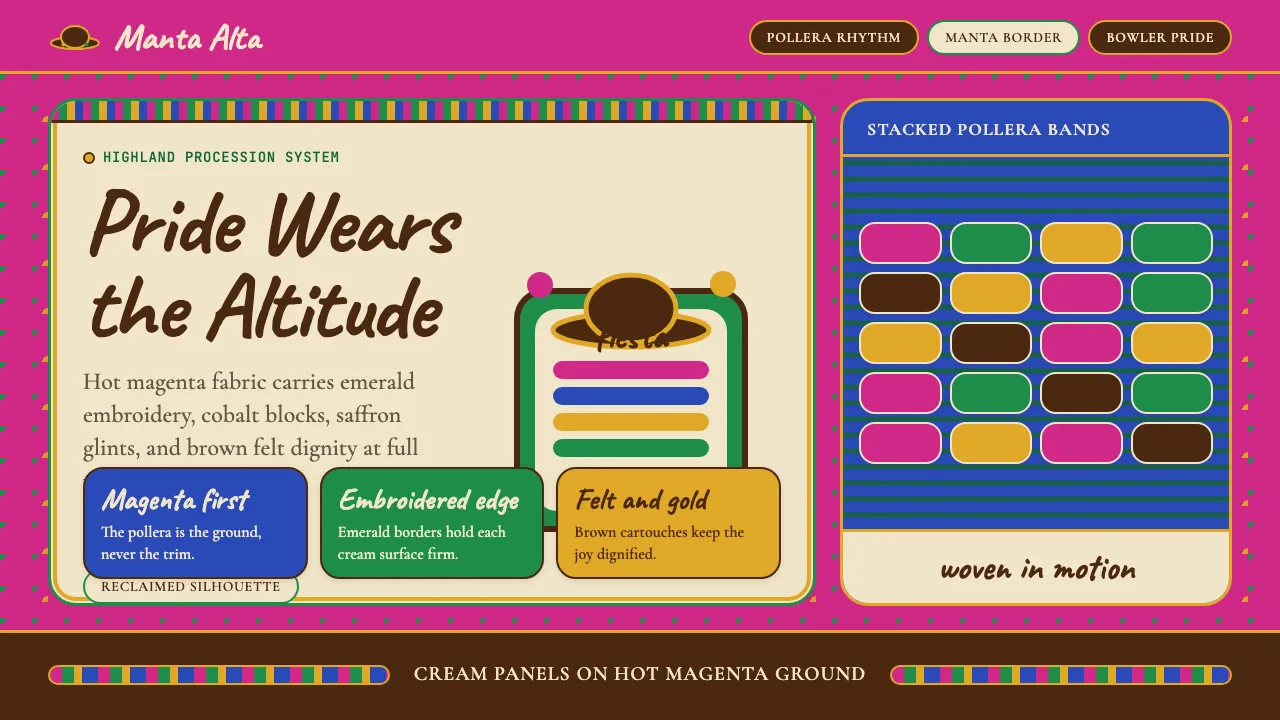
About Bolivian Cholita (Bowler-Hat Fiesta)
The cholita silhouette is the loudest assertion of Indigenous feminine identity in the Americas. Aymara and Quechua women in La Paz and El Alto dress in pleated pollera skirts, embroidered manta shawls, and the iconic bowler hat — a garment once imposed, now reclaimed as unmistakable cultural pride.
This design system channels the full-volume joy of a highland fiesta procession: hot magenta pollera fabric, emerald and cobalt embroidery, saffron accents, and brown-felt bowler textures. Every element carries the kinetic energy of cholita wrestlers, mountain-climbers, and fashion designers who turned a dress code into a movement.
Learn more about the Bolivian Cholita (Bowler-Hat Fiesta) style
- Origin
- Bolivia (La Paz, El Alto, Oruro, Cochabamba); Peruvian Aymara highlands (Puno)
- Era
- post-1781 Aymara urban-revival; bowler hat introduced 1920s; cholita reclaimed post-1990s; empowerment movements 2005–present
- Key figures
- Carolina Vargas · Cholitas Escaladoras de Bolivia · Eliana Paco · Andrew Canessa
- Movements
- Bolivian Aymara urban-identity formation · post-2005 cultural reclamation · cholita empowerment
Bolivian Cholita (Bowler-Hat Fiesta) design spec
Colors
Typography
The other 11 sections — buttons, cards, spacing, motion, techniques and more — open once you unlock. Download the DESIGN.md or send it to your AI in one click. Unlock once, yours forever.
Sign up nowStyles similar to Bolivian Cholita (Bowler-Hat Fiesta)
Also inspired by crafts & folk art, with a close feel.
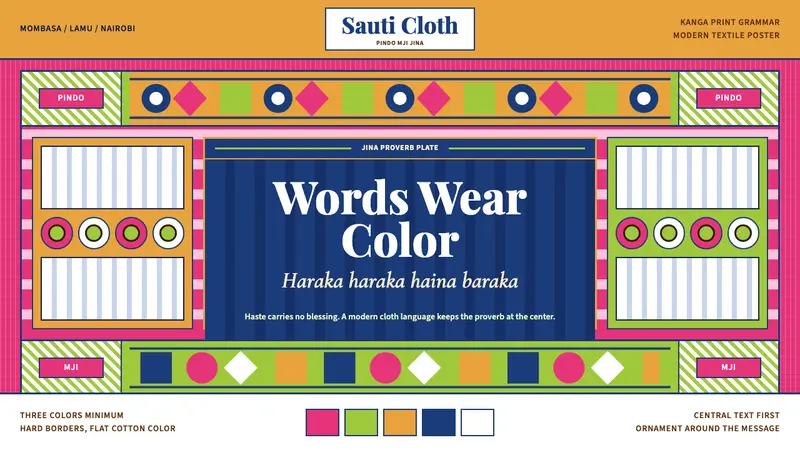 Kenyan Kanga PrintText speaks first. Hot pink ground, lime pindo border, indigo italic proverb plate.
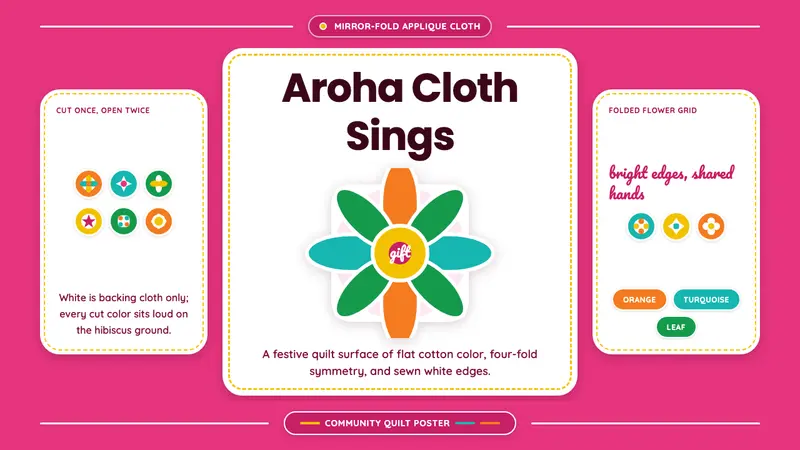 Cook Islands TivaevaeSaturated craft sings. Hibiscus pink carries mirror-fold florals in flat applique color.
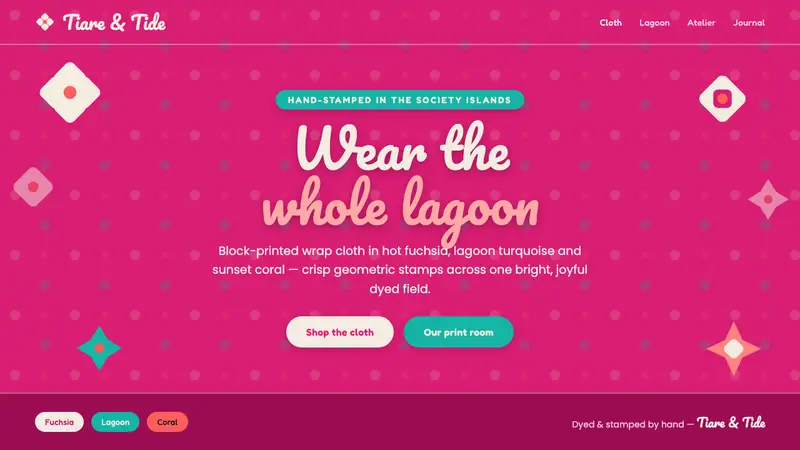 Tahitian Pareu PrintWear the whole lagoon. White hibiscus block-printed on hot-fuchsia cloth, with turquoise and coral.
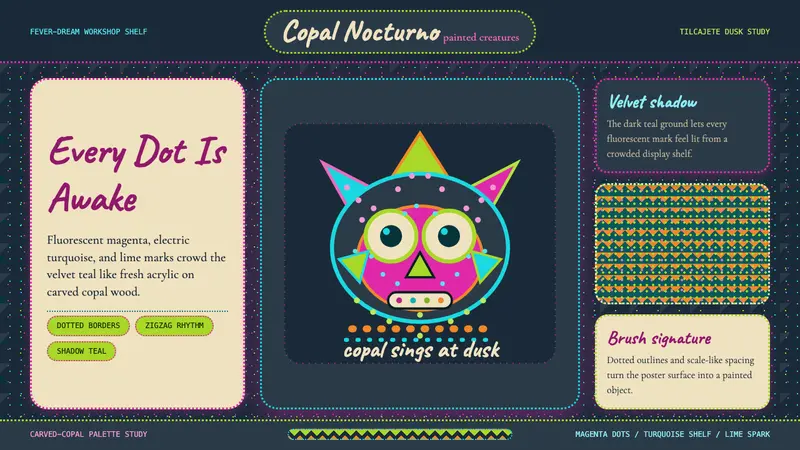 Mexican Alebrije Oaxaca (Linares 1936)Fever craft glows. Velvet teal carries magenta dots, turquoise zigzags, and Caveat script.