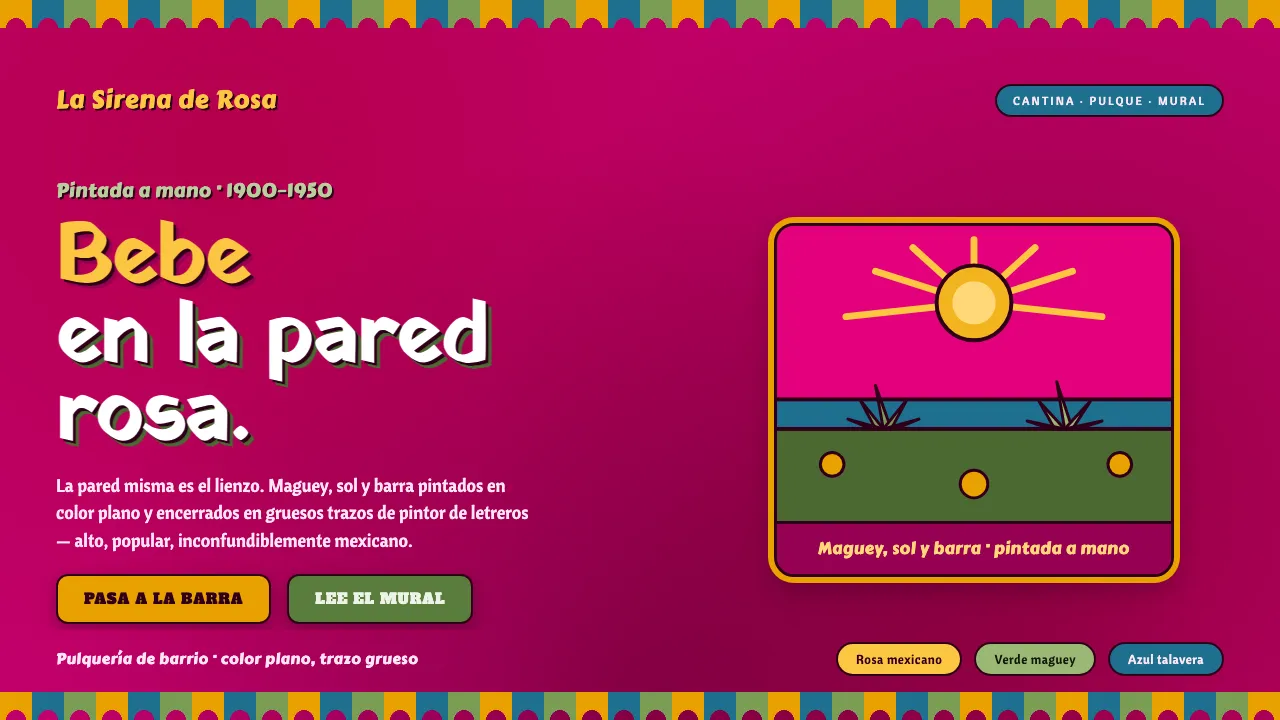
About Mexican Pulquería Mural
The pulquería mural is the painted skin of working-class Mexico's cantinas, where the wall itself — drenched in hot rosa-mexicano plaster — becomes the ground for naive folk murals of charros, sirenas, and maguey fields. Anonymous sign-painters and muralists, a tradition Diego Rivera documented, rendered these scenes in flat saturated color and bold hand-painted outlines.
This design system carries that loud, popular palette to the screen: a vivid Mexican-pink wall, maguey green, talavera blue, and marigold, framed by papel-picado trim and heavy folk lettering that never goes slick or corporate.
- Origin
- Central Mexico (Mexico City pulque bars and cantinas)
- Era
- 1900–1950 (golden age of the urban pulquería and its painted-wall mural tradition)
- Key figures
- Diego Rivera · Anonymous cantina sign-painters · Folk muralists
- Movements
- Mexican folk art · Pulquería mural painting · Cantina sign-lettering · Rosa-mexicano tradition
Mexican Pulquería Mural design spec
Colors
Typography
The other 11 sections — buttons, cards, spacing, motion, techniques and more — open once you unlock. Download the DESIGN.md or send it to your AI in one click. Unlock once, yours forever.
Sign up nowStyles similar to Mexican Pulquería Mural
Also inspired by crafts & folk art, with a close feel.
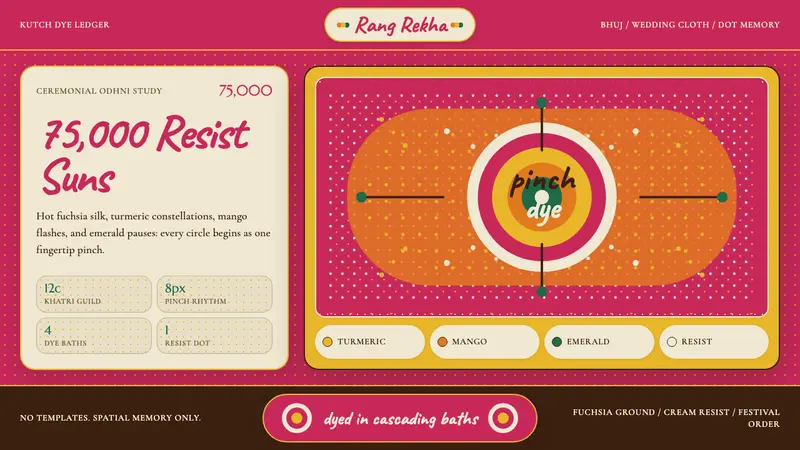 Gujarati Bandhani Tie-DyeFestival precision. Fuchsia cloth, turmeric dot constellations, Caveat lettering.
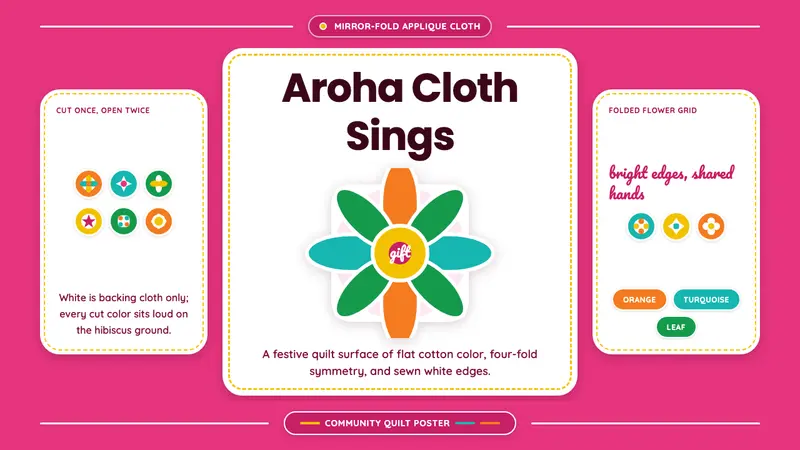 Cook Islands TivaevaeSaturated craft sings. Hibiscus pink carries mirror-fold florals in flat applique color.
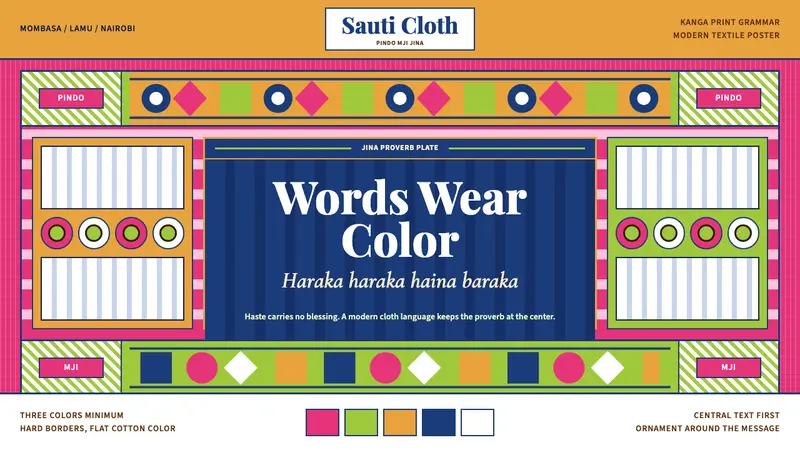 Kenyan Kanga PrintText speaks first. Hot pink ground, lime pindo border, indigo italic proverb plate.
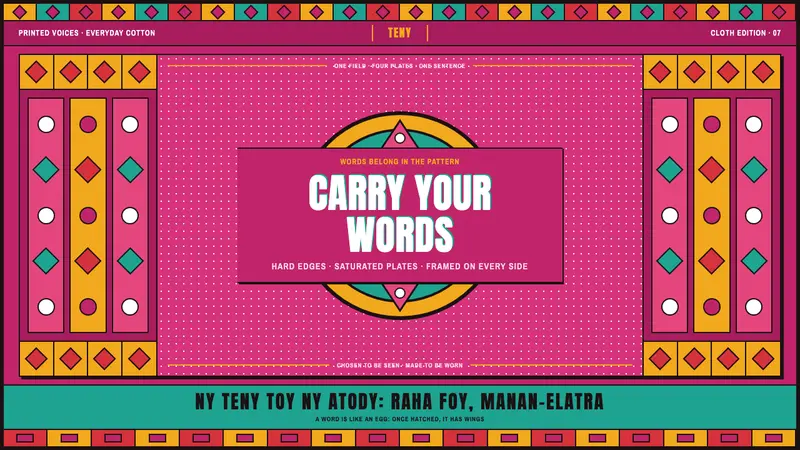 Malagasy Lamba HoanyWords become ornament. Hot fuchsia, saturated print plates and a border that never breaks.