About Talavera Poblana Ceramic
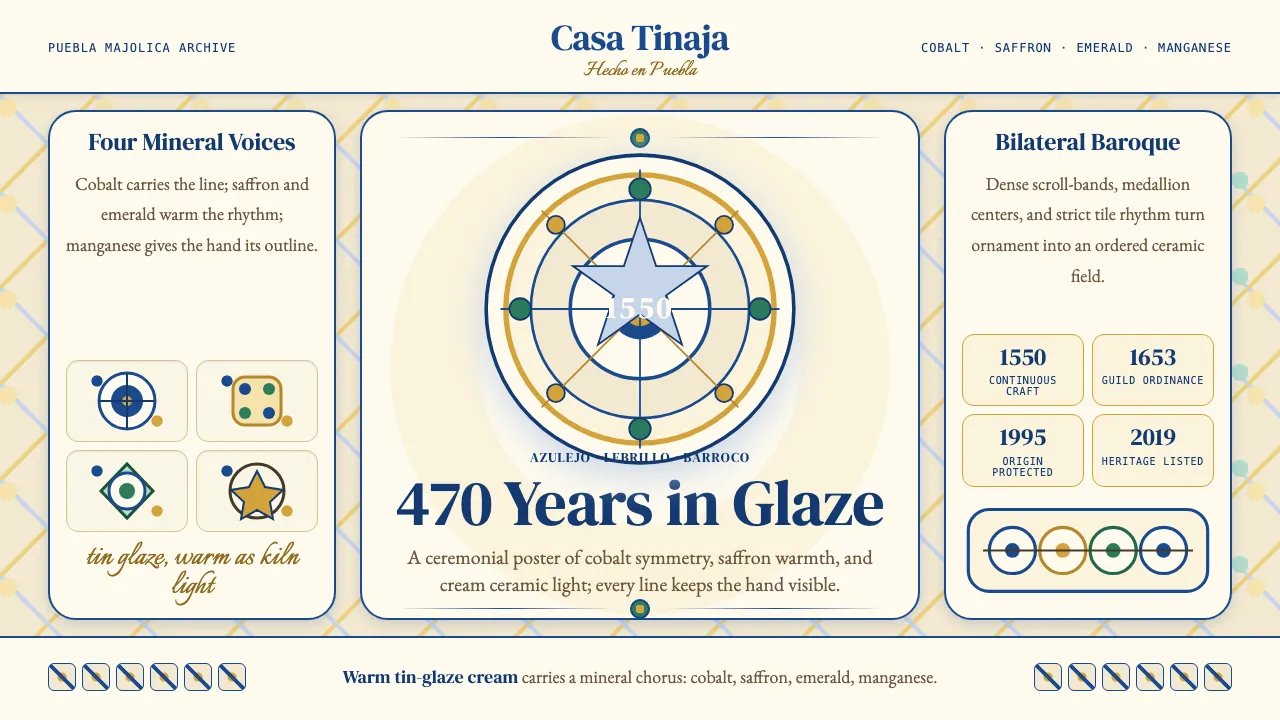
Talavera Poblana is the Spanish-Mexican blue-and-white-and-yellow majolica ceramic tradition produced continuously in Puebla since 1550. Descended from Spanish Talavera-de-la-Reina via Italian Faenza and Islamic Andalusian-Persian blue-and-white, it grew its own Mexican-Baroque idiom: cobalt, saffron, emerald and manganese hand-painted on warm tin-glaze cream.
The aesthetic feels like the Museo Amparo Talavera hall — warm cream pottery surface, saturated mineral pigments, Baroque floral and figural scrollwork, slight brush irregularity that signs the human hand. Strict 4–5 color discipline, bilateral symmetry, and centuries of guild craft.
- Origin
- Puebla & Tlaxcala, Mexico
- Era
- 1550 onward; Baroque peak 1650–1750; Denominación de Origen 1995; UNESCO ICH 2019
- Key figures
- Enrique Luis Ventosa · Uriarte family (1824–present) · Talavera de la Reyna workshop · Spanish Talavera-de-la-Reina immigrant potters
- Movements
- Spanish-Mediterranean tin-glaze maiolica · Mexican colonial Baroque · Denominación de Origen craft preservation
Talavera Poblana Ceramic design spec
Colors
Typography
The other 11 sections — buttons, cards, spacing, motion, techniques and more — open once you unlock. Download the DESIGN.md or send it to your AI in one click. Unlock once, yours forever.
Sign up nowStyles similar to Talavera Poblana Ceramic
Also inspired by crafts & folk art, with a close feel.
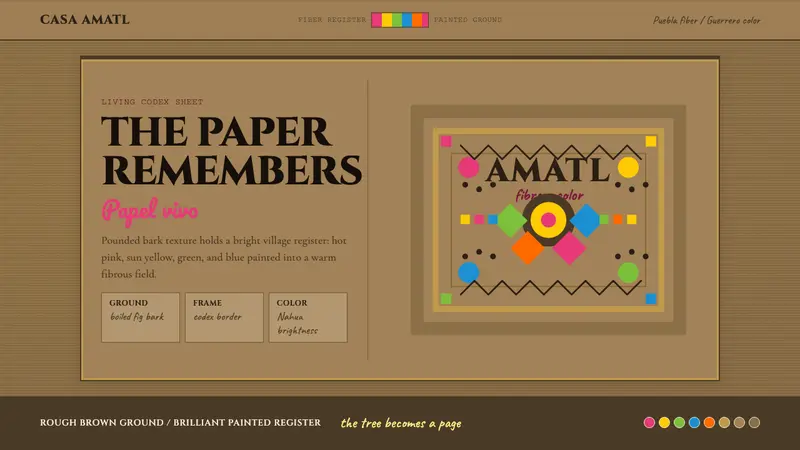 Mexican Amate Bark PaperLiving craft, not nostalgia. Bark-brown fiber carries hot pink and sun-yellow codex geometry.
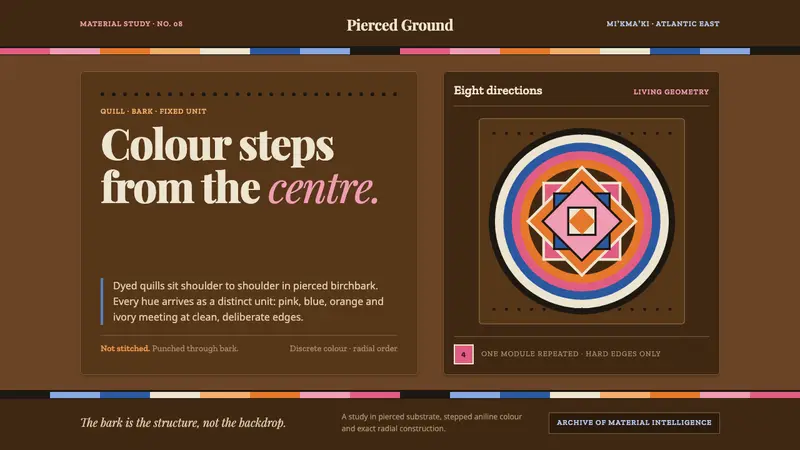 Miʼkmaq QuillworkColour never blends. Bright quill bands step across dark birchbark toward an eight-point star.
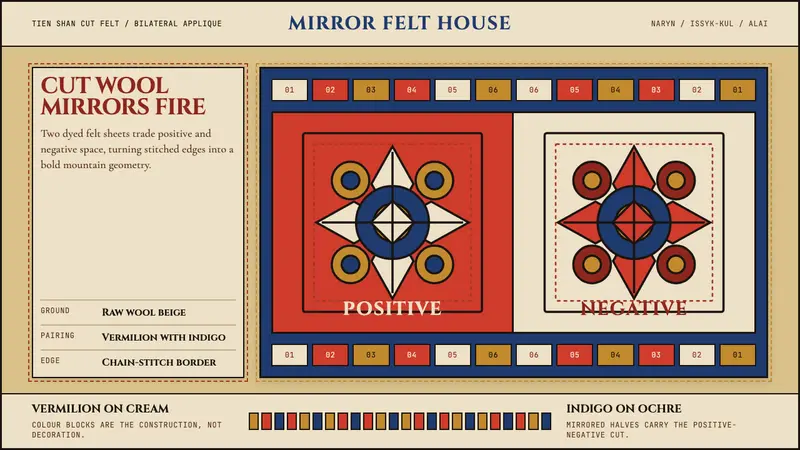 Kyrgyz Shyrdak Felt RugCut felt becomes structure. Vermilion-indigo mirror blocks stitch positive to negative.
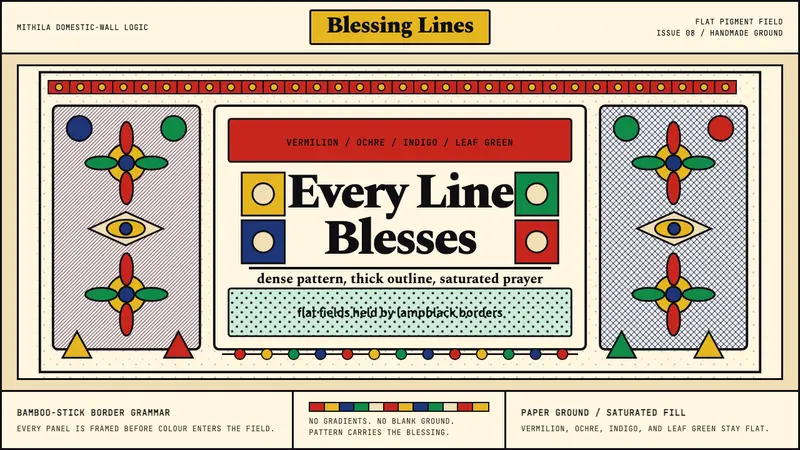 Mithila (Madhubani) PaintingEvery inch is blessed. Lampblack borders lock vermilion, ochre, indigo, and leaf green.