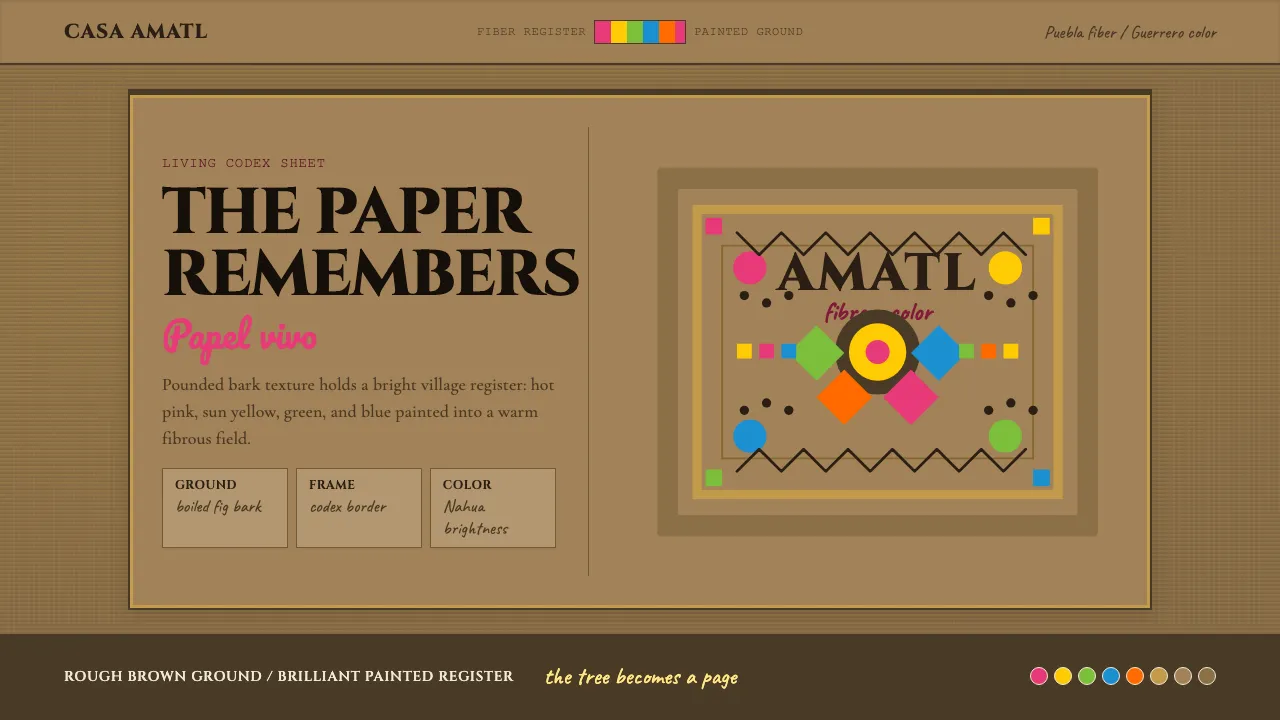
About Mexican Amate Bark Paper
Amate bark paper is one of the few continuous pre-Columbian craft traditions surviving in the Americas. Made by Otomi artisans who strip, boil, and pound fig-tree bark into thick fibrous sheets, the medium carried Aztec codices and Mayan manuscripts for over a millennium before Spanish colonizers banned its production.
The 1960s revival saw Nahua painters from Guerrero state cover the rough brown sheets with brilliant scenes of village life — birds perched on flowering branches, farmers in milpas, festival dancers in saturated pinks and yellows. This design system captures both registers: the earthy, fibrous materiality of the paper itself and the vivid folk-art palette painted onto it.
- Origin
- San Pablito Pahuatlán, Puebla & Ameyaltepec/Xalitla, Guerrero, Mexico
- Era
- 500 CE earliest documented; 1960s painted-amate revival
- Key figures
- Cristino Flores Medina · Pedro de Jesús · Bodil Christensen · Catharine Good Eshelman
- Movements
- Pre-Columbian Mesoamerican bark paper · Otomi ceremonial paper · Nahua painted-amate revival · Mexican folk art
Mexican Amate Bark Paper design spec
Colors
Typography
The other 11 sections — buttons, cards, spacing, motion, techniques and more — open once you unlock. Download the DESIGN.md or send it to your AI in one click. Unlock once, yours forever.
Sign up nowStyles similar to Mexican Amate Bark Paper
Also inspired by crafts & folk art, with a close feel.
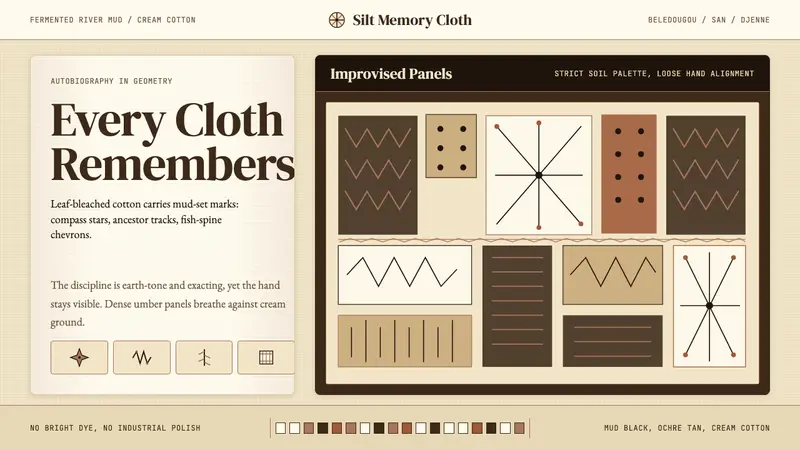 Mali Bògòlanfini (Bambara Mud-Cloth)Autobiography in geometry. Deep umber motifs breathe across cream cotton.
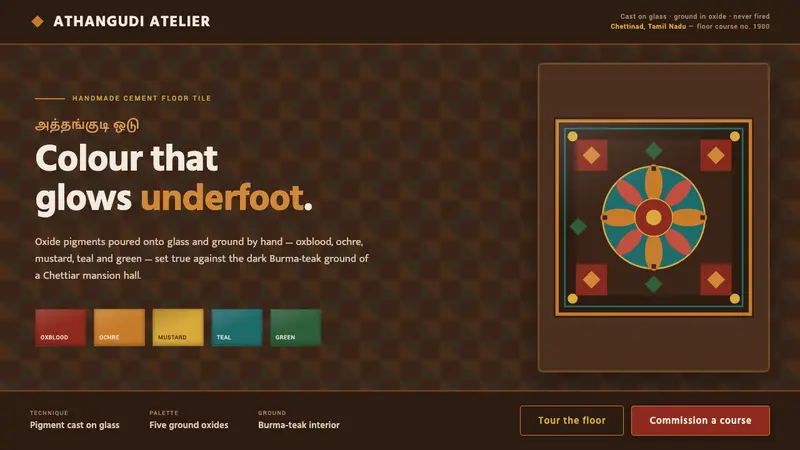 Chettinad Athangudi TilesColour that glows underfoot. Five ground-oxide tones on dark teak in bordered tile-grid medallions.
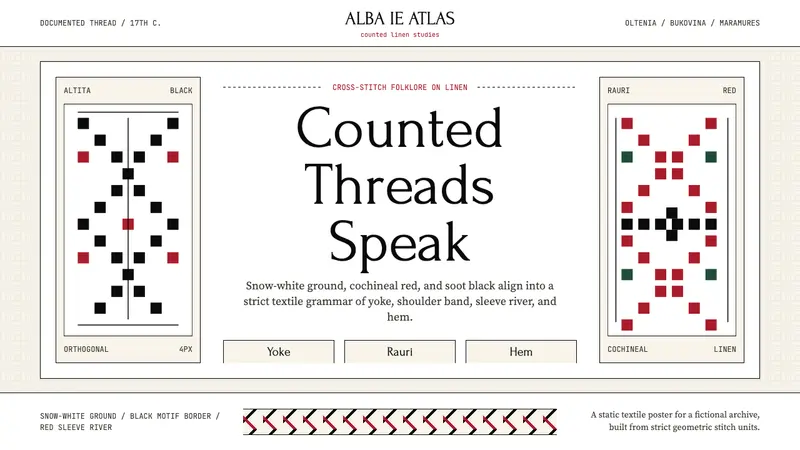 Romanian Ie (folk embroidered blouse)Folklore becomes grid. Cochineal red and soot black stitch strict bands on linen white.
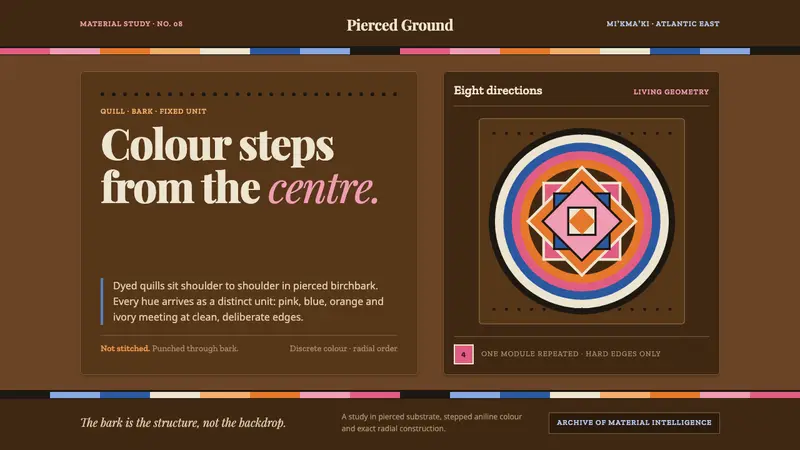 Miʼkmaq QuillworkColour never blends. Bright quill bands step across dark birchbark toward an eight-point star.