About Mexican Alebrije Oaxaca (Linares 1936)
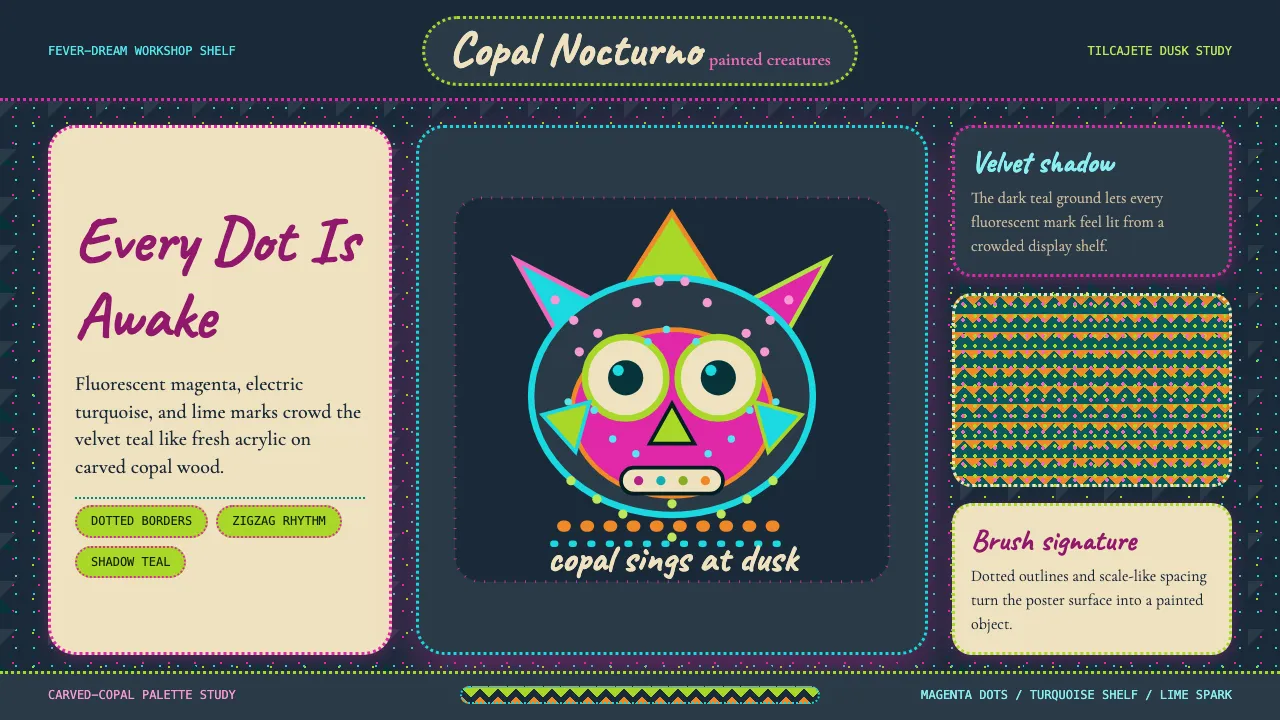
Alebrijes began as a fever-dream vision — Pedro Linares López, ill in bed in 1936 Mexico City, hallucinated hybrid creatures screaming the word "alebrije" and began sculpting them from papier-mâché upon recovery. In the 1980s, Oaxacan Zapotec carver Manuel Jiménez adapted the tradition to copal wood, spawning a cottage industry across Arrazola and San Martín Tilcajete where artisans hand-paint every millimeter in fluorescent dots, zigzags, and scale patterns.
This design system channels the carved-creature workshop aesthetic: a velvet-shadow teal ground like a Tilcajete display shelf at dusk, fluorescent magenta and turquoise as saturated as freshly painted copal, and dense dot-pattern textures that reference each artisan's signature brushwork.
Learn more about the Mexican Alebrije Oaxaca (Linares 1936) style
- Origin
- Mexico (Mexico City origin; Oaxaca — Arrazola, San Martín Tilcajete, Zapotec villages)
- Era
- 1936 papier-mâché origin; Oaxacan copal-wood 1980s onward
- Key figures
- Pedro Linares López · Manuel Jiménez · Jacobo Ángeles · Susan Masuoka
- Movements
- post-revolutionary Mexican folk-art revival · Oaxacan Zapotec wood-carving cottage industry · contemporary Mexican magical realism
Mexican Alebrije Oaxaca (Linares 1936) design spec
Colors
Typography
The other 11 sections — buttons, cards, spacing, motion, techniques and more — open once you unlock. Download the DESIGN.md or send it to your AI in one click. Unlock once, yours forever.
Sign up nowStyles similar to Mexican Alebrije Oaxaca (Linares 1936)
Also inspired by crafts & folk art, with a close feel.
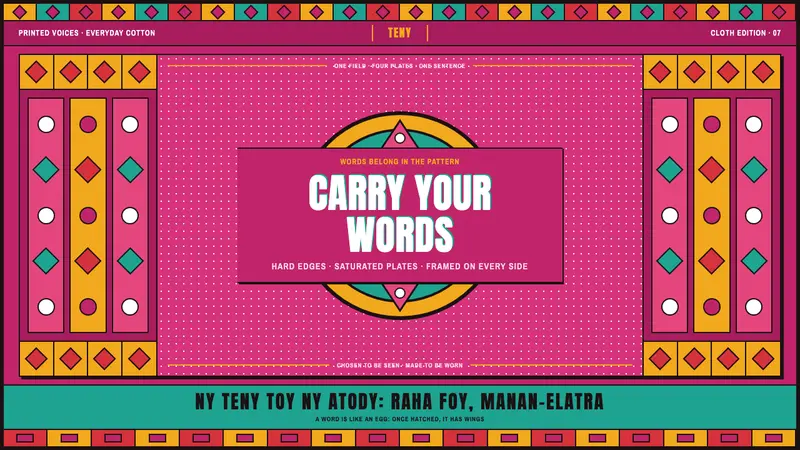 Malagasy Lamba HoanyWords become ornament. Hot fuchsia, saturated print plates and a border that never breaks.
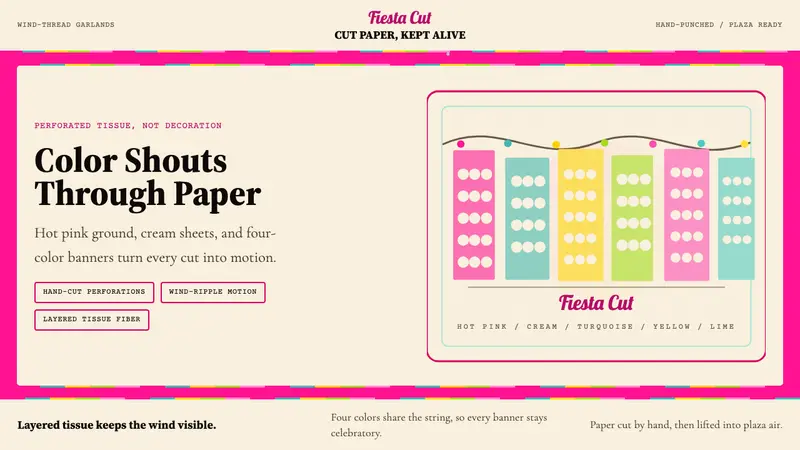 Mexican Papel Picado TissueFiesta cut paper. Hot pink, turquoise, yellow banners and hand-cut perforations.
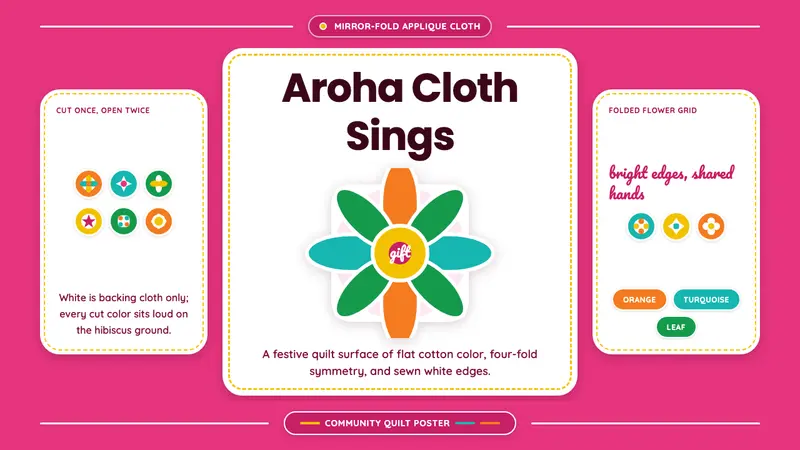 Cook Islands TivaevaeSaturated craft sings. Hibiscus pink carries mirror-fold florals in flat applique color.
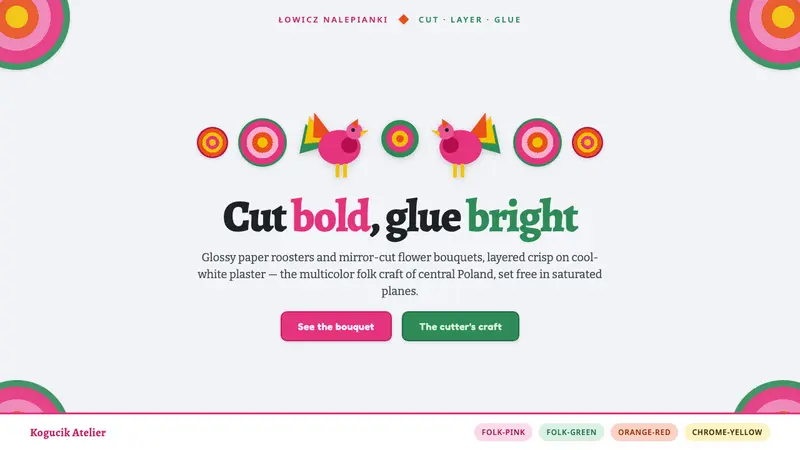 Polish Wycinanki PinkFolk papercut maximalism. Hot-pink roosters and mirror-cut bouquets layered on cool-white plaster.