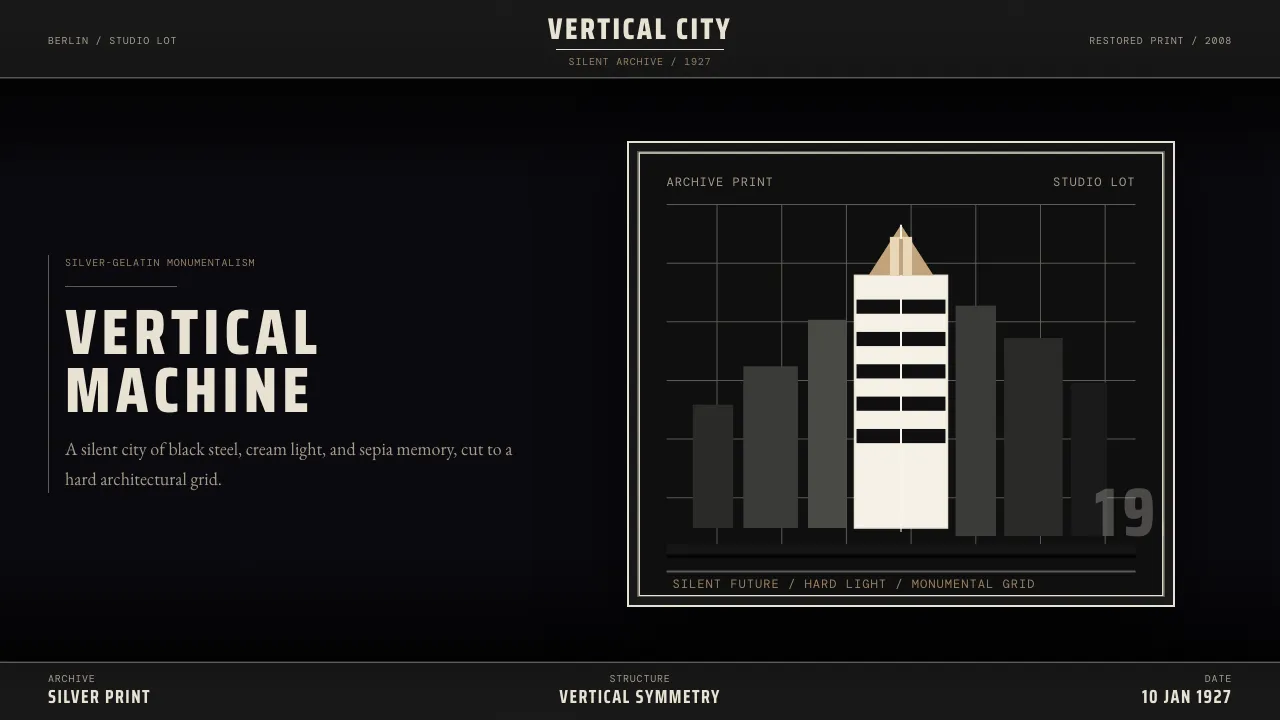
About Metropolis (Fritz Lang, 1927)
Fritz Lang's Metropolis defined the visual grammar of cinematic dystopia — vertical megacity architecture, monumental Expressionist shadow-play, and the silver-gelatin tonal world of silent-film nitrate prints. This design system channels that vocabulary: towering compositions on void-black grounds, sepia-aged archival warmth, compressed Weimar-poster typography, and the hard geometric certainty of Kettelhut's set designs.
Every surface recalls the silver-nitrate print — warm cream highlights emerging from absolute black, hairline borders like architectural drafting lines, and the monumental symmetry of the Tower of Babel sequences.
- Origin
- Berlin, Germany — UFA Babelsberg Studios, Weimar Republic
- Era
- 1925–1927 production; premiered January 10, 1927; 2008 restoration
- Key figures
- Fritz Lang · Thea von Harbou · Erich Kettelhut · Walter Schulze-Mittendorff
- Movements
- Weimar German Expressionist cinema · Art Deco architectural cinema · foundational science-fiction film
Metropolis (Fritz Lang, 1927) design spec
Colors
Typography
The other 11 sections — buttons, cards, spacing, motion, techniques and more — open once you unlock. Download the DESIGN.md or send it to your AI in one click. Unlock once, yours forever.
Sign up nowStyles similar to Metropolis (Fritz Lang, 1927)
Also inspired by film, games & music, with a close feel.
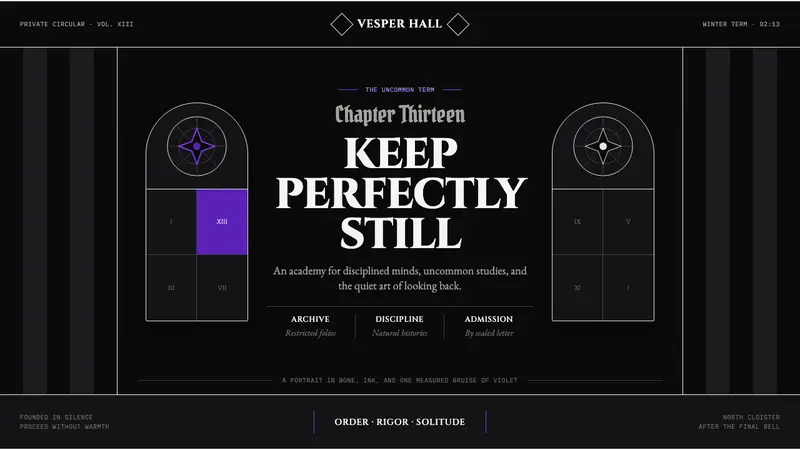 Wednesday — Nevermore AcademyCold symmetry cuts deepest. Bone-white capitals and hard stripes yield to one violet pane.
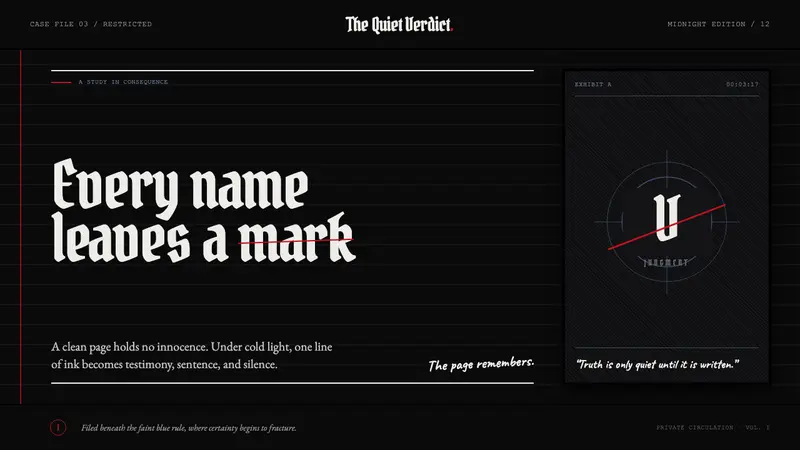 Death Note (2003)Silence becomes judgment. Bone-white blackletter and blue rules break under one red strike.
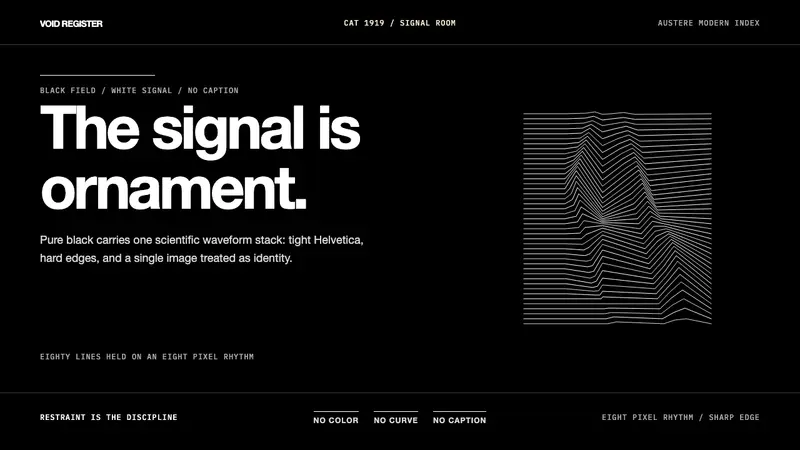 Joy Division — Unknown PleasuresRestraint becomes signal. Black field, tight Helvetica, and white pulsar lines do all the work.
 Journey to the West (Monkey King)A god roars off the block. Vermilion opera paint and gilt rules ignite a lacquer-black stage.