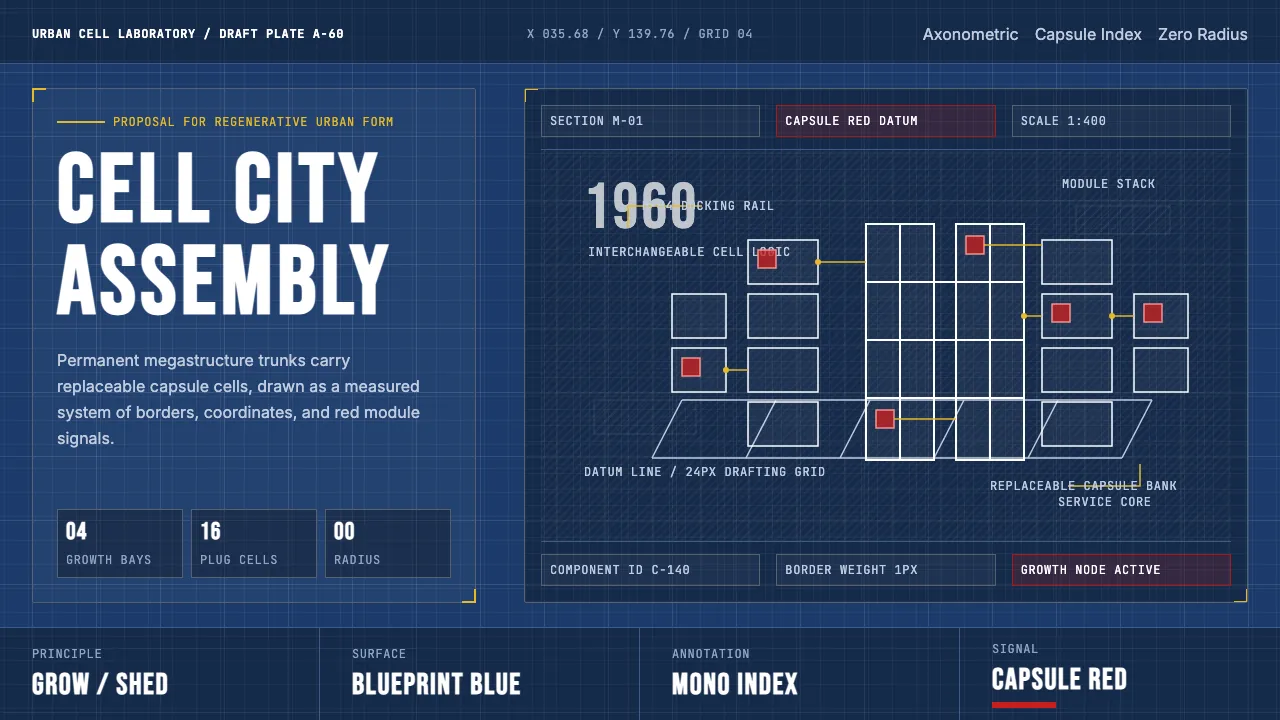
About Metabolism Tokyo (1960)
Metabolism was the Japanese architectural movement that proposed cities as living organisms — permanent megastructure trunks carrying interchangeable capsule cells that grow, shed, and regenerate. Launched at the 1960 World Design Conference in Tokyo, the group's visual language is rooted in technical drafting: axonometric projections, cross-section diagrams, and modular grids rendered in blueprint blue ink on drafting paper.
This design system captures that drafting-table precision — blueprint grounds, capsule-red accents, mono-spaced annotation labels, and zero-radius geometries that treat every surface as an architectural diagram waiting to be built.
- Origin
- Tokyo, Japan
- Era
- 1960–1973 (manifesto 1960, peak Osaka Expo 1970, post-oil-crisis decline)
- Key figures
- Kenzo Tange · Kisho Kurokawa · Kiyonori Kikutake · Fumihiko Maki
- Movements
- Metabolism · postwar Japanese Modernism · megastructuralism
Metabolism Tokyo (1960) design spec
Colors
Typography
The other 11 sections — buttons, cards, spacing, motion, techniques and more — open once you unlock. Download the DESIGN.md or send it to your AI in one click. Unlock once, yours forever.
Sign up nowStyles similar to Metabolism Tokyo (1960)
Also inspired by design movements, with a close feel.
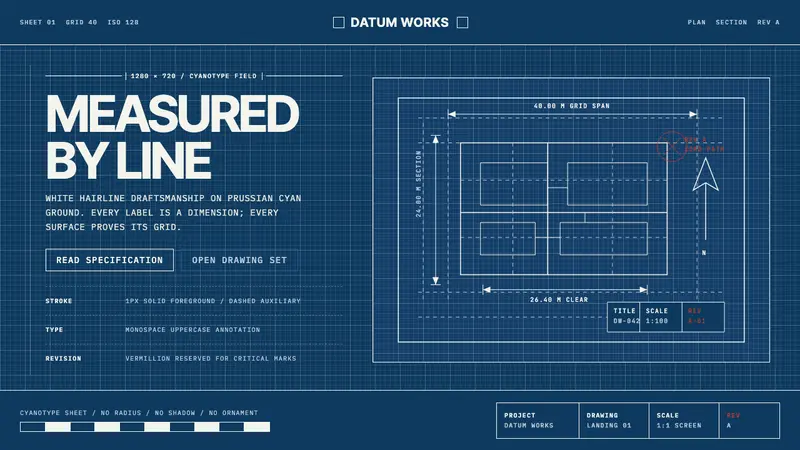 Architectural BlueprintMeasurement, not mood. Prussian cyan grid with white hairlines and vermillion revision marks.
 Transhumanism (H+)The body, rendered engineerable. Electric-blue circuit-anatomy schematics and the h+ disc on a void.
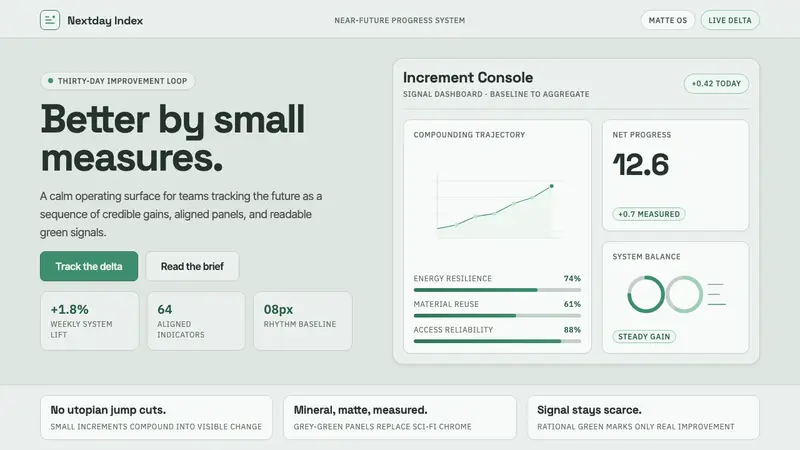 ProtopiaCalm progress, not sci-fi hype. Mineral grey-green grids make every small gain measurable.
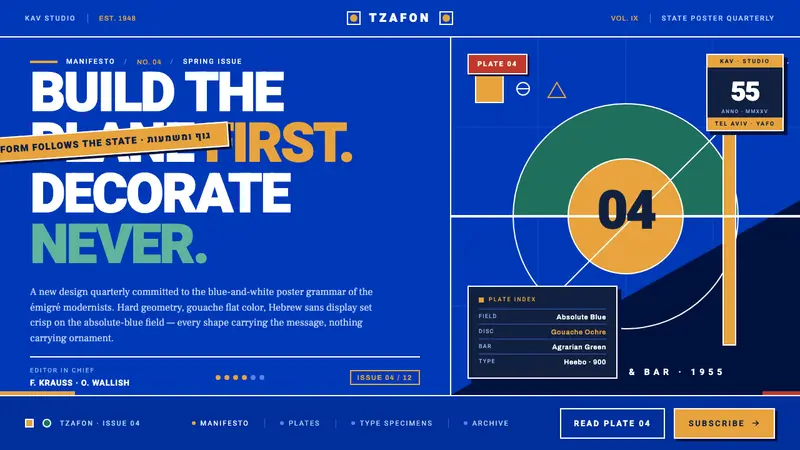 Israeli Bezalel ModernismForm follows the state. Hard Bauhaus discs and ochre bars on absolute blue, Hebrew sans display.