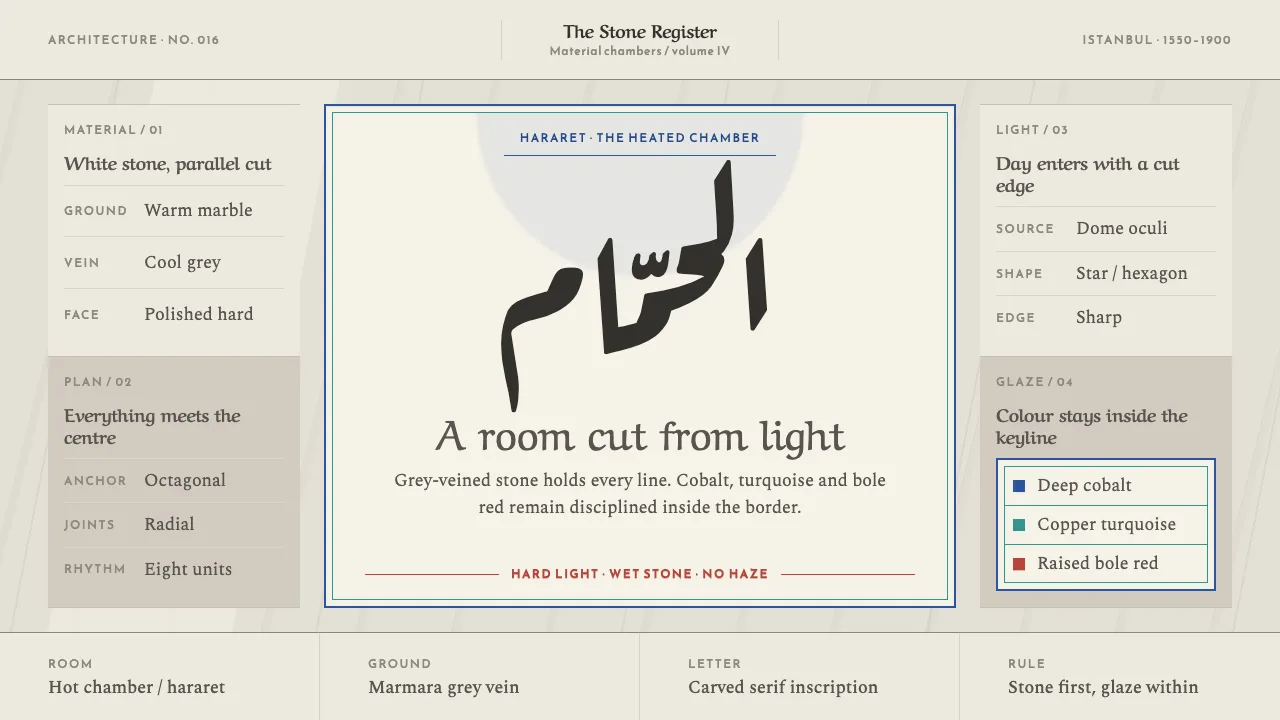
About Ottoman Hamam Interior
The hararet is not a dim spa. It is a hard, bright stone chamber — floor, walls and the octagonal göbek taşı cut from Marmara and Afyon white marble, grey veins running in parallel bands through every surface. Light enters only through star- and hexagon-shaped glass oculi punched into the dome, the fil gözü, landing as cut-edged shafts on wet stone.
This system takes that room literally. Warm marble ground, grey vein as the working color, and İznik cobalt, copper turquoise and Armenian-bole red used the way tile is used: bordered, panelled, never scattered. Arabic calligraphy carries the display voice; Latin text sits in sharp serifs, like an engraved plaque.
- Origin
- Istanbul and the Ottoman Empire
- Era
- 16th–19th century; classical form codified in Mimar Sinan's hamams of the 1550s–1580s
- Key figures
- Mimar Sinan · Barbaros Hayreddin Pasha · Hürrem Sultan
- Movements
- Classical Ottoman architecture · İznik ceramics · Roman–Byzantine bath lineage
Ottoman Hamam Interior design spec
Colors
Typography
The other 11 sections — buttons, cards, spacing, motion, techniques and more — open once you unlock. Download the DESIGN.md or send it to your AI in one click. Unlock once, yours forever.
Sign up nowStyles similar to Ottoman Hamam Interior
Also inspired by architecture & places, with a close feel.
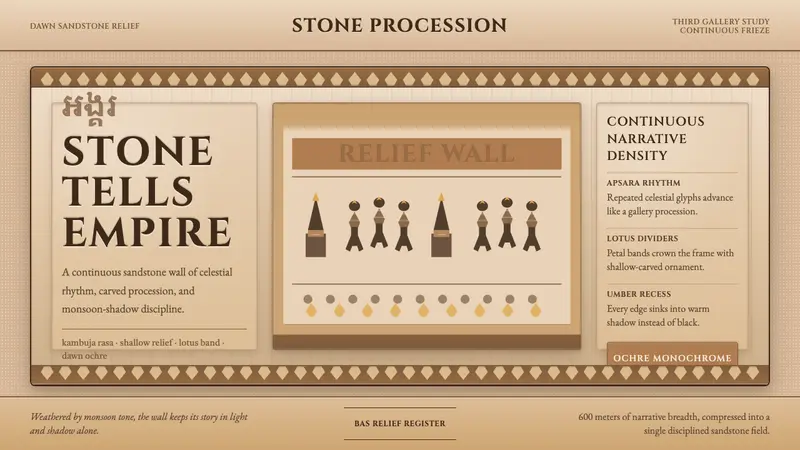 Khmer Angkor Wat ReliefStone remembers everything. Ochre friezes, Cinzel capitals, and lotus bands hold the wall.
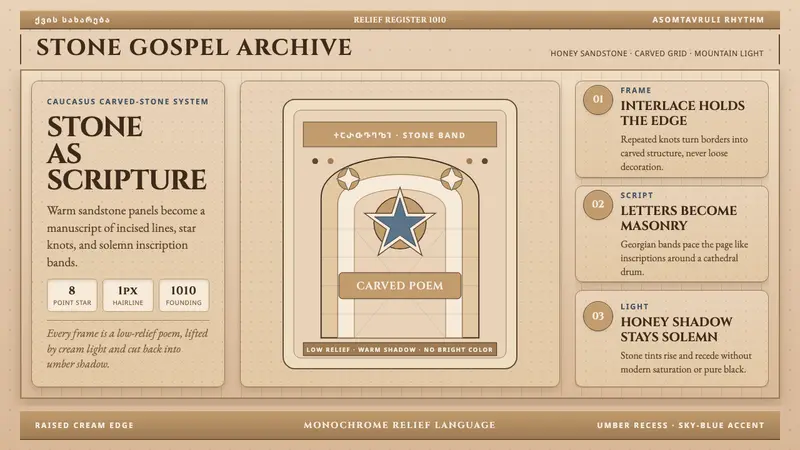 Georgian Nikortsminda Stone-CarvingStone becomes scripture. Cinzel caps and Georgian bands carve honey-sandstone grids.
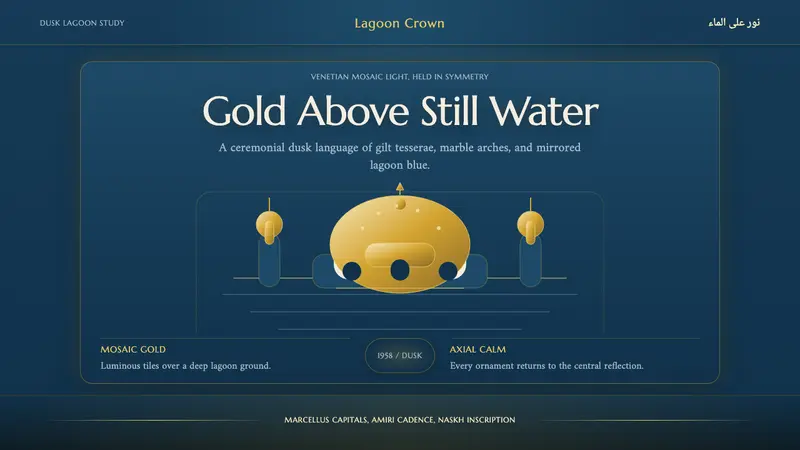 Brunei Omar Ali MosqueRegal dusk, mirrored. Lagoon blue frames luminous gold mosaics and axial symmetry.
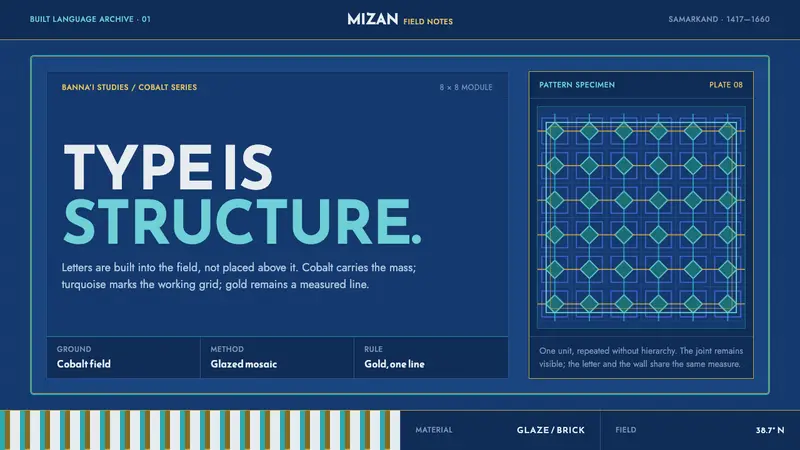 Registan TileworkType becomes structure. Turquoise geometry locks into cobalt, edged with spare gold.