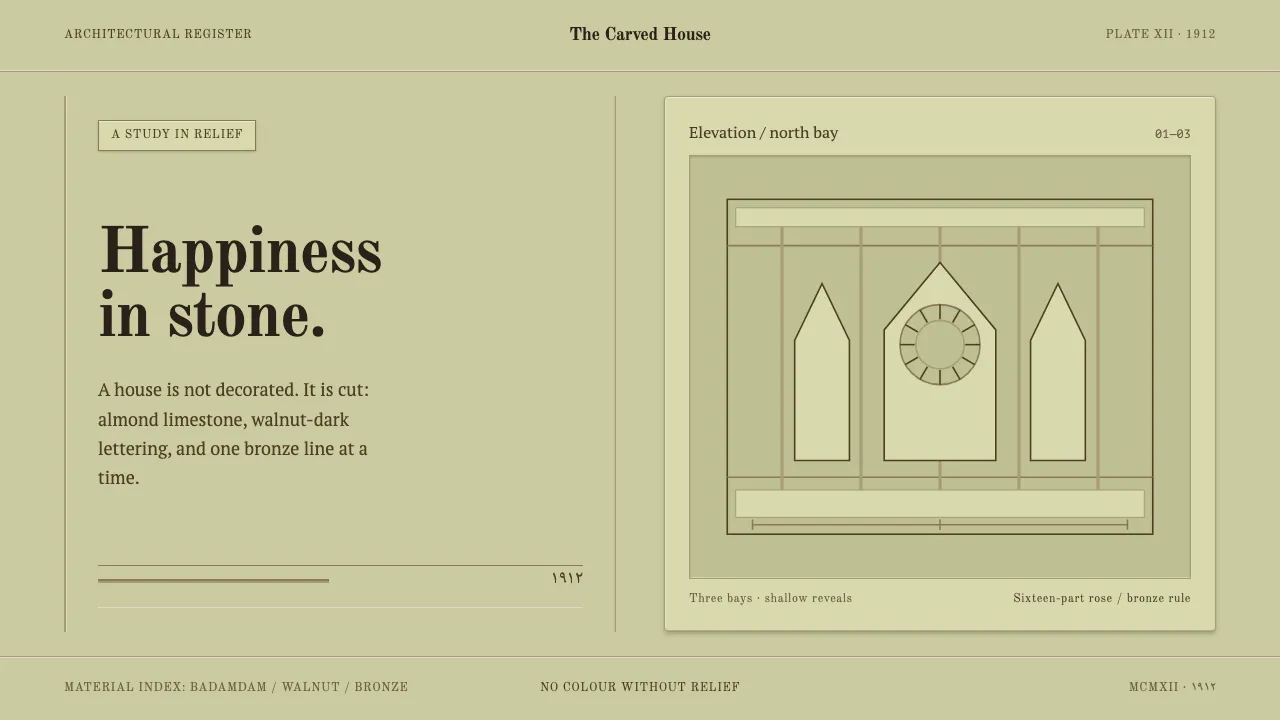
About Baku Oil Boom Mansions
Baku's oil millionaires spent the decade before 1914 turning crude into carved stone. Murtuza Mukhtarov built the Palace of Happiness for his wife Liza Tuganova in 1911–12, hiring the Polish architect Józef Płoszko and importing French blueprints — French Gothic Revival cut into local badamdam limestone, an almond stone that reads pale olive-tan under Caspian sun.
This system works the way the building does. Outside: tracery, pinnacles, deep-cut ashlar where every panel sits recessed under a hard shadow. Inside: walnut joinery, wrought iron, bronze hairlines, and doorways where Cyrillic and Arabic-script Azerbaijani sit on the same lintel. Relief carries the hierarchy — not color, not weight.
- Origin
- Baku, Absheron peninsula, Azerbaijan
- Era
- 1900–1914 Baku oil boom; reference building completed 1912
- Key figures
- Murtuza Mukhtarov · Liza Tuganova · Józef Płoszko · Zivar bey Ahmadbeyov
- Movements
- Gothic Revival · Russian-imperial eclecticism · Absheron stonecarving
Baku Oil Boom Mansions design spec
Colors
Typography
The other 11 sections — buttons, cards, spacing, motion, techniques and more — open once you unlock. Download the DESIGN.md or send it to your AI in one click. Unlock once, yours forever.
Sign up nowStyles similar to Baku Oil Boom Mansions
Also inspired by architecture & places, with a close feel.
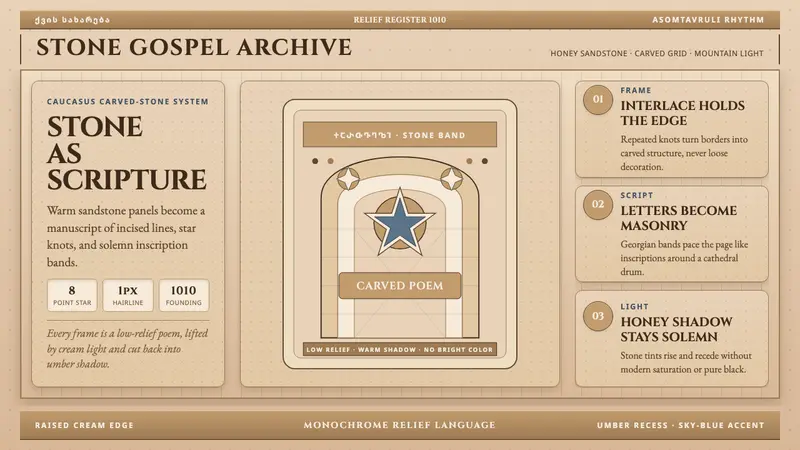 Georgian Nikortsminda Stone-CarvingStone becomes scripture. Cinzel caps and Georgian bands carve honey-sandstone grids.
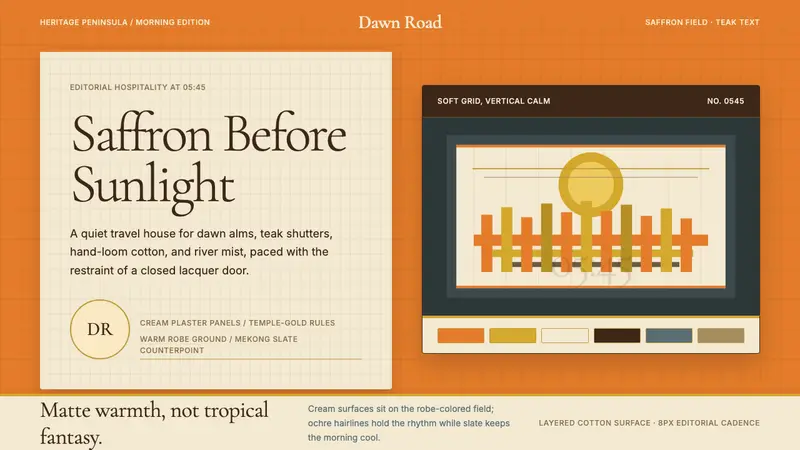 Luang Prabang Temple TourismReverent dawn luxury. Saffron field, cream panels, and teak serif type carry the hush.
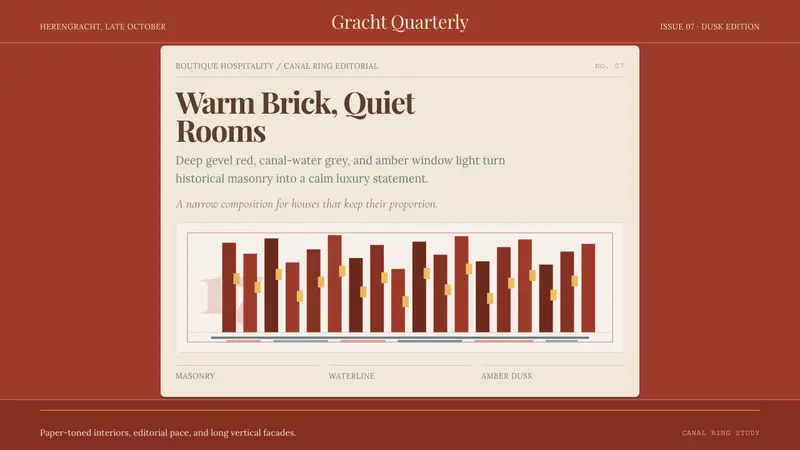 Amsterdam Canal HouseQuiet luxury in brick and cream. Playfair serif, narrow columns, amber window light.
 Khmer Angkor Wat ReliefStone remembers everything. Ochre friezes, Cinzel capitals, and lotus bands hold the wall.