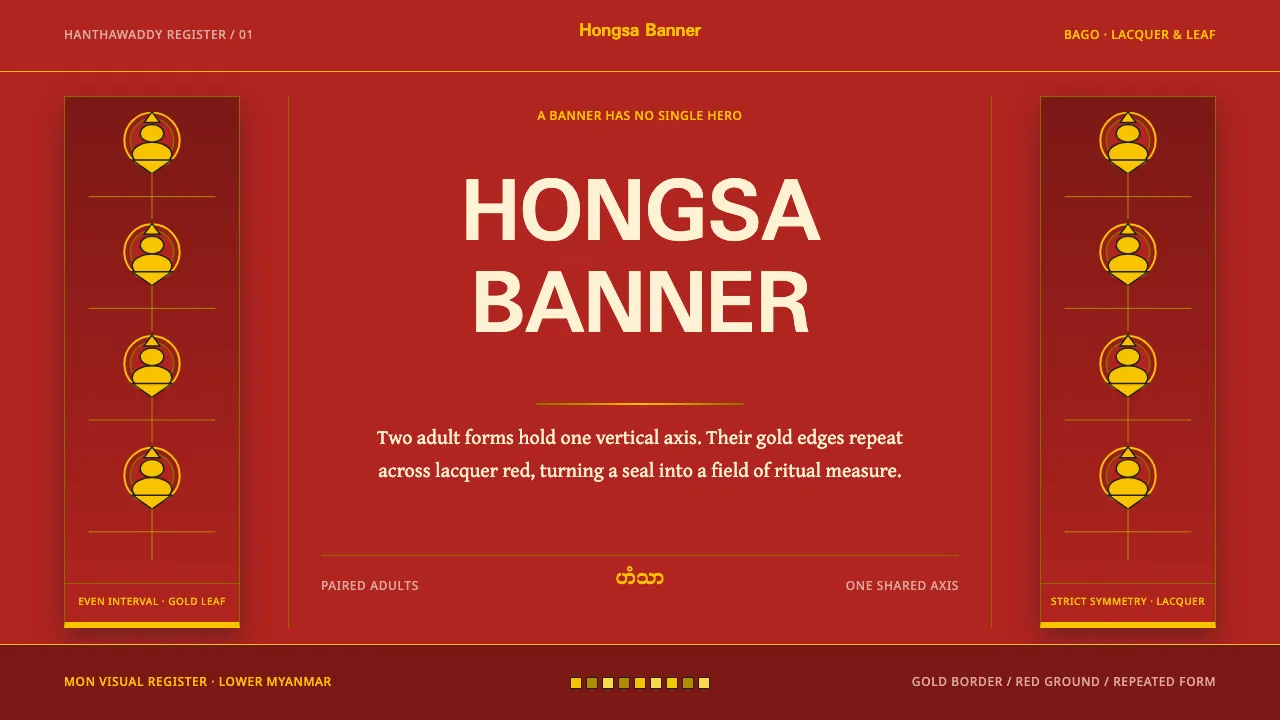
About Mon Hongsa Emblem
The hintha is not a swan. Burmese culture reads it as a ruddy shelduck: plump-bodied, short-necked, with a flowering beak and a flaring tail. It is the emblem of the Mon people and of Hanthawaddy — the Realm of Hamsa — and Bago's founding legend puts two of them on an island in a lake, a female standing on the back of a male.
That stacked pair became a seal, then a flag, then a habit of ornament. Gold on a lacquer-red field, tiled down hanging banners at even intervals, gilded onto finials at the tops of monastery flagpoles. This system takes the banner as its unit: strict bilateral symmetry, repetition over hierarchy, gold hairlines around every filled shape.
- Origin
- Lower Burma / Myanmar — Bago (Pegu), Mottama, Mawlamyine, the Mon State coast
- Era
- pre-1900 — Hanthawaddy Pegu 1287–1552, restored 1740–1757; emblem carried into the Mon State flags of 1974 and 2018
- Key figures
- Shin Sawbu · Dhammazedi
- Movements
- Mon Buddhist temple art · Burmese royal and monastic heraldry · 20th-century ethnic-nationalist flag design
Mon Hongsa Emblem design spec
Colors
Typography
The other 11 sections — buttons, cards, spacing, motion, techniques and more — open once you unlock. Download the DESIGN.md or send it to your AI in one click. Unlock once, yours forever.
Sign up nowStyles similar to Mon Hongsa Emblem
Also inspired by crafts & folk art, with a close feel.
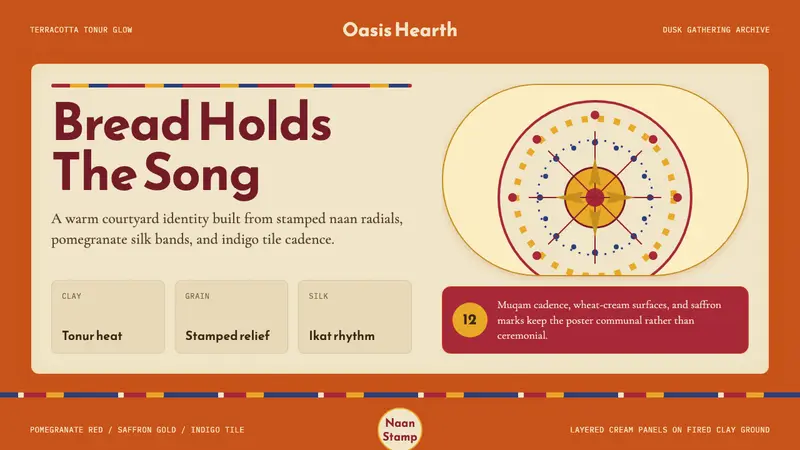 Uyghur Meshrep (Naan Oasis Gathering)Warmth gathers. Terracotta ground, saffron naan radials, and indigo ikat bands carry it.
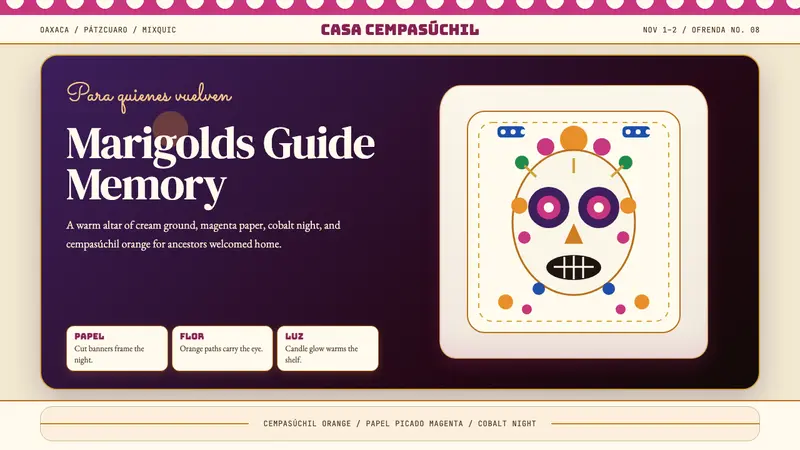 Día de los MuertosRemembrance glows. Marigold orange, magenta papel picado, and cream altar tiers.
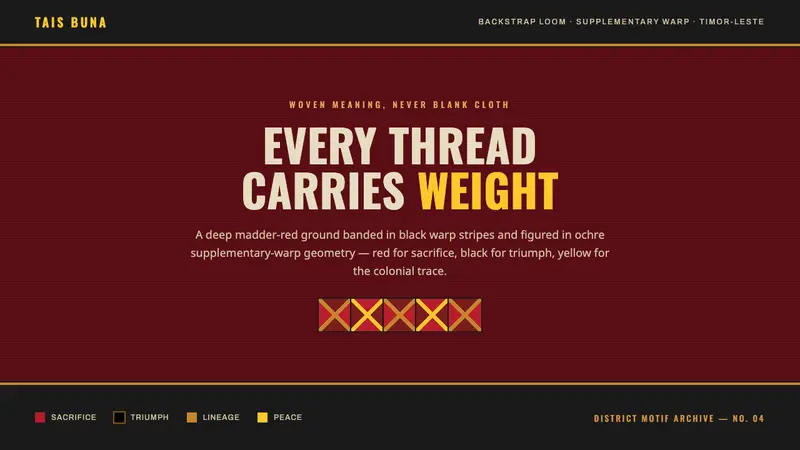 Timor-Leste Tais BunaWoven meaning, never blank cloth. Madder-red ground banded in black, ochre diamond geometry.
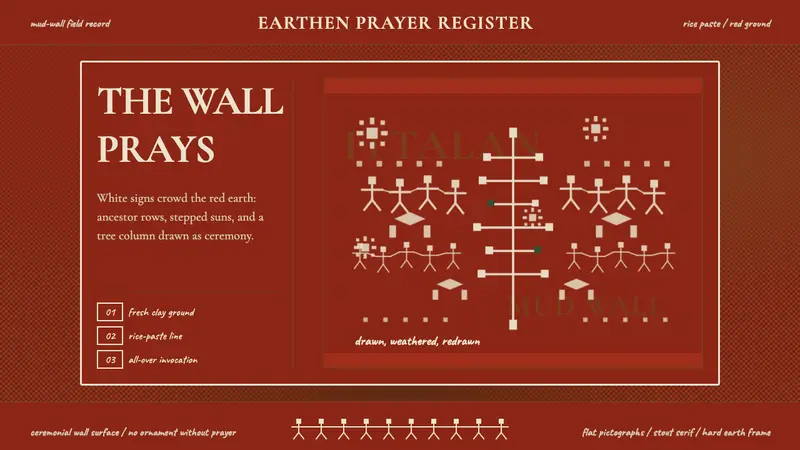 Odisha Saura Tribal MuralSacred density. Rice-white pictographs crowd a red-earth wall in ritual rhythm.