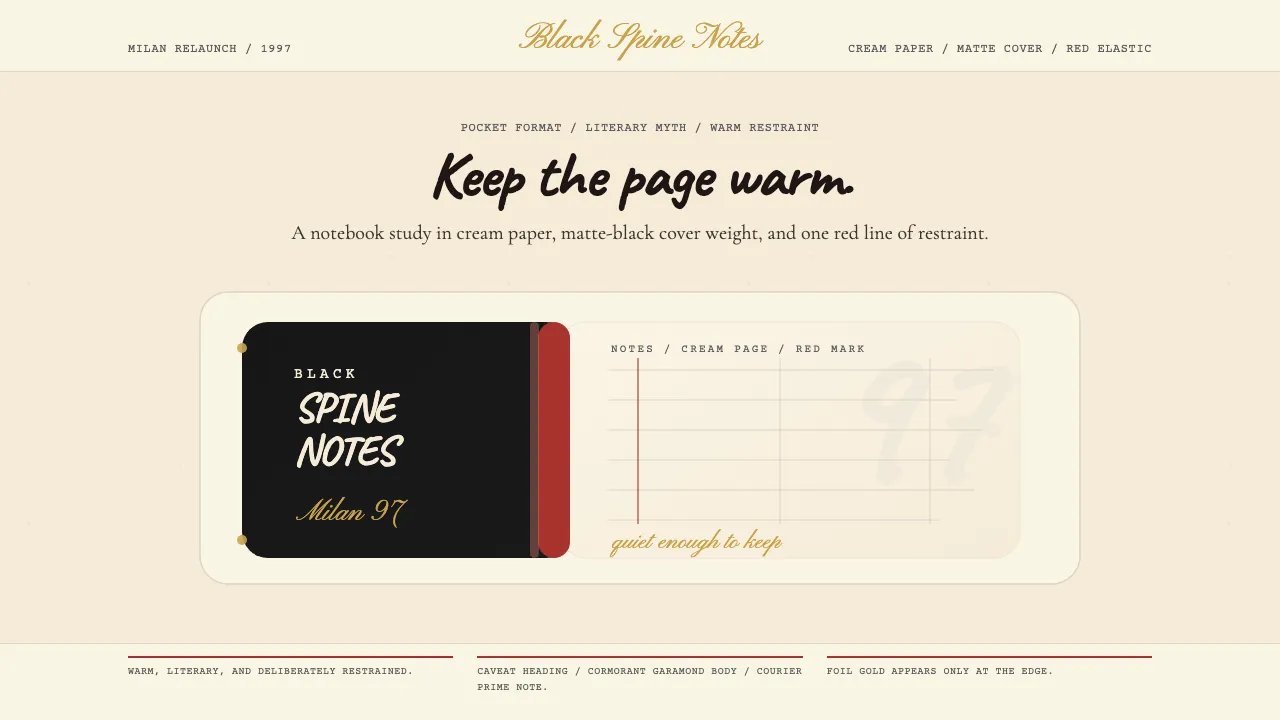
About Moleskine Sketchbook (1997)
The Moleskine sketchbook system captures the quiet dignity of cream paper under a matte-black hardcover — the notebook that became a creative-class talisman after its 1997 Milan relaunch. Handwritten headings meet warm Garamond body text, elastic-red accents punctuate rounded corners, and gold-foil details whisper of Hemingway and Picasso whether or not the lineage is strictly true.
Every surface feels like opening a well-loved notebook: the paper has warmth and fiber, the typography mixes casual brush with classical serif, and the palette stays muted, literary, and restrained.
- Origin
- Milan, Italy
- Era
- 1997 relaunch by Modo&Modo Milan; visual identity through 2024
- Key figures
- Bruce Chatwin · Maria Sebregondi · Francesco Franceschi
- Movements
- late-1990s revival-product branding · creative-class object marketing · Bruce Chatwin nostalgia commercialism
Moleskine Sketchbook (1997) design spec
Colors
Typography
The other 11 sections — buttons, cards, spacing, motion, techniques and more — open once you unlock. Download the DESIGN.md or send it to your AI in one click. Unlock once, yours forever.
Sign up nowStyles similar to Moleskine Sketchbook (1997)
Also inspired by brands & products, with a close feel.
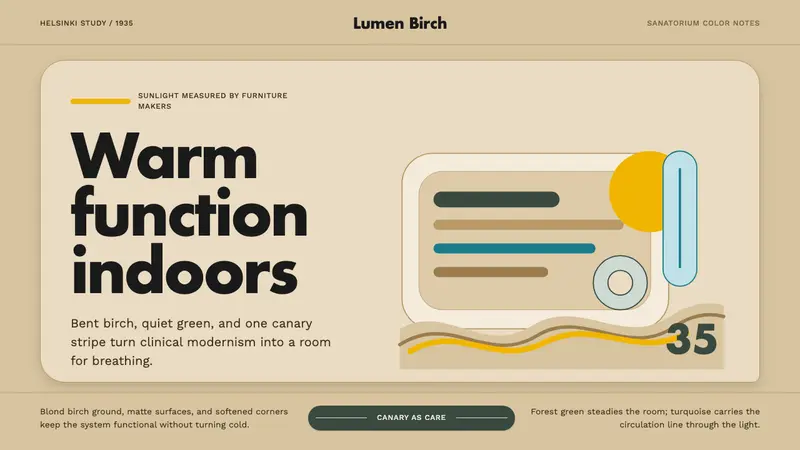 Aalto Finnish ModernModernism made humane. Birch fields, canary yellow, and soft plywood curves bring sun inside.
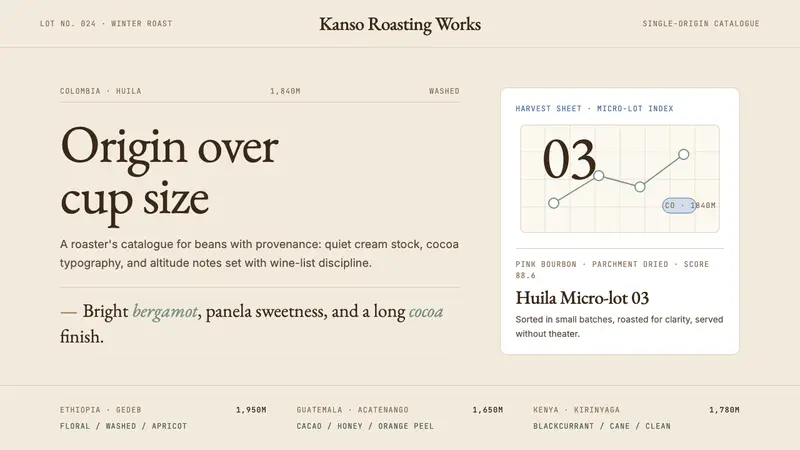 Third Wave CoffeeCoffee as catalogue. Cream paper, cocoa serif, mono origin specs, one sage note.
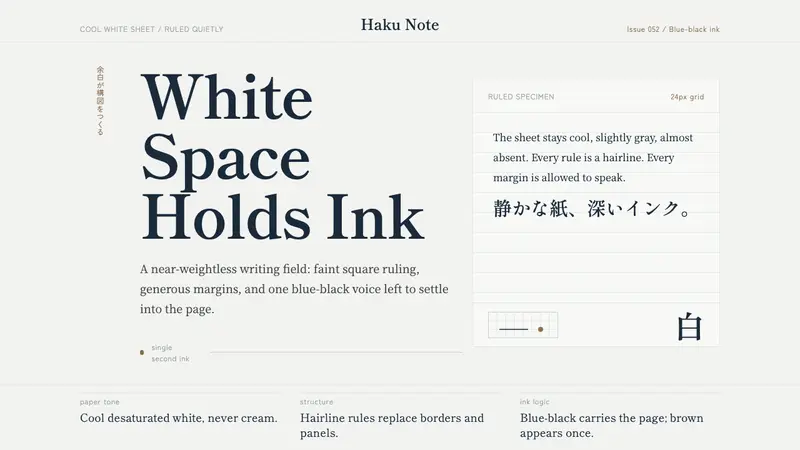 Japanese StationeryNear-weightless restraint. Pale gray grid and blue-black Mincho type hold the silence.
 AllbirdsSustainability that breathes. Cream-and-sage tones, carbon labels next to prices, never preachy.