About Martinique Madras
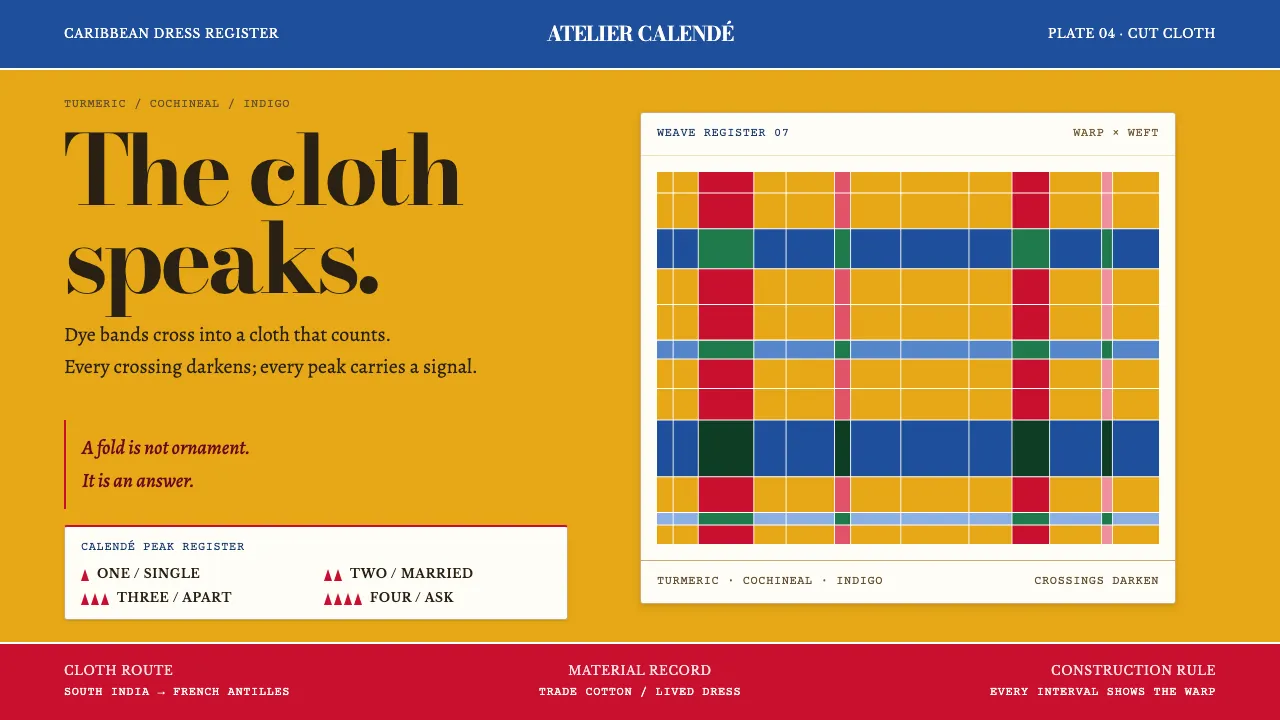
Madras is a woven fact before it is a pattern. Cotton dyed with turmeric, cochineal and indigo left South India as trade cloth and became the everyday dress of the French Antilles — the grande robe créole, its foulard, and above all the calendé headtie folded into peaks.
The peaks counted: one for single, two for married, three for widowed or divorced, four for open to whoever asked. This system takes that seriously. Bands of unequal width cross at right angles, hairline white rules the intervals, and every intersection sits darker than either band that made it.
- Origin
- Martinique and Guadeloupe, French Antilles; cloth woven in Madras (Chennai), South India
- Era
- 18th–19th century trade cloth and Creole dress; carried into 20th–21st century festival and heritage wear
- Key figures
- Antillean Creole women who codified the tête calendée · Smithsonian NMAAHC (Guadeloupe madras headdress, 2015.153)
- Movements
- Indian Ocean cotton trade into the Caribbean · Antillean Creole dress · the calendé knot code
Martinique Madras design spec
Colors
Typography
The other 11 sections — buttons, cards, spacing, motion, techniques and more — open once you unlock. Download the DESIGN.md or send it to your AI in one click. Unlock once, yours forever.
Sign up nowStyles similar to Martinique Madras
Also inspired by crafts & folk art, with a close feel.
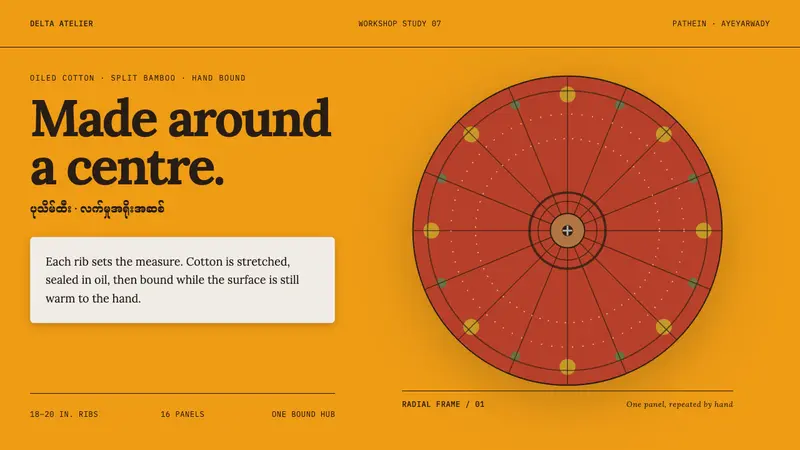 Pathein ParasolCraft radiates from the centre. Saffron cotton, lacquer red and bamboo ribs set the rhythm.
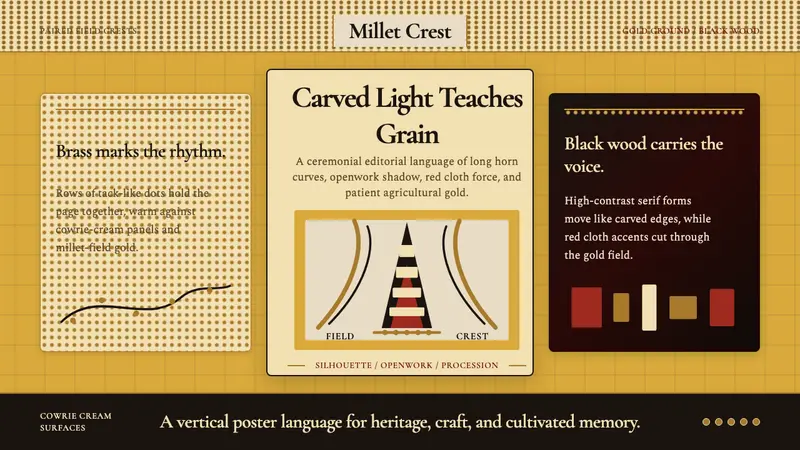 Bambara Chi Wara AntelopeCarved memory in gold. Black serif silhouettes and brass-dot borders carry the field ritual.
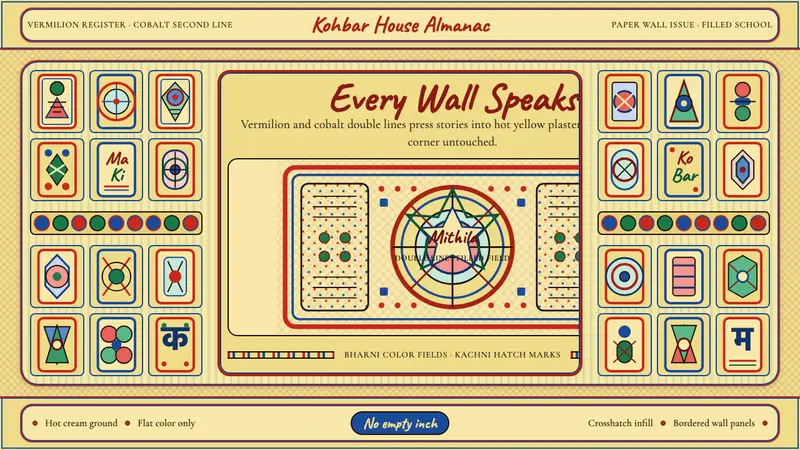 Madhubani Mithila (Bharni & Kachni)Refuses empty space. Hot cream-yellow, Caveat lettering, double cobalt-vermilion frames.
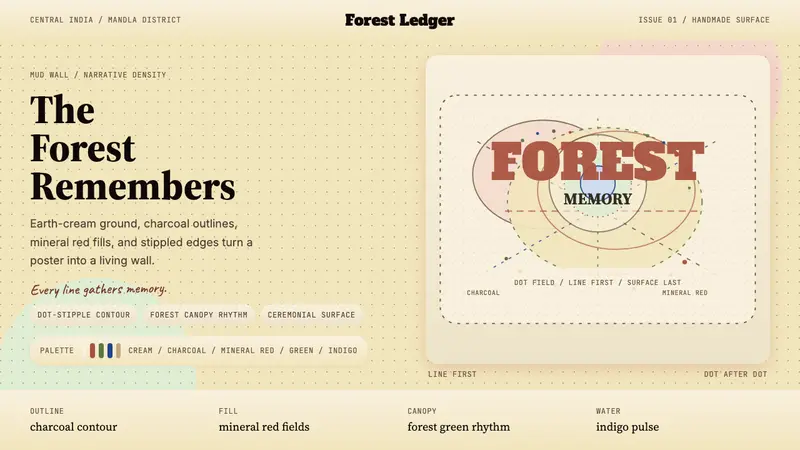 Gond Tribal Art (Madhya Pradesh)The wall becomes a forest. Earth-cream, charcoal, and stippled red make it ceremonial.