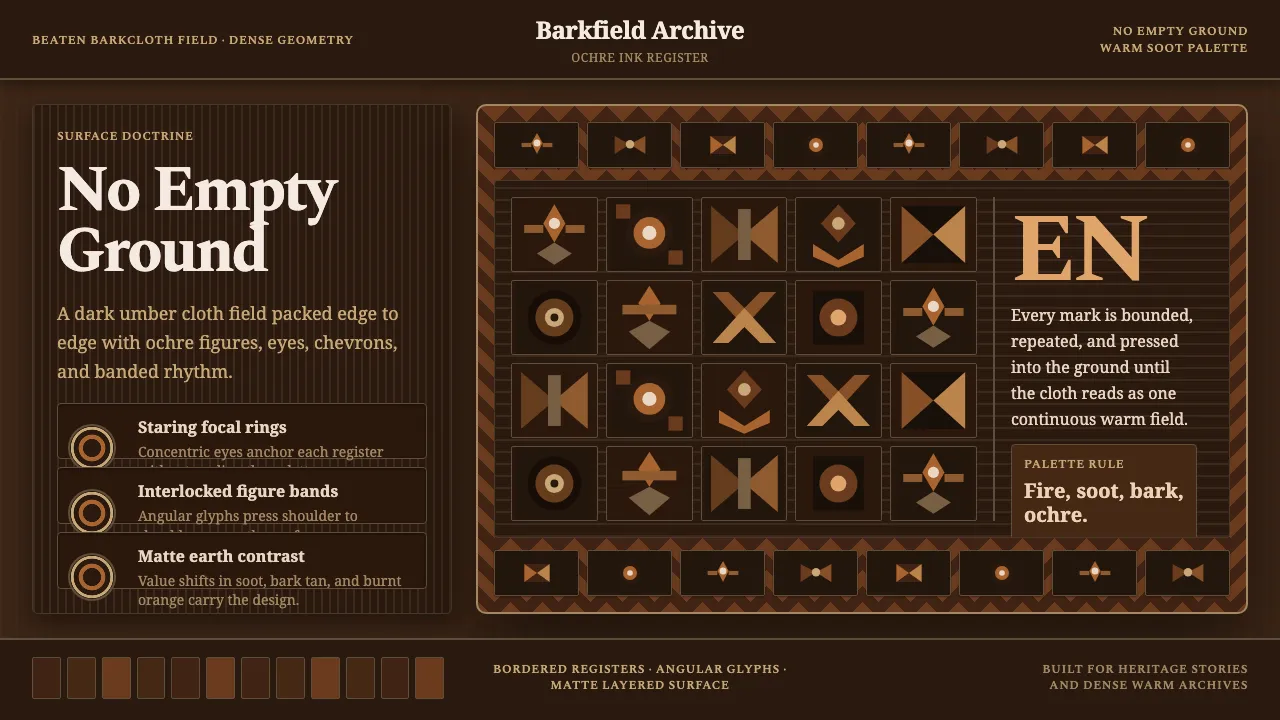
About Marquesan Enata Tapa Motif
On Fatu Hiva, sheets of beaten mulberry-bark cloth were transformed into dense fields of *enata* — repeating human figures — and staring tiki eyes, inked in ochre and soot directly onto the dark, fibrous ground. Nothing was left empty: chevrons, bands and figures interlock edge to edge across the cloth.
The palette came entirely from what the island offered — burnt earth ochres, plant soot, tree saps — worked into browns, blacks, oranges, reds and yellows over a barkcloth ground that reads as deep umber, never pale. This design system carries that same density and warmth into digital surfaces: a dark bark-brown field worked over with continuous ochre-brown geometry.
- Origin
- Marquesas Islands, French Polynesia (Fatu Hiva)
- Era
- pre-1900 (traditional Marquesan tapa production)
- Key figures
- Marquesan tapa beaters · Marquesan motif painters
- Movements
- Polynesian tapa (barkcloth) tradition · enata / tiki iconography
Marquesan Enata Tapa Motif design spec
Colors
Typography
The other 11 sections — buttons, cards, spacing, motion, techniques and more — open once you unlock. Download the DESIGN.md or send it to your AI in one click. Unlock once, yours forever.
Sign up nowStyles similar to Marquesan Enata Tapa Motif
Also inspired by crafts & folk art, with a close feel.
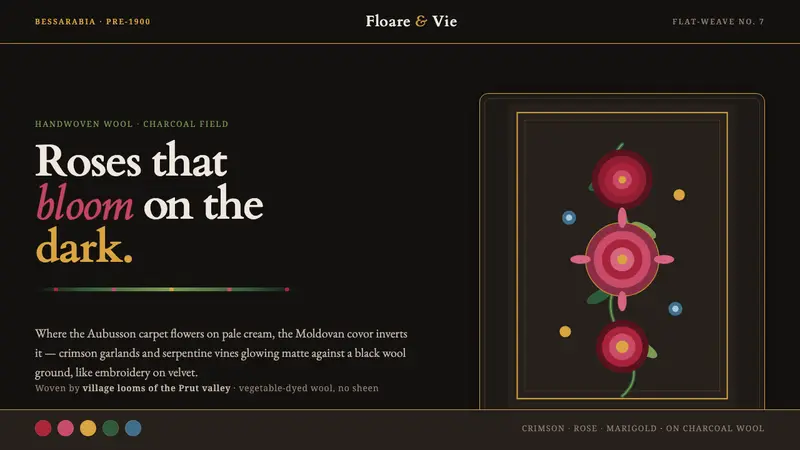 Moldovan Covor KilimRoses that bloom on the dark. Crimson garlands glow matte on a charcoal wool field, gold-fringed.
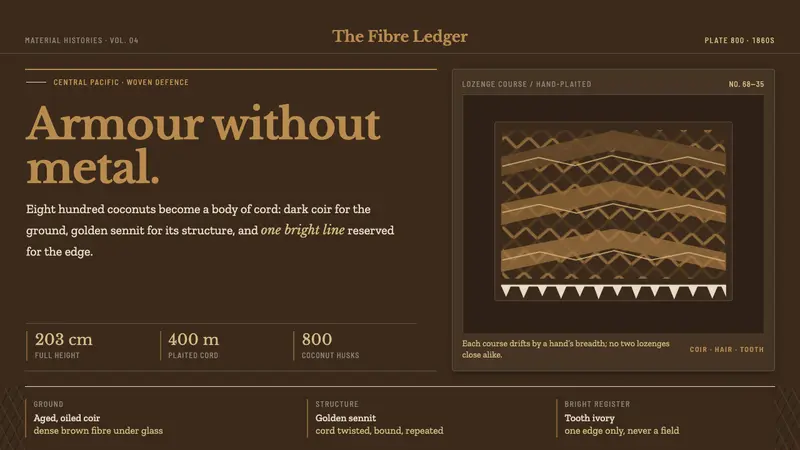 Kiribati Coconut ArmorArmour without metal. Dark coir, golden sennit and one disciplined tooth-ivory edge.
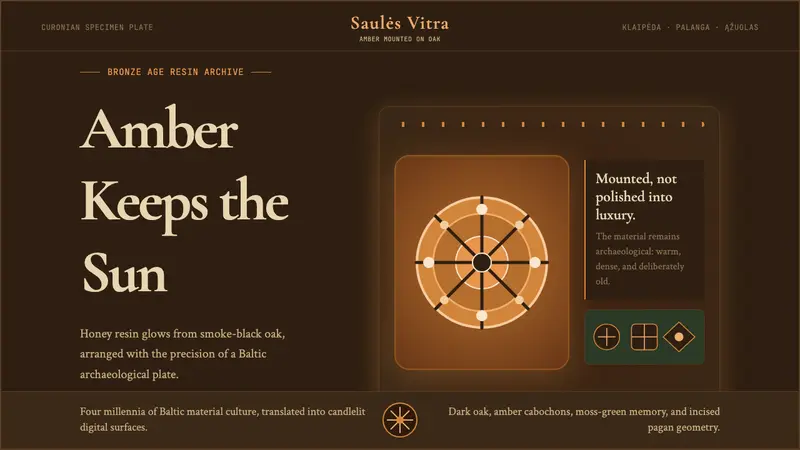 Lithuanian Amber (Baltic Pagan)Ancient amber glows. Honey resin on smoked oak, framed by saulė geometry.
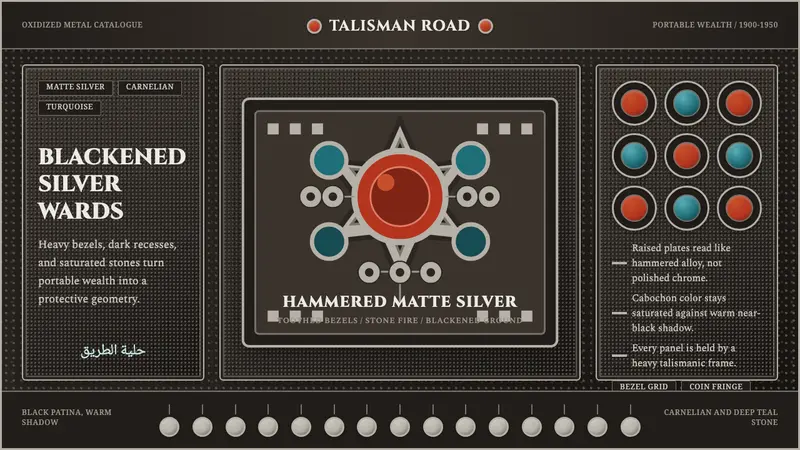 Kuchi Nomad Silver JewelryWeight becomes protection. Matte silver frames carnelian and teal stones on black patina.