About Lithuanian Amber (Baltic Pagan)
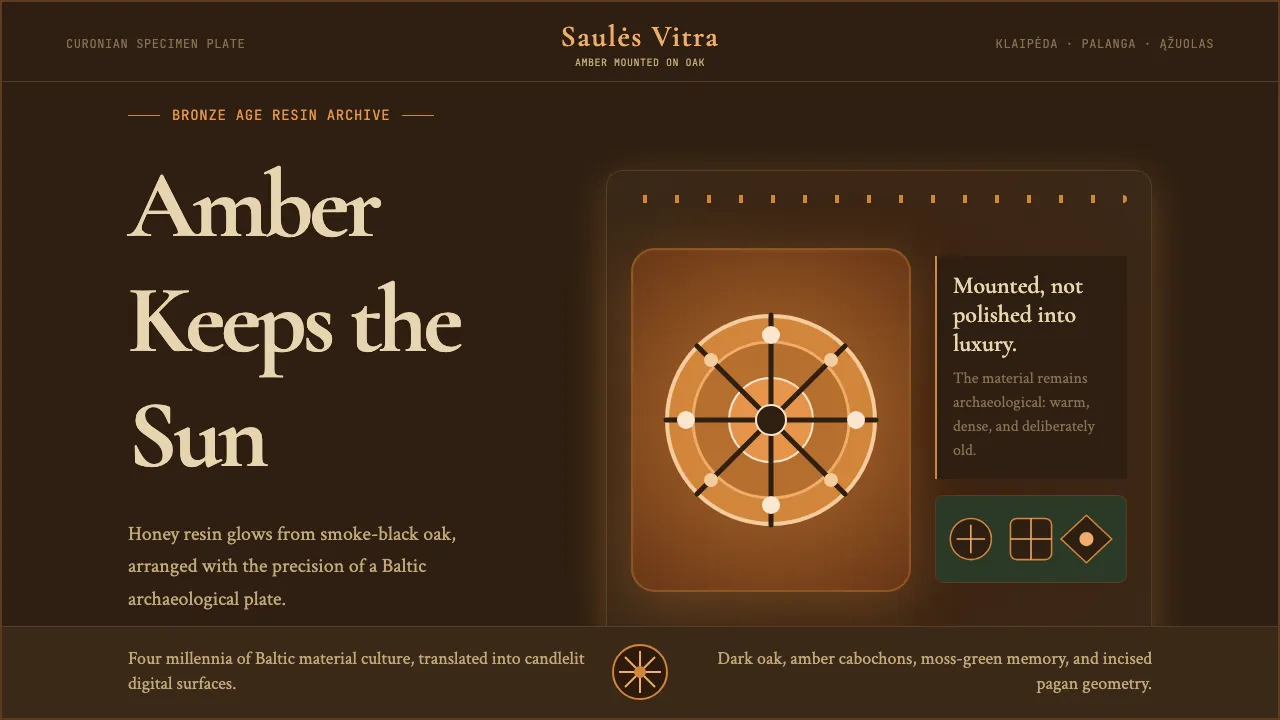
Lithuanian amber design draws from four thousand years of Baltic material culture — fossilized Eocene resin carved into sun-cross pendants, serpent amulets, and oak totems by Europe's last pagan civilization. The visual language places warm honey-amber against smoke-blackened oak, recalling archaeological specimen plates and Čiurlionis's symbolist paintings.
This system channels the Lithuanian national revival's rediscovery of pre-Christian iconography: the eight-radial saulė sun wheel, the sacred žaltys serpent, and the deep-forest greens of the Curonian Spit. Every surface feels like polished amber mounted on ancient hardwood.
- Origin
- Lithuania (Klaipėda, Palanga, Curonian Spit)
- Era
- 3rd millennium BCE amber trade; pre-Christian Balt period (until 1387); 19th–20th c. national revival
- Key figures
- Mikalojus Konstantinas Čiurlionis · Marija Gimbutas · Jonas Basanavičius · Palanga amber masters
- Movements
- Baltic pagan vernacular · Lithuanian National Romantic Revival · Čiurlionis symbolist movement
Lithuanian Amber (Baltic Pagan) design spec
Colors
Typography
The other 11 sections — buttons, cards, spacing, motion, techniques and more — open once you unlock. Download the DESIGN.md or send it to your AI in one click. Unlock once, yours forever.
Sign up nowStyles similar to Lithuanian Amber (Baltic Pagan)
Also inspired by crafts & folk art, with a close feel.
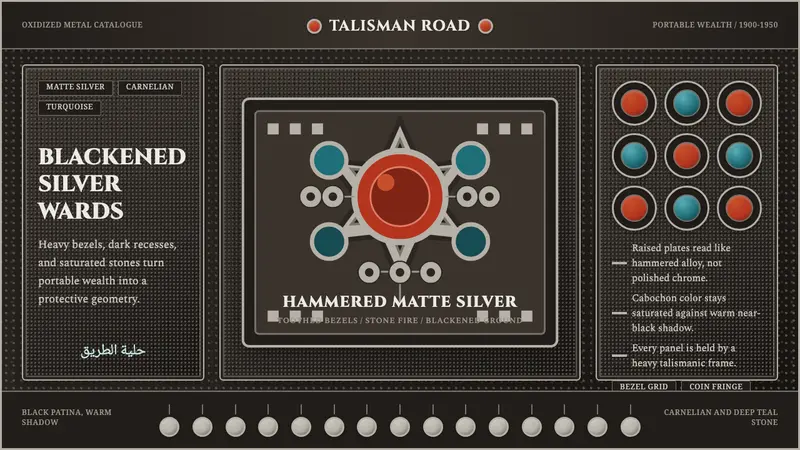 Kuchi Nomad Silver JewelryWeight becomes protection. Matte silver frames carnelian and teal stones on black patina.
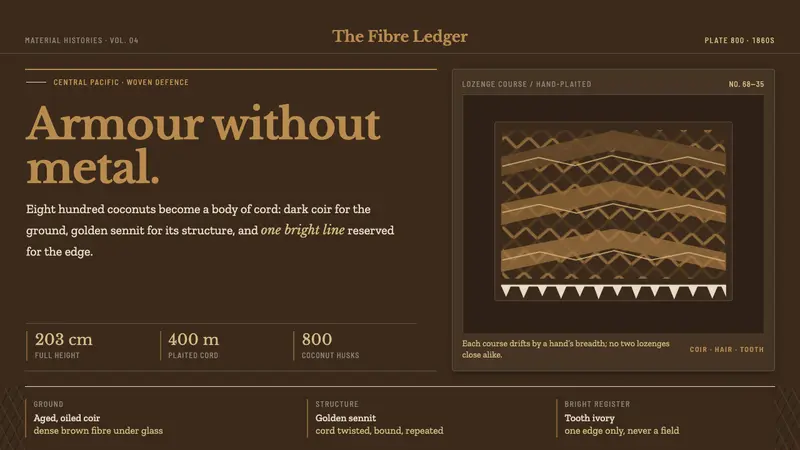 Kiribati Coconut ArmorArmour without metal. Dark coir, golden sennit and one disciplined tooth-ivory edge.
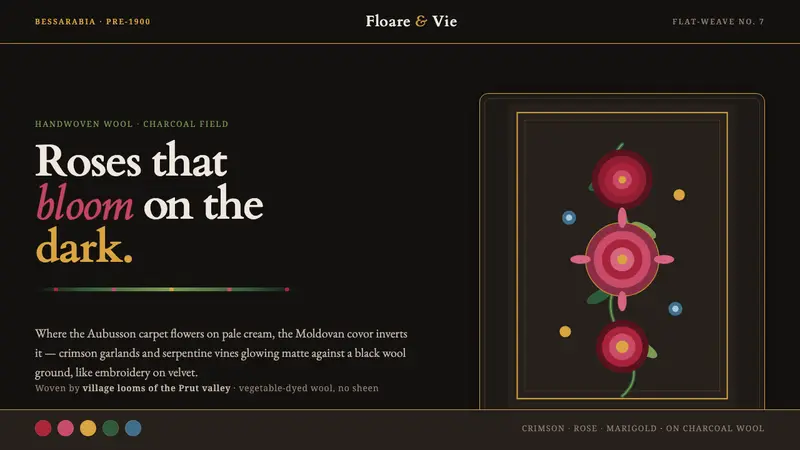 Moldovan Covor KilimRoses that bloom on the dark. Crimson garlands glow matte on a charcoal wool field, gold-fringed.
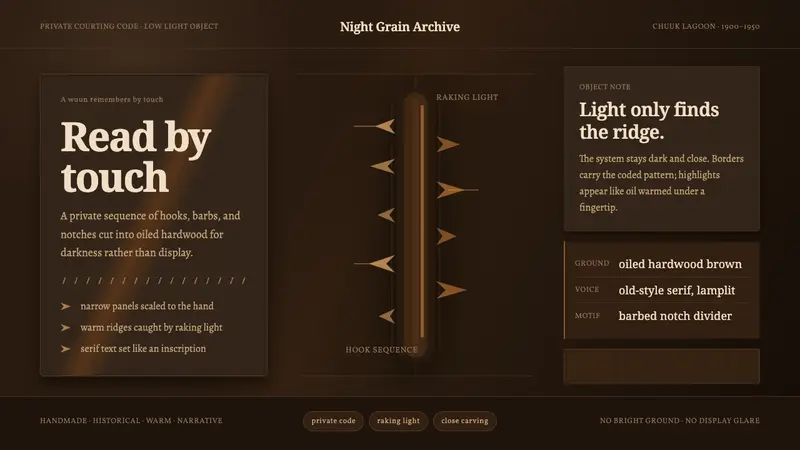 Chuukese Love Stick CarvingIntimacy carved for darkness. Oiled brown grain and hook-notches read by raking light.