About Maronite Qadisha
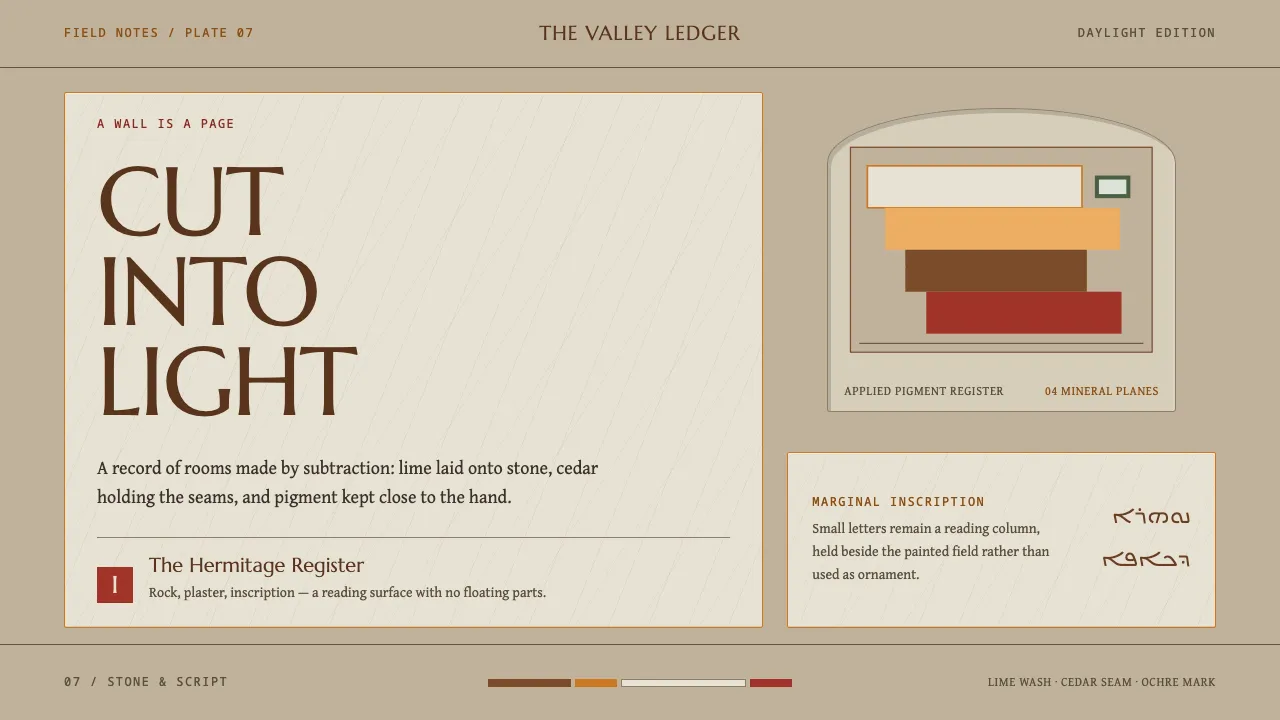
Maronite Qadisha takes its surfaces from the hermitages cut into the limestone gorge of Lebanon's Holy Valley: cells and chapels hollowed from rock, skimmed with lime plaster, painted with ochre and hematite figures, and annotated in small Syriac letters that run beside the images.
The system works in mineral values only — buff-grey cut stone as ground, cedar heartwood brown for structure, lime wash for the plastered panels that carry text. Nothing floats. Every element is either cut into the wall or laid onto it, and the layout steps down the page like the valley's dry-stone terraces.
- Origin
- Ouadi Qadisha, Bsharri and Zgharta districts, North Lebanon
- Era
- monastic occupation from the 7th century; surviving rock-cut chapels and wall paintings 12th–17th century; UNESCO inscription 1998
- Key figures
- Estephan El Douaihy · Erica Cruikshank Dodd
- Movements
- Syriac Christian eremitic monasticism · rock-cut ecclesiastical architecture · medieval Levantine fresco painting
Maronite Qadisha design spec
Colors
Typography
The other 11 sections — buttons, cards, spacing, motion, techniques and more — open once you unlock. Download the DESIGN.md or send it to your AI in one click. Unlock once, yours forever.
Sign up nowStyles similar to Maronite Qadisha
Also inspired by architecture & places, with a close feel.
 Estonian Limestone GrayStone keeps its silence. Limestone grays, blackletter, and dry-laid bands carry the weight.
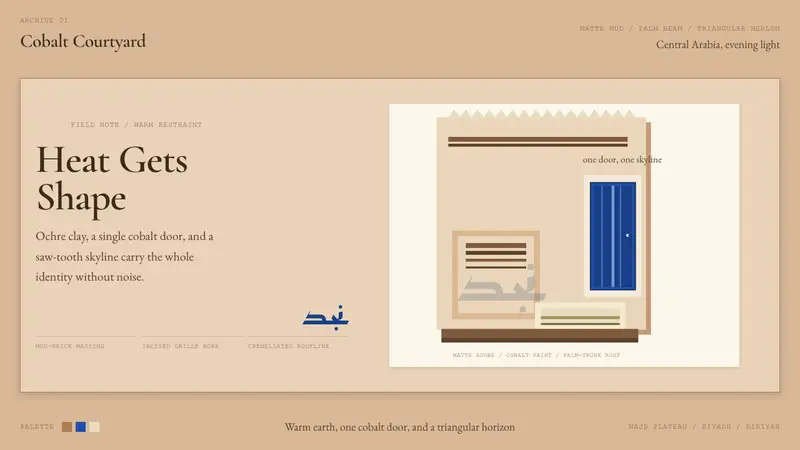 Saudi Najdi Vernacular ArchitectureHeat gets shape. Ochre clay, a single cobalt door, and a saw-tooth skyline.
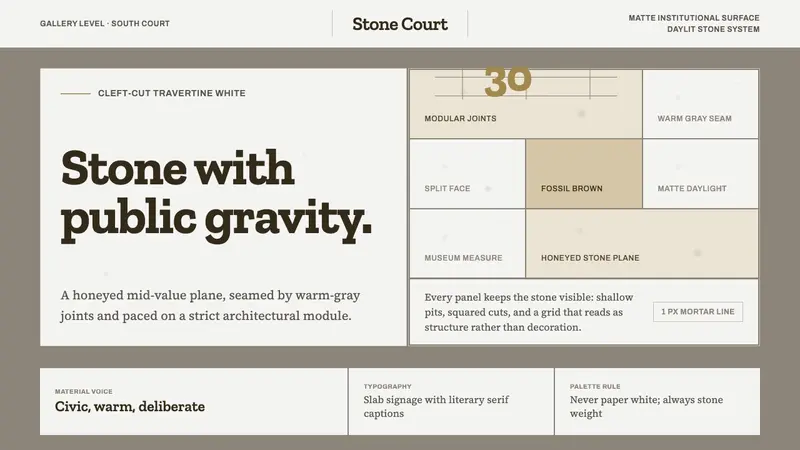 Getty Center Travertine WhiteStone has gravity. Honeyed travertine planes are cut by warm-gray modular seams.
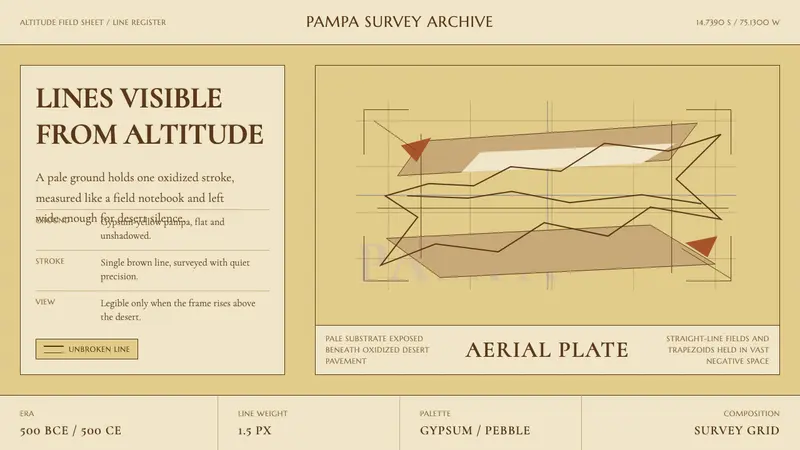 Peruvian Nazca Lines (Geoglyph)Vastness holds the line. Gypsum ground, pebble-brown strokes, and survey-grid silence.