About Joseon Moon Jar
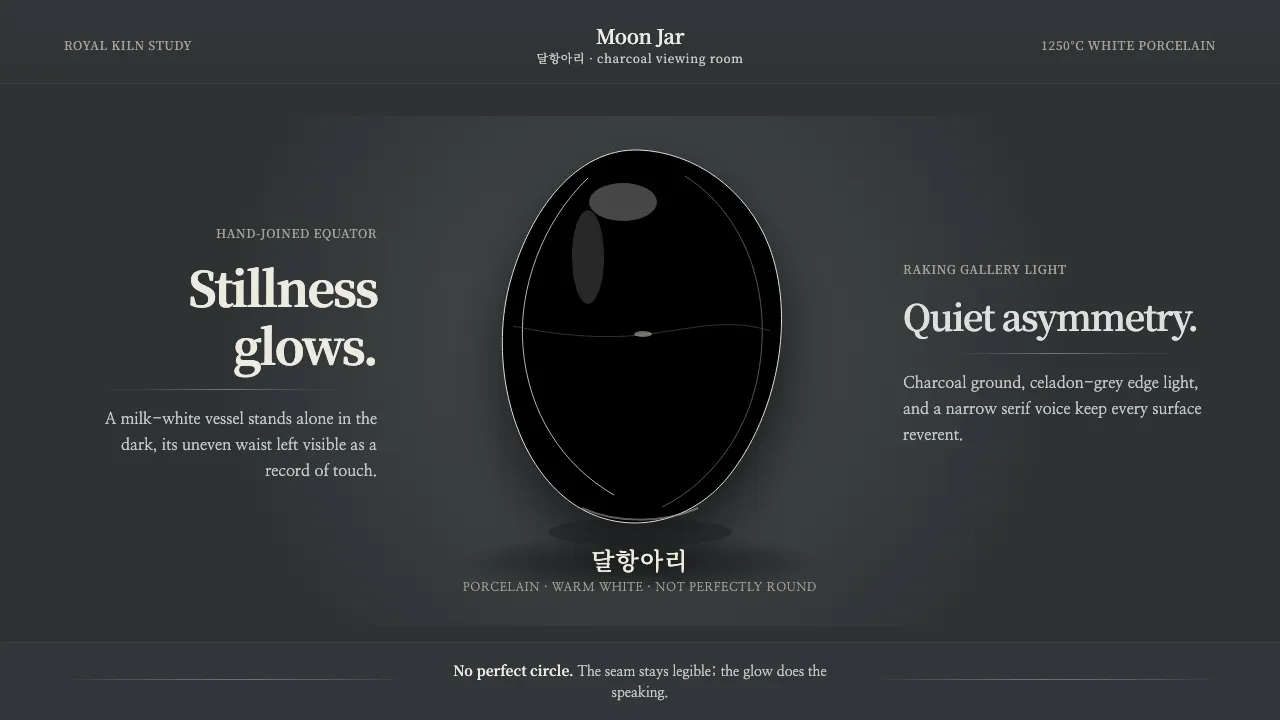
The Joseon moon jar, or dalhangari, is a white-porcelain vessel thrown in two hemispheres on the wheel and joined by hand at the equator — a seam left visible rather than hidden, because perfection was never the point. Fired above 1250°C from iron-free kaolin, the glaze settles into a warm milk-white that shifts toward pale celadon-blue-grey wherever light rakes across its irregular curve.
Museums present these jars against deep charcoal grounds, isolated in the dark so the glaze seems to emit its own soft light. This design system carries that presentation forward: a near-black stage, a single luminous form, and the quiet asymmetry of a shape made by hand, not mold.
- Origin
- Korea
- Era
- 17th–18th century (Joseon dynasty); pre-1900
- Key figures
- Anonymous Bunwon royal-kiln potters
- Movements
- Joseon white porcelain (baekja) · Confucian austerity aesthetics
Joseon Moon Jar design spec
Colors
Typography
The other 11 sections — buttons, cards, spacing, motion, techniques and more — open once you unlock. Download the DESIGN.md or send it to your AI in one click. Unlock once, yours forever.
Sign up nowStyles similar to Joseon Moon Jar
Also inspired by crafts & folk art, with a close feel.
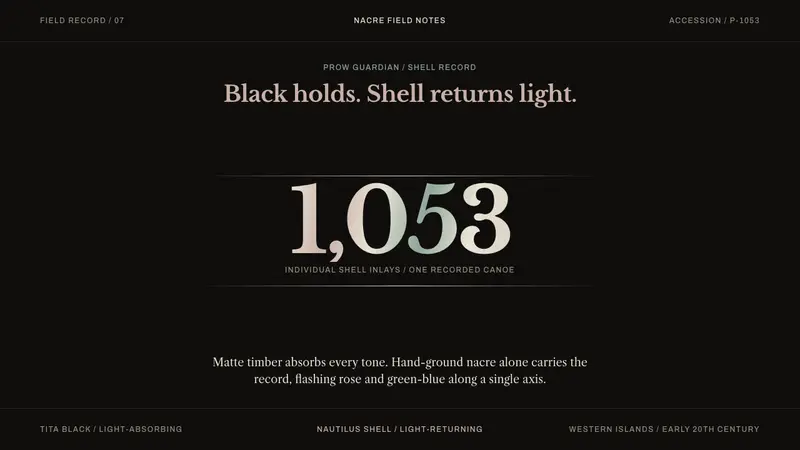 Solomon Islands NguzunguzuBlack swallows light; nacre gives it back. Rose and green-blue flashes hold a strict central axis.
 Yapese Stone Money (Micronesia)Monumental stillness. Limestone type and one circular void sit inside warm black shadow.
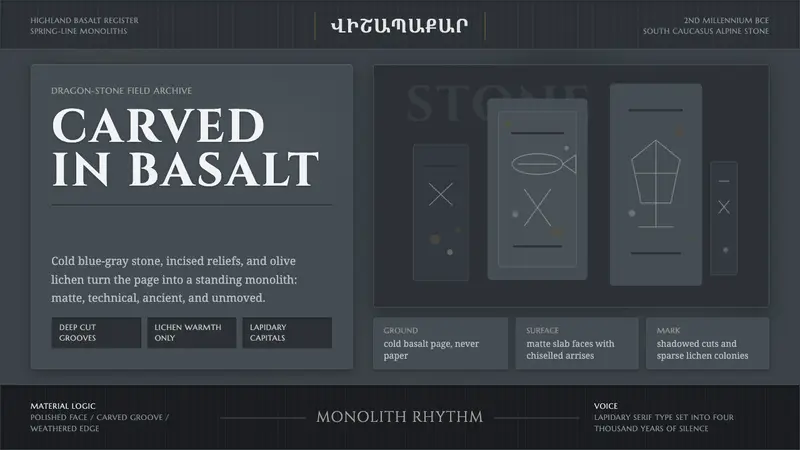 Armenian Vishapakar Dragon StoneAncient, cold, unmoved. Basalt gray slabs, incised grooves, sparse olive lichen.
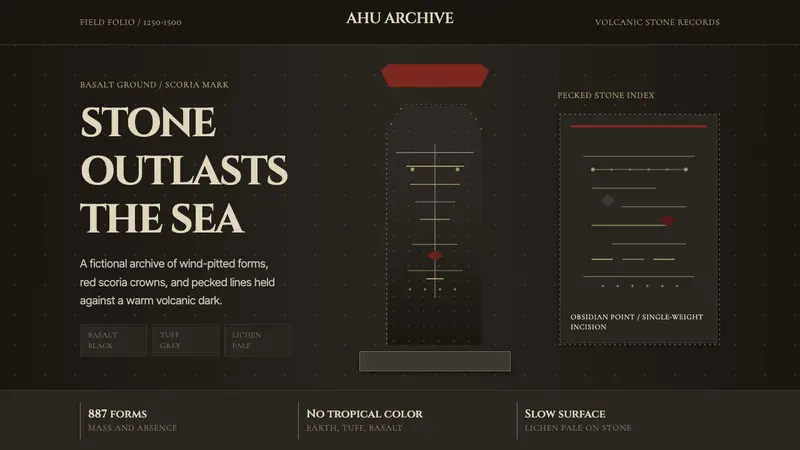 Rapa Nui Moai PetroglyphMonumental sparseness. Basalt black, scoria red, and pecked-dot borders hold the silence.