About Armenian Vishapakar Dragon Stone
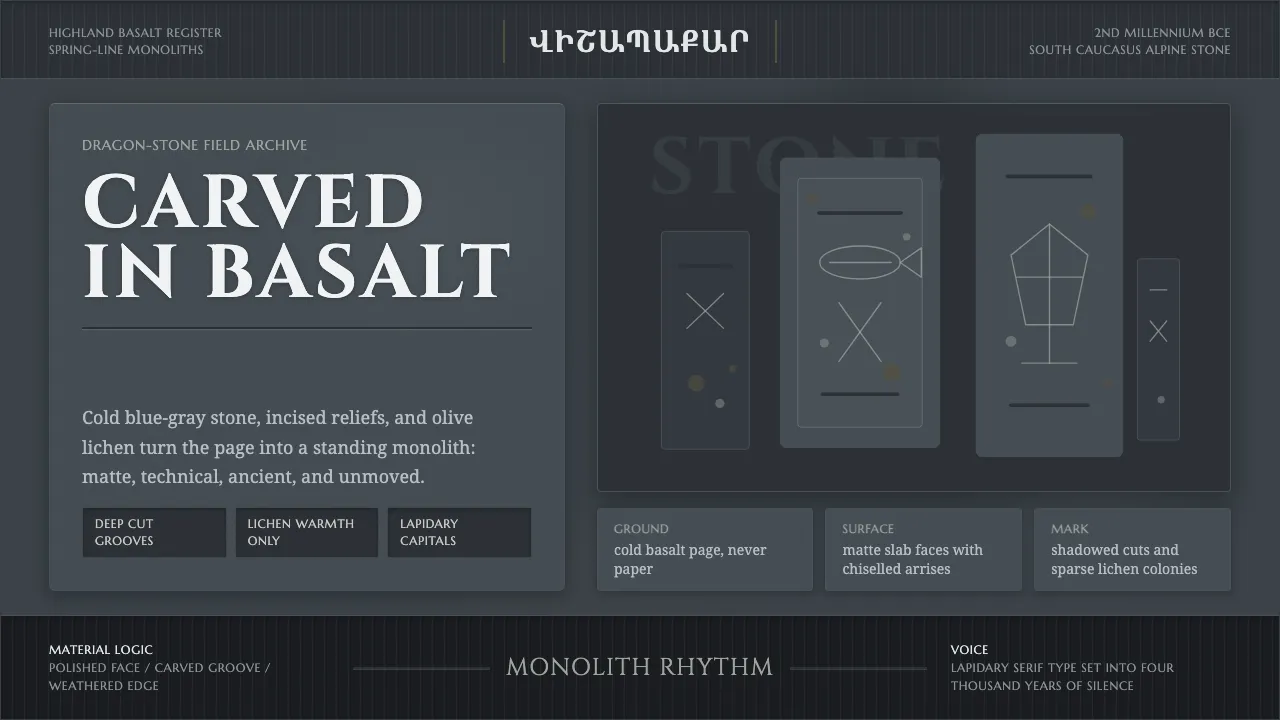
Vishapakar — "dragon stones" — are Bronze-Age basalt and andesite megaliths standing 1.1 to 5.5 metres tall in the high alpine pastures of the Armenian Highland. Carved by prehistoric stone-workers in the second millennium BCE, they bear incised fish forms and stretched bull-hide motifs, weathered by four thousand years of highland wind and lichen.
This design system translates the monolith into interface: a cold blue-gray basalt ground, matte chiselled surfaces, deep carved-groove lines catching shadow, olive-tan lichen as the only warmth, and lapidary serif type set like inscriptions on polished stone faces.
- Origin
- Armenian Highland, South Caucasus (Eastern Europe / West Asia alpine pastures)
- Era
- Bronze Age — 2nd millennium BCE megalithic tradition
- Key figures
- Prehistoric stone-carvers of the Armenian Highland vishap tradition
- Movements
- Vishapakar (dragon-stone) stelae · Bronze-Age megalithic rock carving
Armenian Vishapakar Dragon Stone design spec
Colors
Typography
The other 11 sections — buttons, cards, spacing, motion, techniques and more — open once you unlock. Download the DESIGN.md or send it to your AI in one click. Unlock once, yours forever.
Sign up nowStyles similar to Armenian Vishapakar Dragon Stone
Also inspired by crafts & folk art, with a close feel.
 Yapese Stone Money (Micronesia)Monumental stillness. Limestone type and one circular void sit inside warm black shadow.
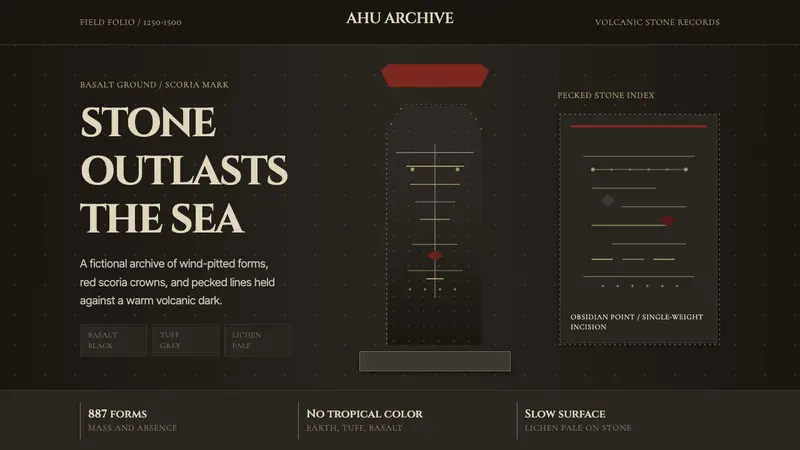 Rapa Nui Moai PetroglyphMonumental sparseness. Basalt black, scoria red, and pecked-dot borders hold the silence.
 Joseon Moon JarQuiet imperfection glows. Milk-white porcelain floats on charcoal with a visible seam.
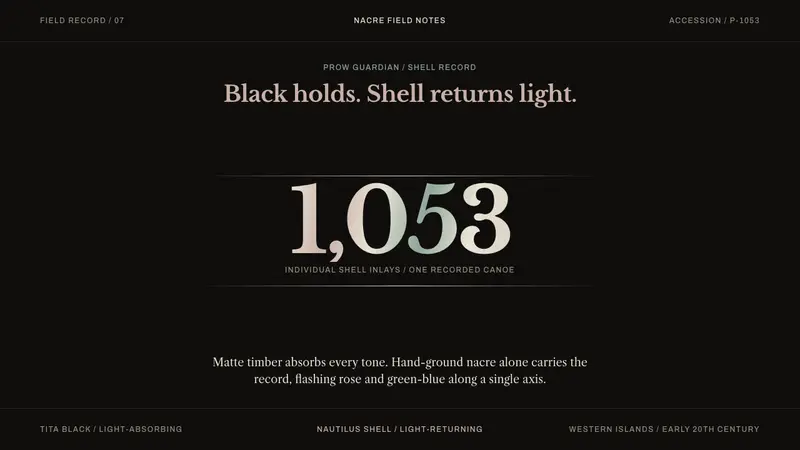 Solomon Islands NguzunguzuBlack swallows light; nacre gives it back. Rose and green-blue flashes hold a strict central axis.