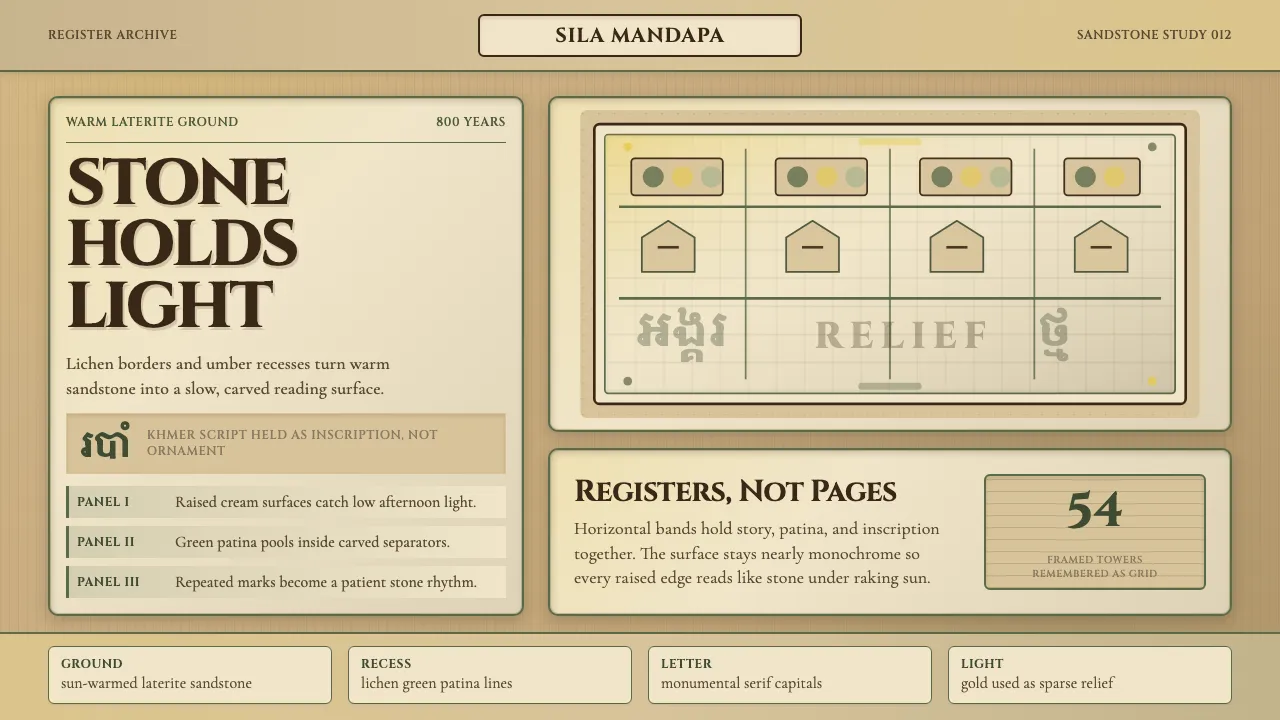
About Khmer Apsara Relief (Bayon)
The Bayon temple at Angkor is a forest of 200 stone faces and 1,500 unique apsara portraits carved into every available sandstone surface. This design system channels that density — warm laterite tan as the dominant ground, lichen-green patina pooling in carved recesses, golden afternoon light catching raised relief. Typography is monumental and serif-carved; layouts stack in horizontal narrative registers like processional friezes.
Eight centuries of tropical weather have given the stone its character: grey-green lichen, deep umber shadow lines, a warm cream where lime-wash survives. The palette is almost monochrome — earth and stone with rare vermilion accent — and the feeling is contemplative weight, not decorative excess.
- Origin
- Cambodia (Angkor, Siem Reap province)
- Era
- 12th–13th century (Bayon temple, Jayavarman VII r. 1181–1218)
- Key figures
- Jayavarman VII · George Cœdès · Philippe Stern · Vittorio Roveda
- Movements
- Khmer Empire Mahayana Buddhist art · Bayon-style stylistics · devata-apsara iconography
Khmer Apsara Relief (Bayon) design spec
Colors
Typography
The other 11 sections — buttons, cards, spacing, motion, techniques and more — open once you unlock. Download the DESIGN.md or send it to your AI in one click. Unlock once, yours forever.
Sign up nowStyles similar to Khmer Apsara Relief (Bayon)
Also inspired by architecture & places, with a close feel.
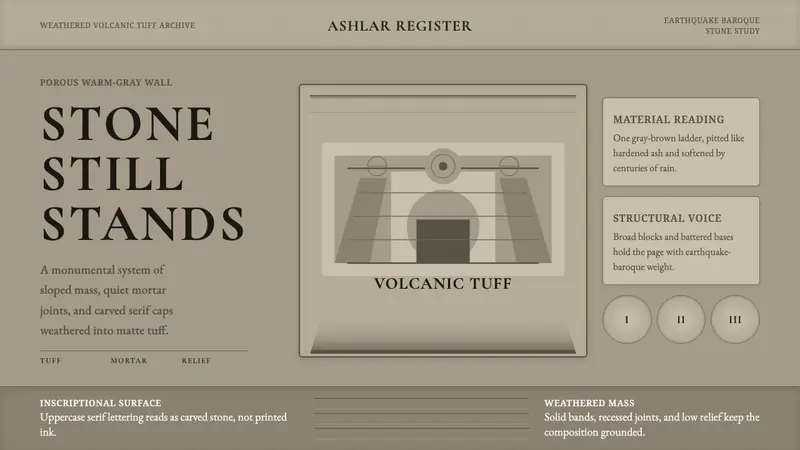 Philippine Adobe TuffStone refuses polish. Warm tuff gray, incised serif caps, and buttress-heavy bands.
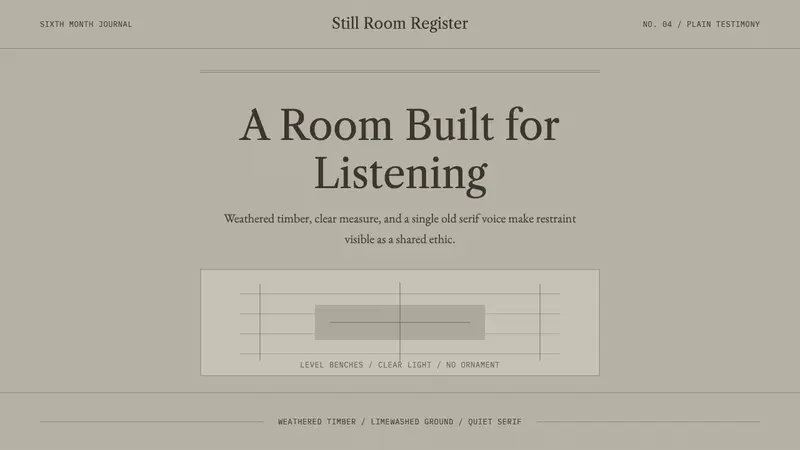 Quaker Plain StyleSilence made visible. Timber gray, Caslon serif, and bench-rule spacing leave only use.
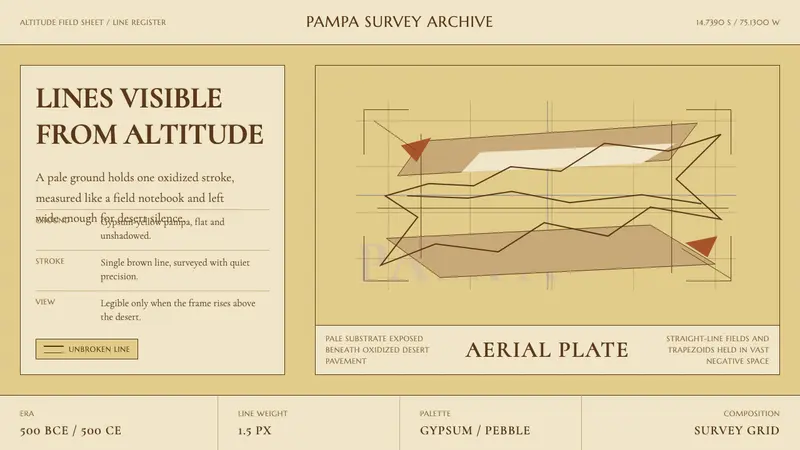 Peruvian Nazca Lines (Geoglyph)Vastness holds the line. Gypsum ground, pebble-brown strokes, and survey-grid silence.
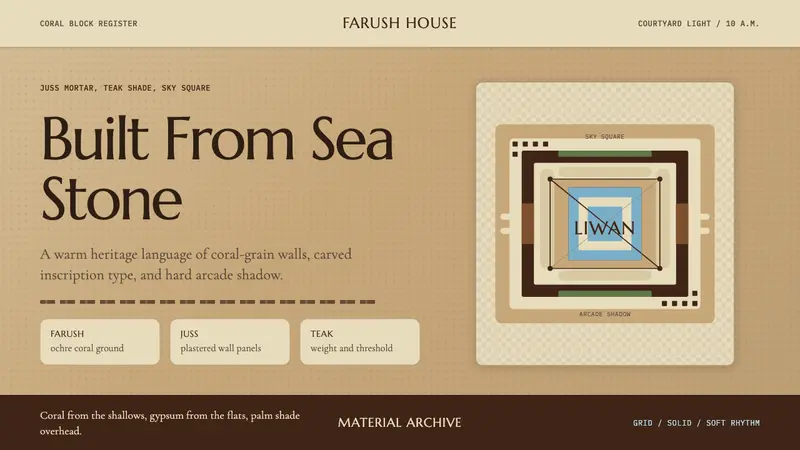 Emirati Bait Al Naboodah Coral HouseFeels built, not styled. Coral ochre, teak brown, and a sky-square courtyard grid.