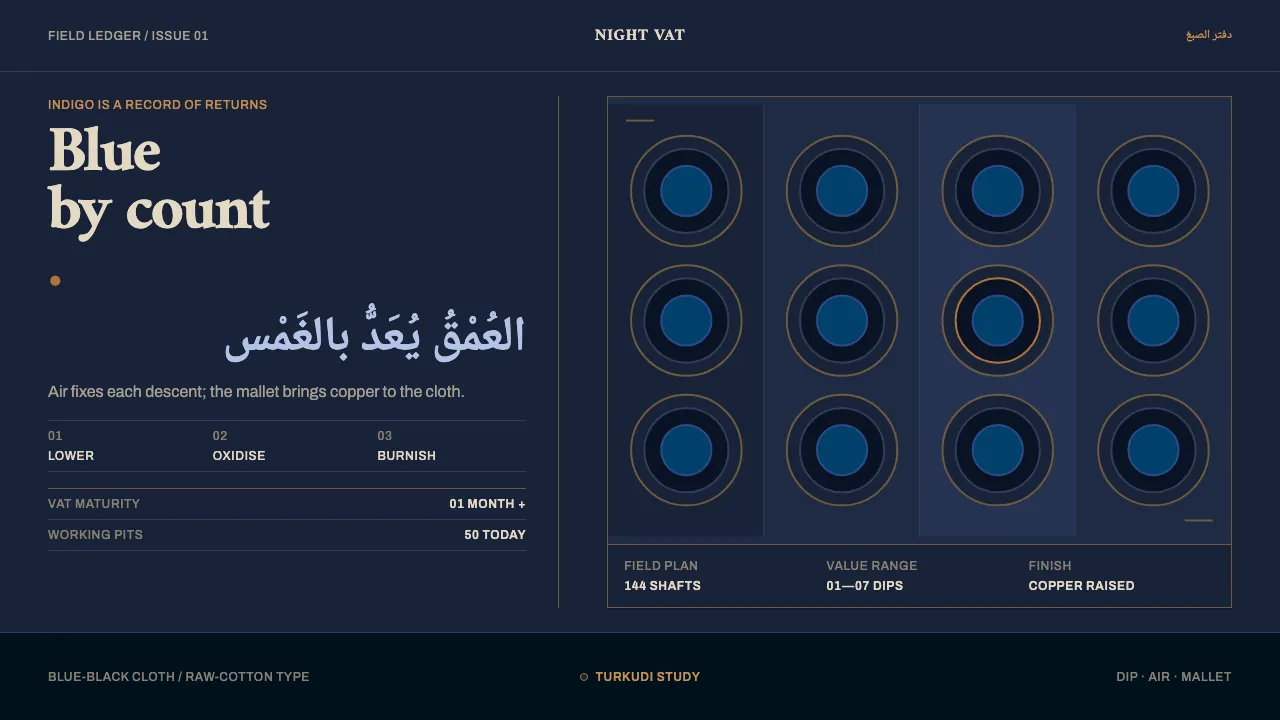
About Kano Indigo Dye Pits
Kofar Mata has been dyeing cloth since 1498. At its peak the field held 144 hand-dug shafts about six feet deep; roughly fifty are still in daily use. The vat is natural indigo with ash and potash, fermented for at least a month, and the knowledge passes down through families.
Depth of blue is a count, not a pattern: dip, oxidise, dip again, until the heaviest cloth goes blue-black with an aubergine cast. Wooden mallets then beat the weave until it throws a coppery, uneven sheen — the mark of genuine Kano turkudi.
- Origin
- Kofar Mata, Kano, northern Nigeria — Hausa land, locally called Marina
- Era
- 1498 to present; the pit field and its dyeing families still working today
- Key figures
- Muhammad Dabosa
- Movements
- Hausa textile craft · Trans-Saharan trade cloth · West African natural indigo dyeing
Kano Indigo Dye Pits design spec
Colors
Typography
The other 11 sections — buttons, cards, spacing, motion, techniques and more — open once you unlock. Download the DESIGN.md or send it to your AI in one click. Unlock once, yours forever.
Sign up nowStyles similar to Kano Indigo Dye Pits
Also inspired by crafts & folk art, with a close feel.
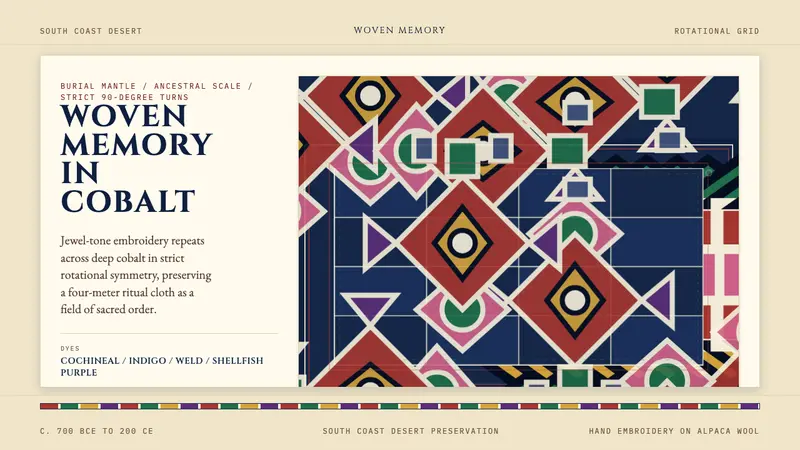 Paracas Andean TextileAncestral and exact. Jewel tones repeat on deep cobalt in strict 90° turns.
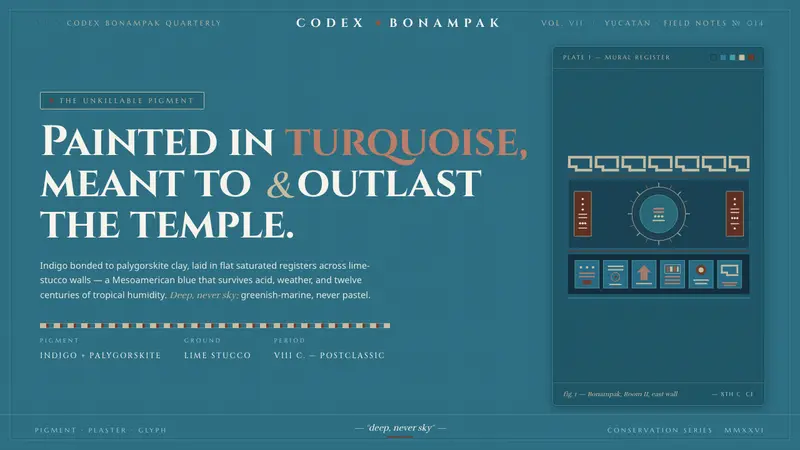 Maya Blue PigmentDeep, never sky. Saturated turquoise mural fields, ochre cartouches, carved-stone serifs.
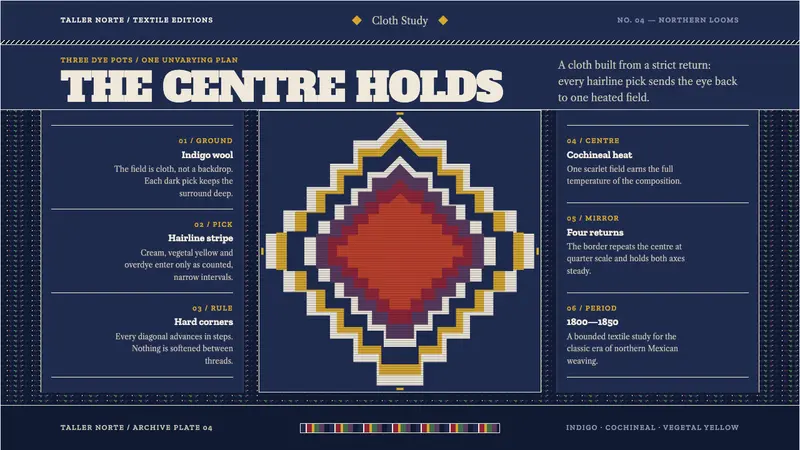 Saltillo SarapeThe centre holds the heat. Indigo hairline stripes frame one cochineal diamond in stepped weave.
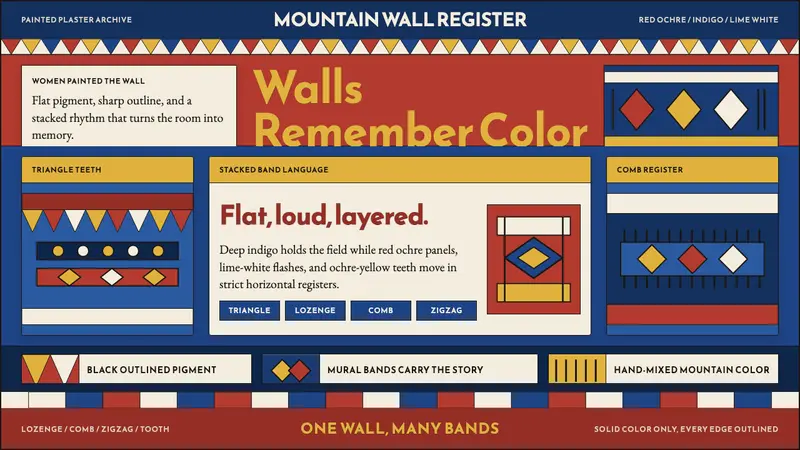 Saudi Asiri Qatt Wall PaintingPainted walls speak loudly. Indigo bands, red triangles, ochre teeth, black outlines.