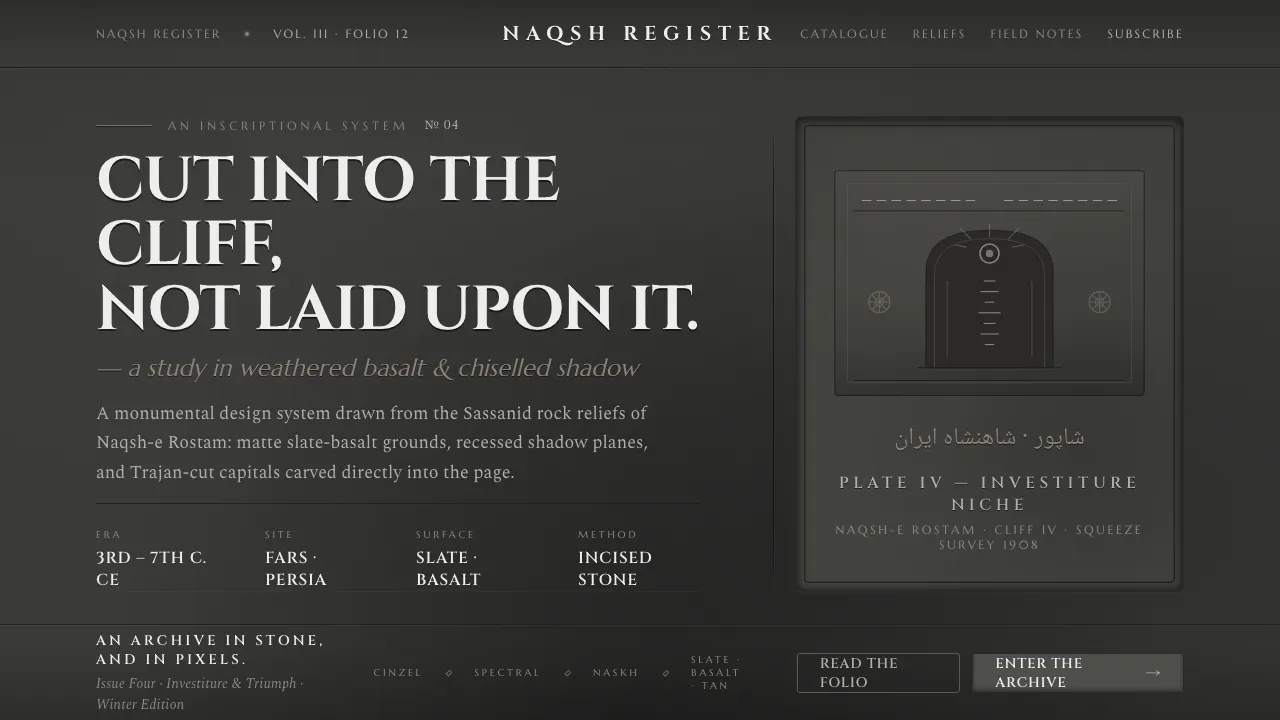
About Iranian Dark Stone Relief
Iranian Dark Stone Relief draws from the carved cliff faces of Naqsh-e Rostam, where Sassanid sculptors cut investiture and victory scenes directly into natural Persian rock. Though once polychrome, the surviving artifact is bare slate-basalt gray — weathered matte, monumental, deeply shadowed.
This system renders that gravity in pixels: charcoal-stone grounds, recessed shadow planes, chiseled inscriptional bands, and Trajan-style monumental caps. Forms read as cut INTO stone, with shadow — not gloss — giving them dimension.
- Origin
- Middle East — Persia / Iran (Naqsh-e Rostam, Fars)
- Era
- pre-1900 (Sassanid Empire, 3rd–7th century CE rock reliefs)
- Key figures
- Shapur I · Sassanid imperial stone carvers
- Movements
- Sassanid rock relief · Persian monumental stone carving
Iranian Dark Stone Relief design spec
Colors
Typography
The other 11 sections — buttons, cards, spacing, motion, techniques and more — open once you unlock. Download the DESIGN.md or send it to your AI in one click. Unlock once, yours forever.
Sign up nowStyles similar to Iranian Dark Stone Relief
Also inspired by art & artists, with a close feel.
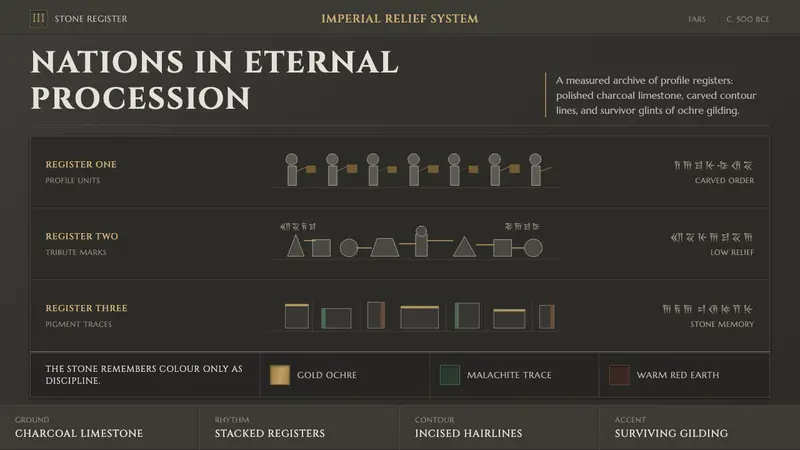 Achaemenid Persepolis ReliefImperial restraint in stone. Charcoal registers carry ochre, green, and red pigment traces.
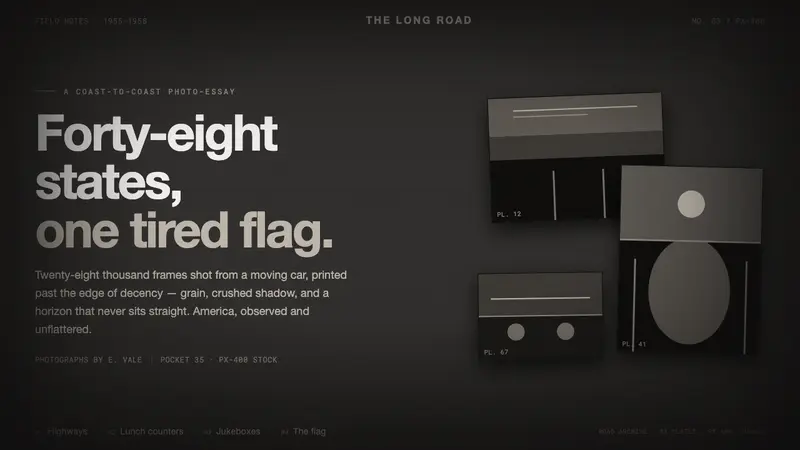 Robert Frank — The AmericansReportage, polish stripped off. Warm sooty charcoal, crushed near-black shadow, grain, tilted frame.
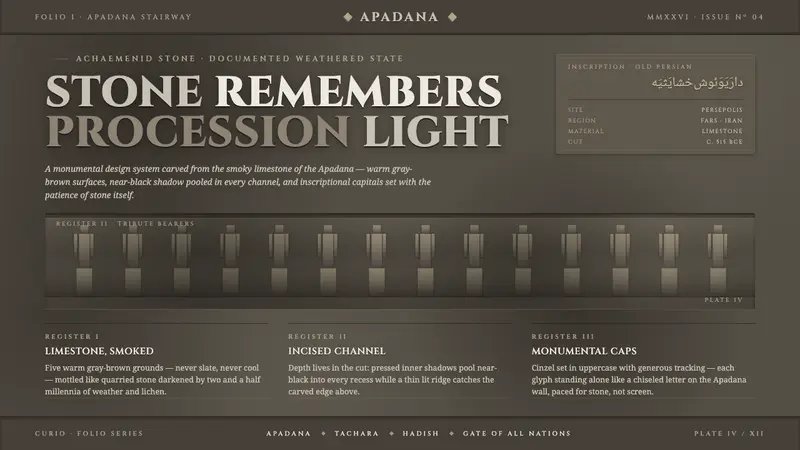 Persian Gray Stone ReliefStone remembers. Smoky weathered limestone, near-black shadow in every channel, Cinzel cut as caps.
 Sogdian FrescoAncient ceremony glows. Cinnabar, lapis and ochre stack into beaded fresco bands.