About Lenca Pottery
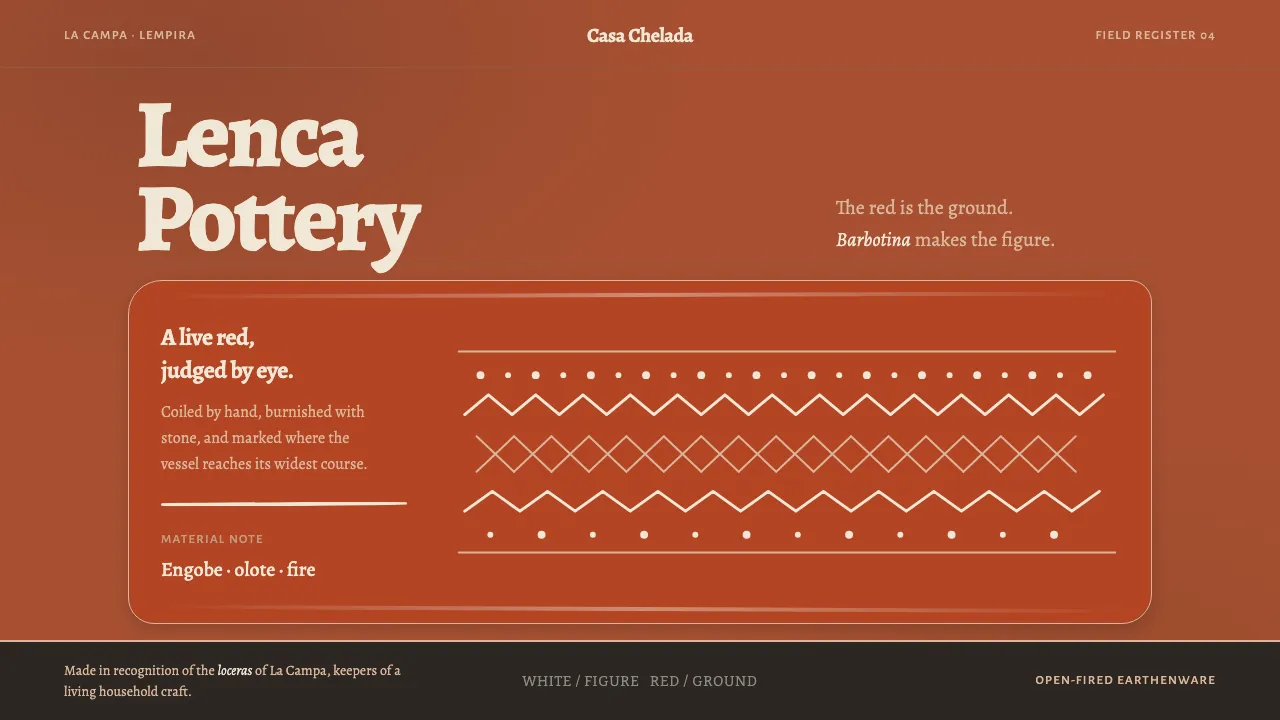
Lenca pottery is built without a wheel. Ropes of clay are coiled up by hand, smoothed with a stone and a stripped corn cob, coated twice or more in red engobe, burnished until the surface holds a low sheen, then open-fired under stones, roof tiles and potsherds with ocote pine. The loceras — the women who own the craft — judge the firing by eye and call it done when the pot is chelado, a live red like an ember.
Onto that red skin they draw in white barbotina, the clay-dust paste they also call mantequilla de barro, using feathers, splinters and fingertips. White is always the figure and red always the ground. This system keeps that relation, keeps the wobble in the line, and keeps the matte, unglazed surface of a working household vessel.
- Origin
- La Campa and the Lenca communities of Lempira, western Honduras
- Era
- pre-1900 in origin, pre-Columbian technique; still practised today
- Key figures
- the loceras of La Campa · the Lenca people of Honduras and El Salvador
- Movements
- Mesoamerican coil-built earthenware · Central American artisanal cooperatives · living-heritage craft
Lenca Pottery design spec
Colors
Typography
The other 11 sections — buttons, cards, spacing, motion, techniques and more — open once you unlock. Download the DESIGN.md or send it to your AI in one click. Unlock once, yours forever.
Sign up nowStyles similar to Lenca Pottery
Also inspired by crafts & folk art, with a close feel.
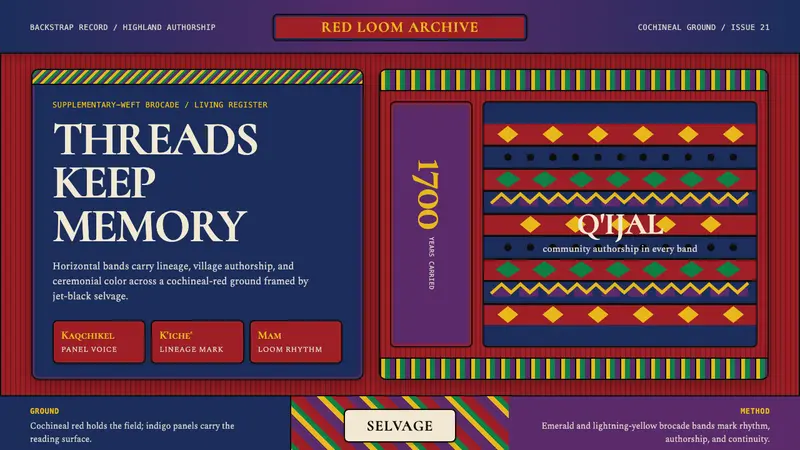 Guatemalan Huipil Maya WeaveMemory is woven dense. Cochineal red, black selvage, and brocade bands hold the page.
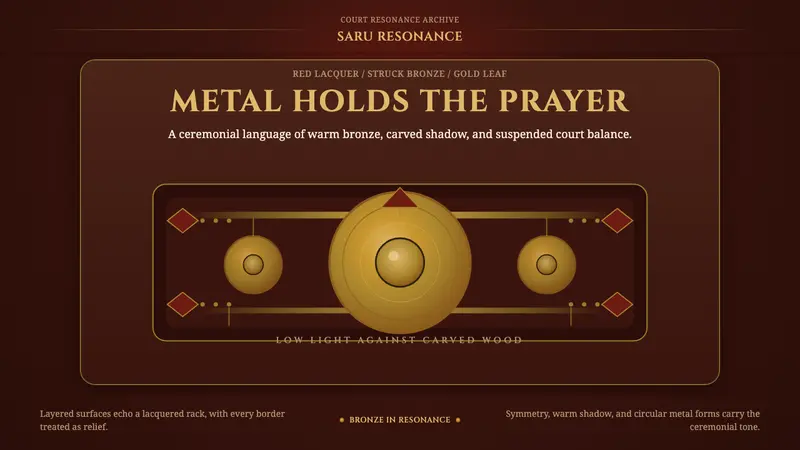 Gamelan BronzeCeremony in low light. Bronze circles glow inside red lacquer and gold-leaf frames.
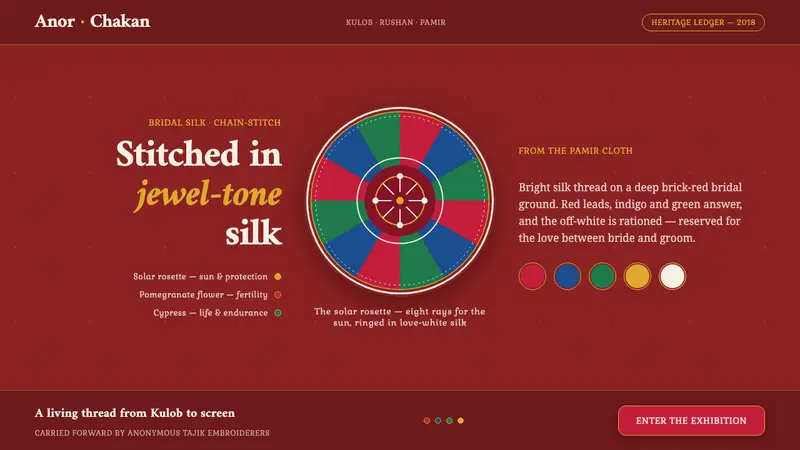 Tajik Chakan EmbroideryBridal silk that earns its white. Jewel-tone chain-stitch on deep brick-red, motif over ground.
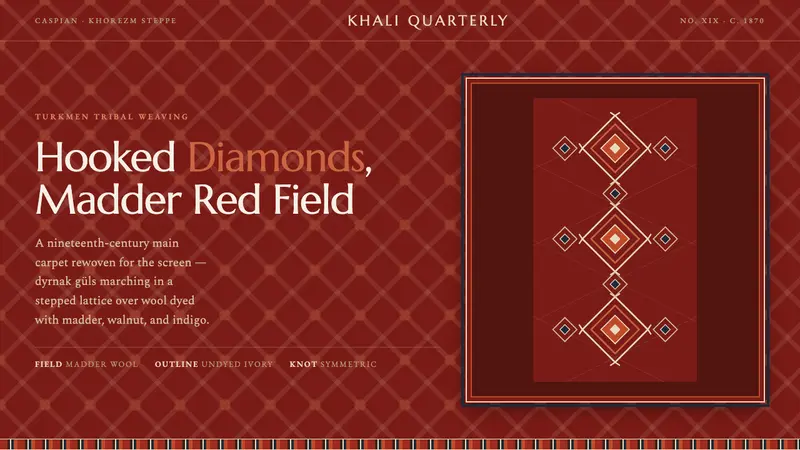 Yomut Gül CarpetHand-knotted authority on screen. Hooked dyrnak diamonds lattice a madder-red wool field in ivory.