About Galician Hórreo
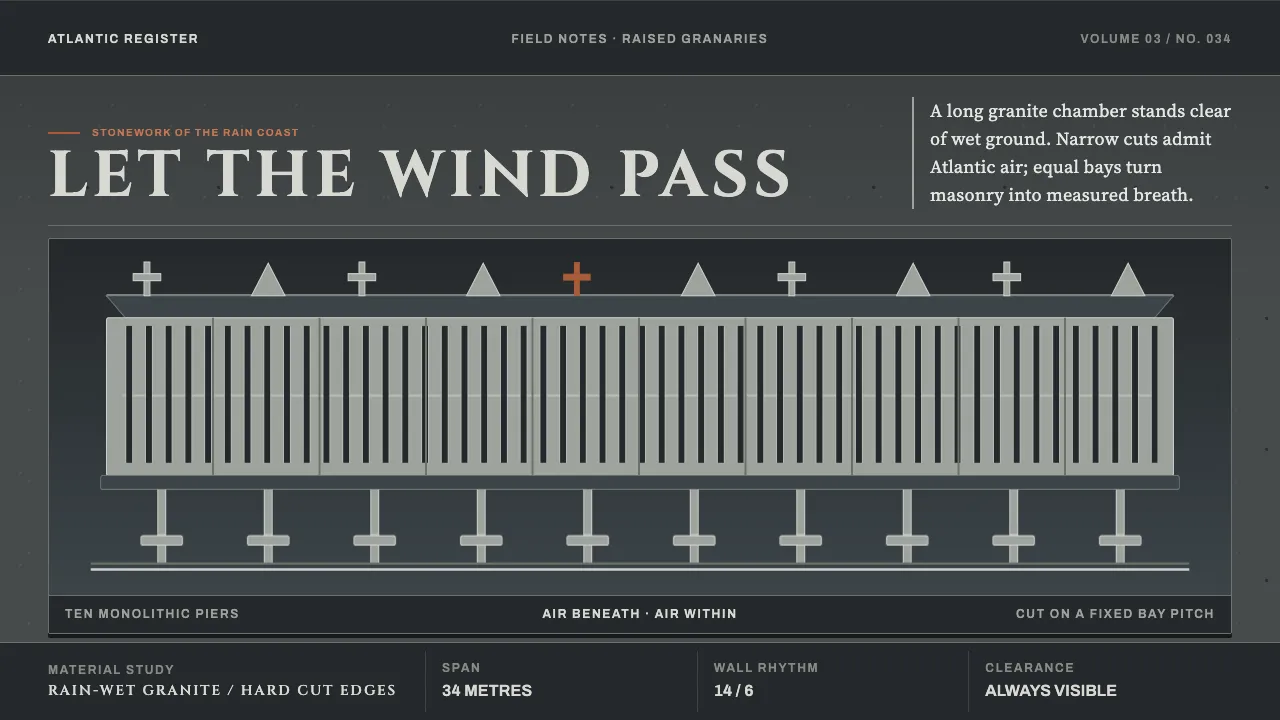
A hórreo is a granary standing on monolithic granite legs, capped with flat rodent-stop plates and walled in slotted stone so the Atlantic wind can dry the maize inside. Carnota's runs about 34 metres on ten feet. Combarro's line up above the tideline.
Everything here comes from that: a long horizontal body cut into equal bays, a rank of narrow vertical slits in each bay, crosses and pyramids alternating along the ridge, and clear air between the ground and the floor.
- Origin
- Galicia, north-west Spain — Carnota and Lira (A Coruña), Combarro (Pontevedra), the Lugo coast
- Era
- pre-1900; the surviving canonical hórreos are 17th–19th century (Carnota is 18th century, protected monument 1973)
- Key figures
- Xaquín Lorenzo Fernández "Xocas" · The canteiros — Galician village stonemason guilds
- Movements
- Atlantic vernacular architecture · Galician stone craft · European raised-granary typology
Galician Hórreo design spec
Colors
Background
Surface
Primary
Secondary
Accent
Text
Typography
CinzelHeadings
Source Serif 4Body
ArchivoMono
Unlock for 1 credit
The other 11 sections — buttons, cards, spacing, motion, techniques and more — open once you unlock. Download the DESIGN.md or send it to your AI in one click. Unlock once, yours forever.
Sign up nowHave an account? Sign in
Styles similar to Galician Hórreo
Also inspired by architecture & places, with a close feel.
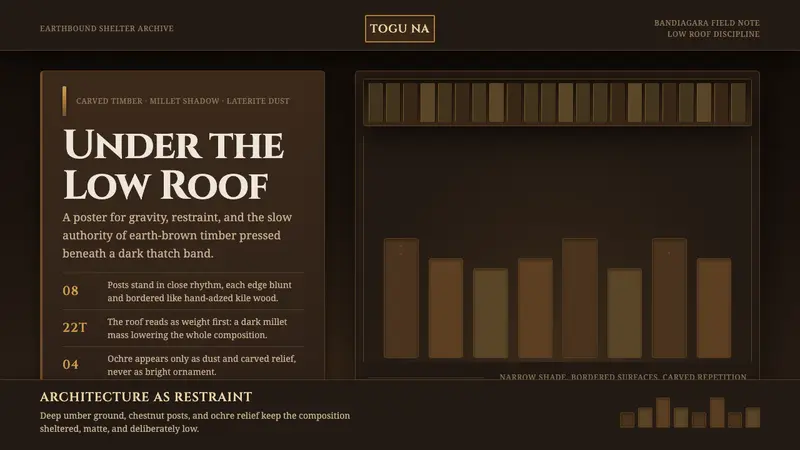 Dogon Toguna ShelterGravity made visible. Deep umber ground, low roof band, chestnut posts in shadow.
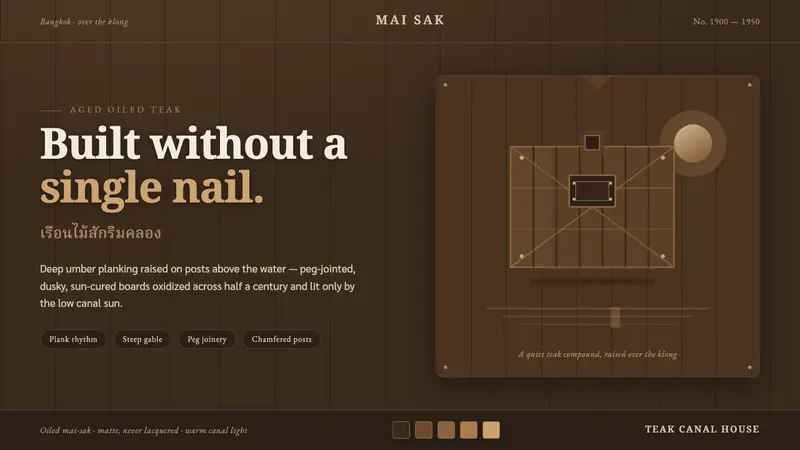 Thai Teak Canal HouseAged oiled teak, never fresh-sawn. Deep umber planks raised over the klong, lit by low canal sun.
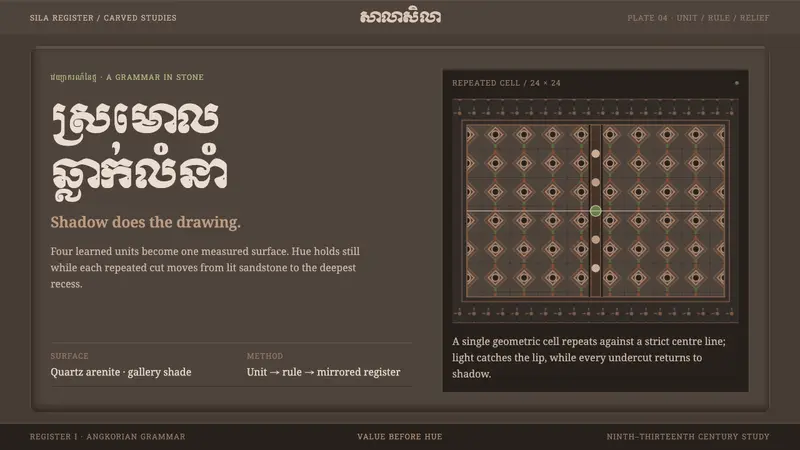 Khmer Kbach MotifShadow carves the grammar. Repeated stone cells turn a narrow sandstone palette into relief.
 Borobudur Andesite GrayStone read like scripture. Cool andesite gray, near-black recess, mossy patina, carved Marcellus.