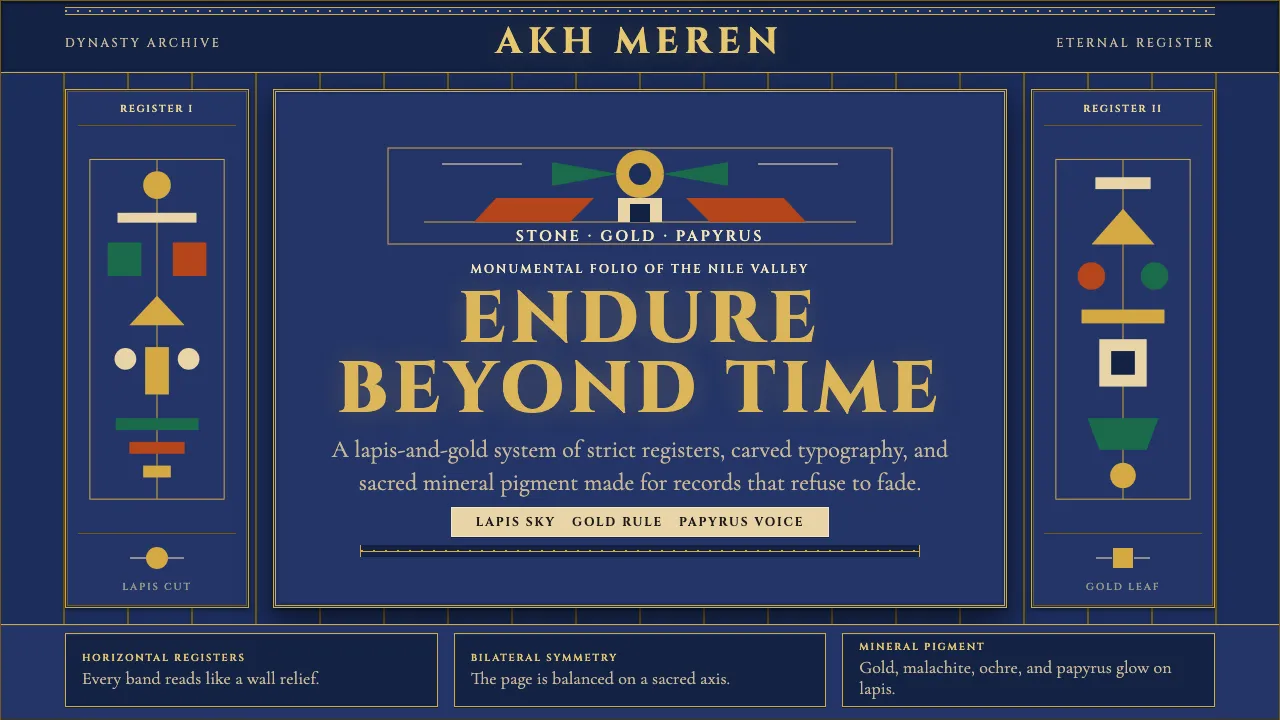
About Egyptian Pharaonic
Egyptian Pharaonic design is the visual language of the oldest monumental civilization — hieroglyphs carved in stone, gold sarcophagi, lapis lazuli inlays, and figures walking eternally in profile. From the pyramids of Giza to the tomb paintings of the Valley of the Kings, it maintained a visual consistency for three millennia.
Its temperament is regal, not spooky. Everything is oriented toward permanence: strict horizontal registers, bilateral symmetry, mineral pigments, and carved-in-stone typography. The visual states plainly, "I will endure beyond time itself."
- Origin
- Nile Valley, Egypt (Memphis, Thebes/Luxor, Alexandria)
- Era
- 3100 BCE – 30 BCE (Old Kingdom through Ptolemaic period); ~3,000 years of continuous tradition
- Key figures
- Imhotep · Tutankhamun · Howard Carter
- Movements
- Egyptian monumental architecture · Hieroglyphic writing · Funerary art · Egyptian Revival
Egyptian Pharaonic design spec
Colors
Typography
The other 11 sections — buttons, cards, spacing, motion, techniques and more — open once you unlock. Download the DESIGN.md or send it to your AI in one click. Unlock once, yours forever.
Sign up nowStyles similar to Egyptian Pharaonic
Also inspired by crafts & folk art, with a close feel.
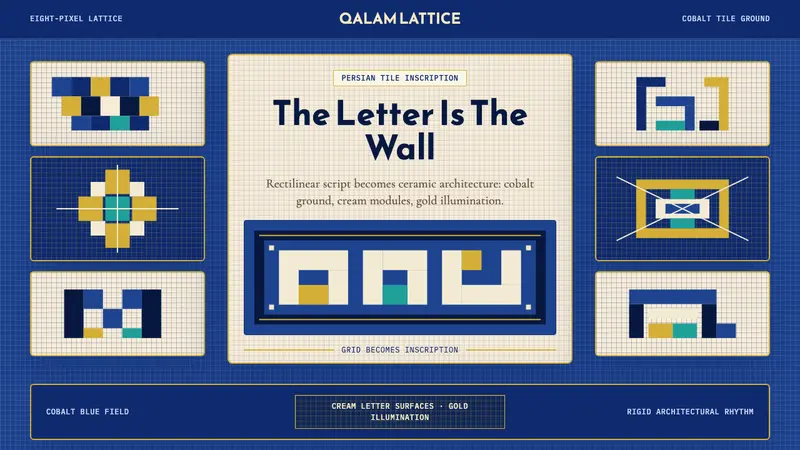 Kufic Square ArabicArchitectural precision. Cobalt tile grids, cream letterfields, and gold lines lock to 8px.
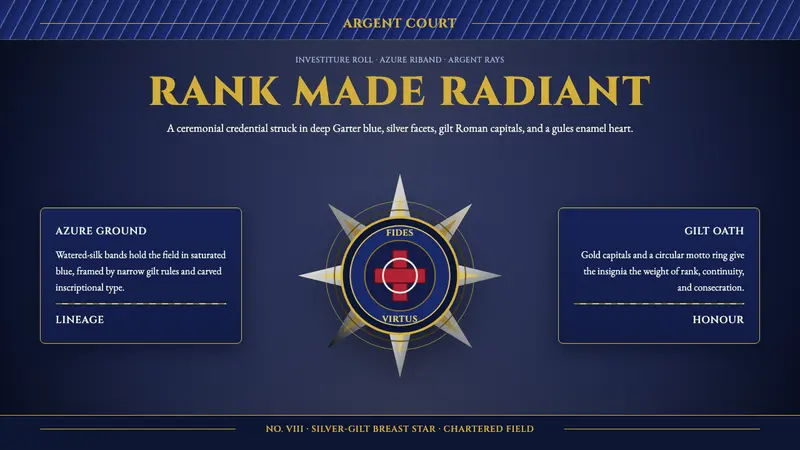 Order of Chivalry StarCeremony made metal. Garter blue, gilt Cinzel, and argent rays form a ranked star.
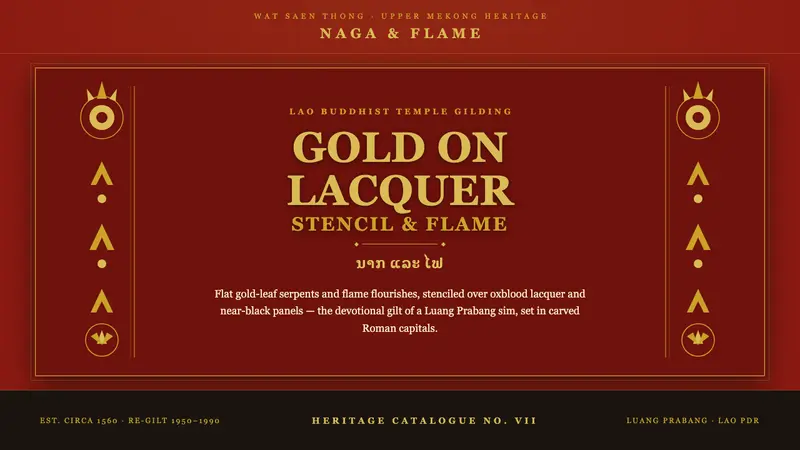 Lao Naga Temple StencilDevotional gilt, not chrome. Flat gold-leaf naga and flame stencils glow on oxblood-lacquer panels.
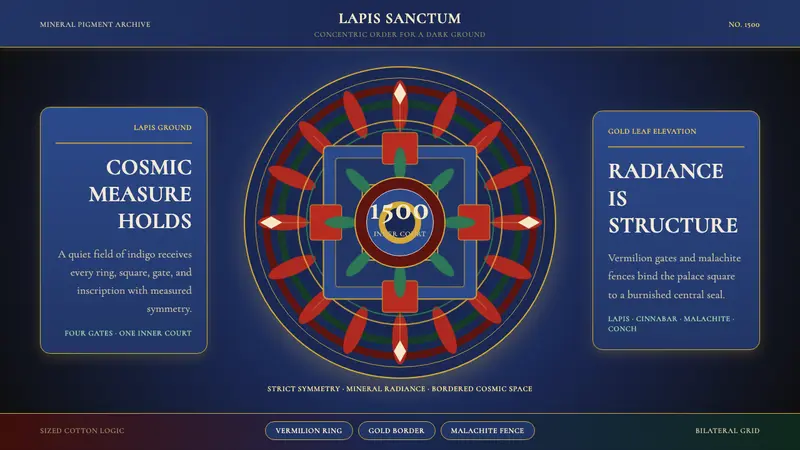 Tibetan Thangka Mandala (1500)Cosmic order, burnished dark. Lapis ground, gold borders, vermilion rings.