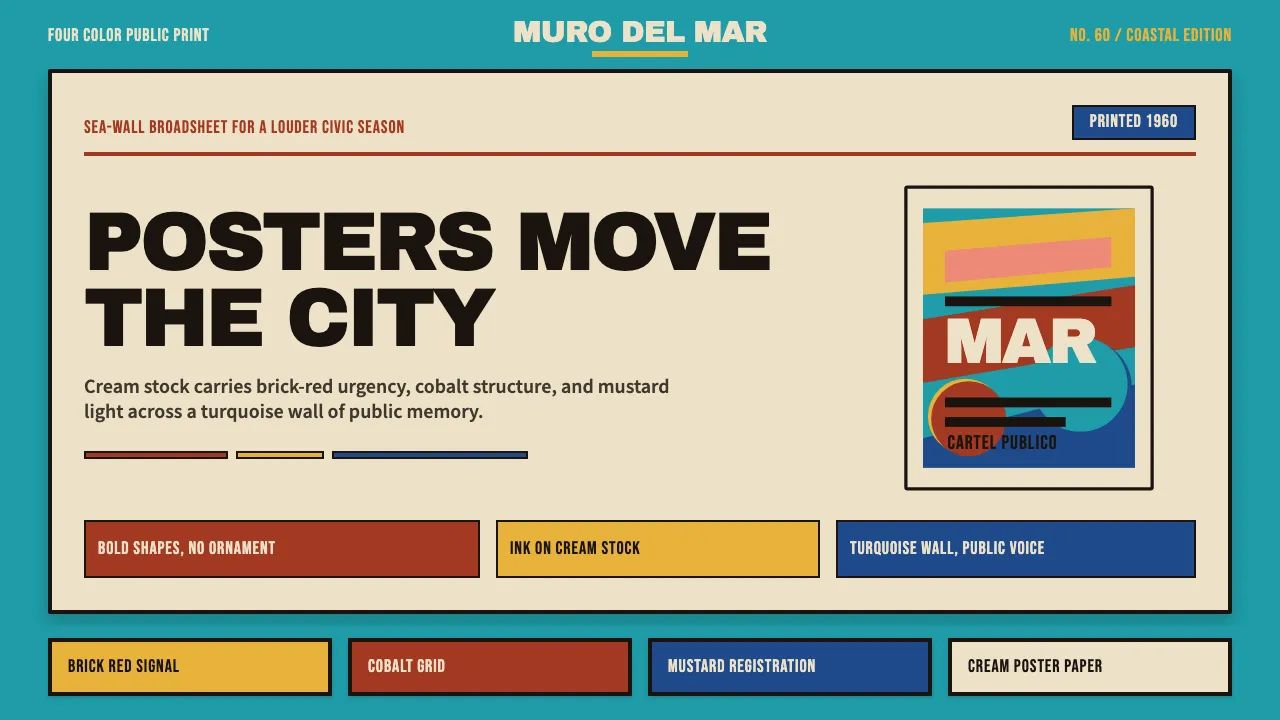
About Cuban Malecón 1960 Poster
Born from the Cuban Revolution's need to communicate with a newly literate populace, the ICAIC and OSPAAAL poster workshops of 1960s Havana produced some of the 20th century's most striking graphic design. Limited to four-colour silkscreen on cream stock, designers like Rostgaard and Beltrán distilled complex political narratives into bold flat shapes and hand-cut lettering.
This design system channels that energy: brick red and cobalt blue punch against the turquoise of the Malecón sea wall, while cream poster-paper surfaces carry bold geometric compositions. Every element is reduced to its essential silhouette — confident, optimistic, and unapologetically graphic.
- Origin
- Havana, Cuba
- Era
- 1959 revolution to ~1976 (OSPAAAL print peak); Cuban poster golden era 1960–1973
- Key figures
- Alfredo Rostgaard · Félix Beltrán · Eduardo Muñoz Bachs · Raúl Martínez
- Movements
- OSPAAAL Tricontinental solidarity posters · ICAIC Cuban film posters · Latin American protest art
Cuban Malecón 1960 Poster design spec
Colors
Typography
The other 11 sections — buttons, cards, spacing, motion, techniques and more — open once you unlock. Download the DESIGN.md or send it to your AI in one click. Unlock once, yours forever.
Sign up nowStyles similar to Cuban Malecón 1960 Poster
Also inspired by design movements, with a close feel.
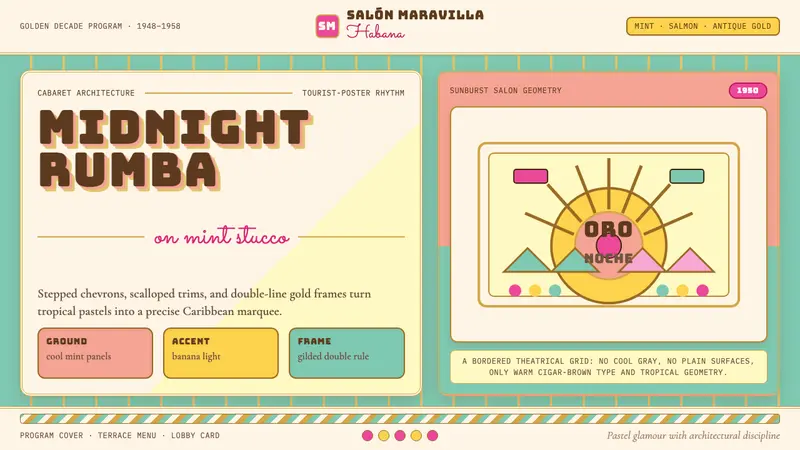 Cuban Art Deco (Havana 1950)Tropical Deco goes theatrical. Mint and salmon panels, gold double rules, Bungee marquee type.
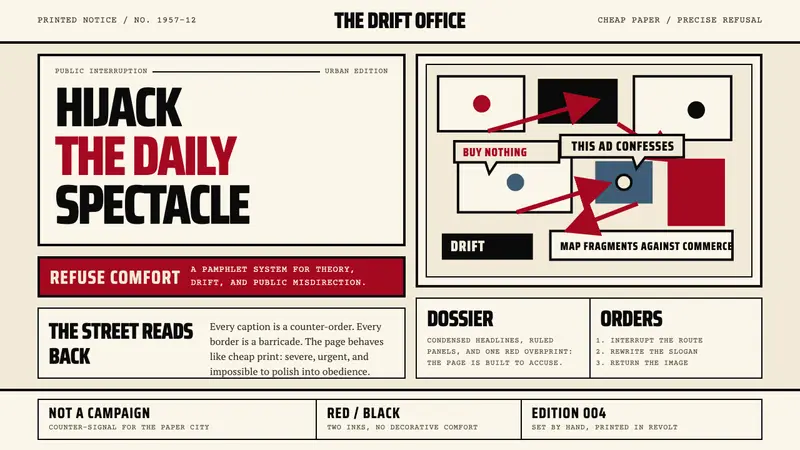 Situationist International (Debord, 1957)Agitation becomes structure. Red-black blocks and condensed type weaponize newsprint.
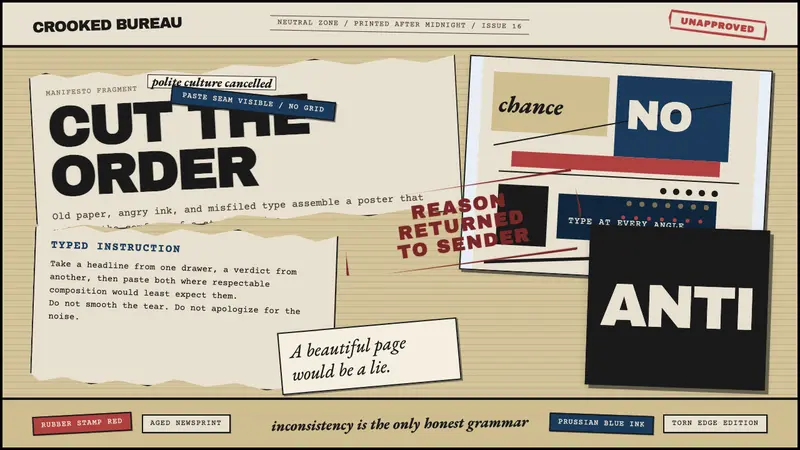 Dadaism (Zürich 1916)Chaos is the grammar. Aged newsprint, stamp red, Prussian blue, and tilted type collide.
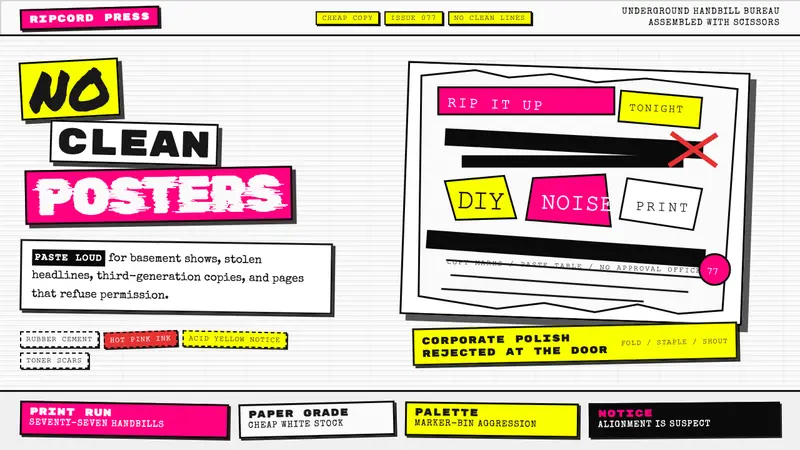 Punk Xerox 1977Anti-design shouts. Hot pink and acid yellow collide with ransom type on Xerox paper.