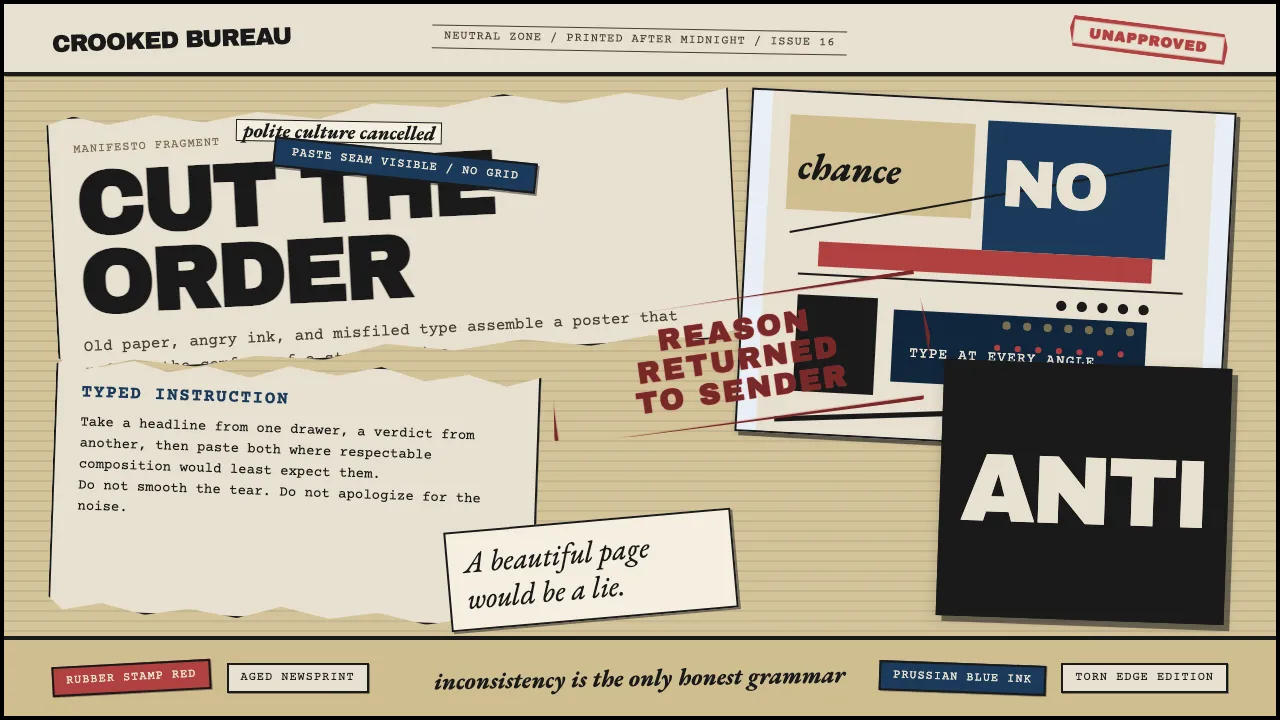
About Dadaism (Zürich 1916)
Dada emerged at Cabaret Voltaire in Zürich in 1916 — an anti-art response to the insanity of the First World War. Hugo Ball, Tristan Tzara, Hannah Höch, and Raoul Hausmann cut up newspapers, pasted photomontage, and set type at every angle to build a visual language of deliberate disorder.
The palette is aged newsprint, stamp-ink red, Prussian-blue halftone, and newsprint black. Typography mixes typewriter, bold sans, and cut-out serif inside one composition. If the world is absurd, the design must be too — inconsistency is the only honest grammar.
- Origin
- Zürich, Berlin, Paris, New York, Hannover
- Era
- 1916–1924 (Cabaret Voltaire founding → Berlin / Paris / New York → merges into Surrealism)
- Key figures
- Hugo Ball · Tristan Tzara · Hannah Höch · Raoul Hausmann · Kurt Schwitters
- Movements
- Dada · Photomontage · Merz
Dadaism (Zürich 1916) design spec
Colors
Typography
The other 11 sections — buttons, cards, spacing, motion, techniques and more — open once you unlock. Download the DESIGN.md or send it to your AI in one click. Unlock once, yours forever.
Sign up nowStyles similar to Dadaism (Zürich 1916)
Also inspired by design movements, with a close feel.
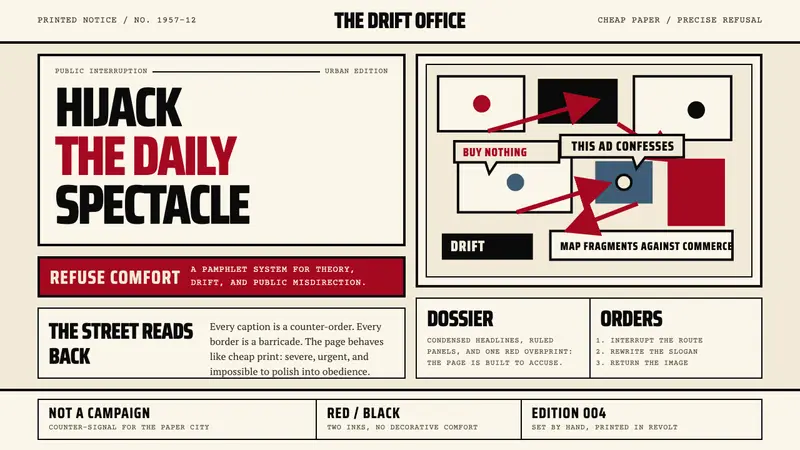 Situationist International (Debord, 1957)Agitation becomes structure. Red-black blocks and condensed type weaponize newsprint.
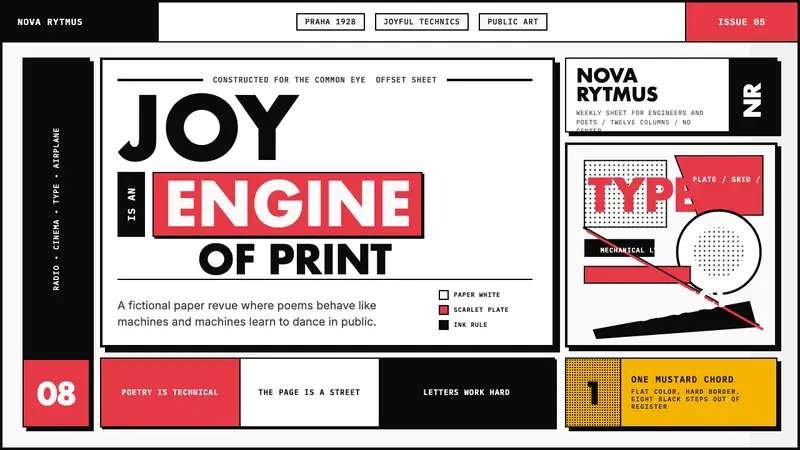 Czech Devětsil Avant-GardeJoy is engineered. Scarlet ink blocks and rotated sans type collide on an asymmetric grid.
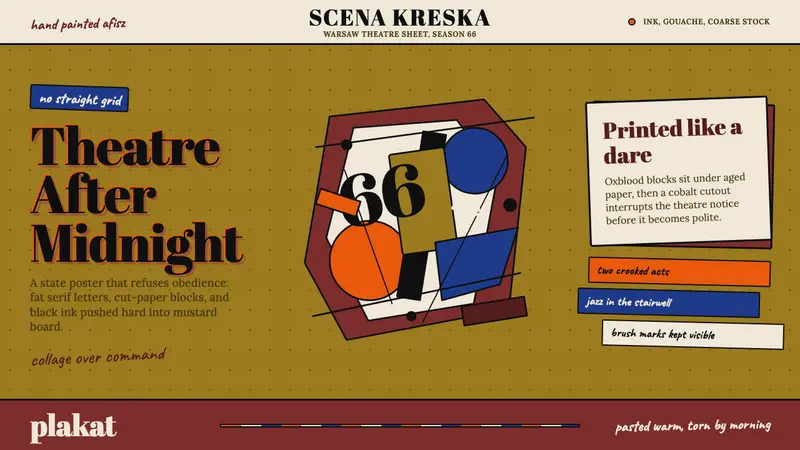 Polish Poster School (1960s)Painterly rebellion. Mustard board, oxblood collage, and fat serif letters reject the grid.
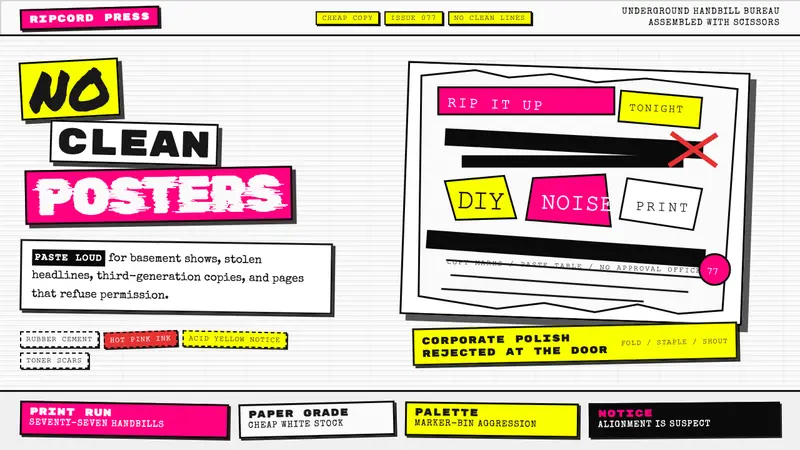 Punk Xerox 1977Anti-design shouts. Hot pink and acid yellow collide with ransom type on Xerox paper.