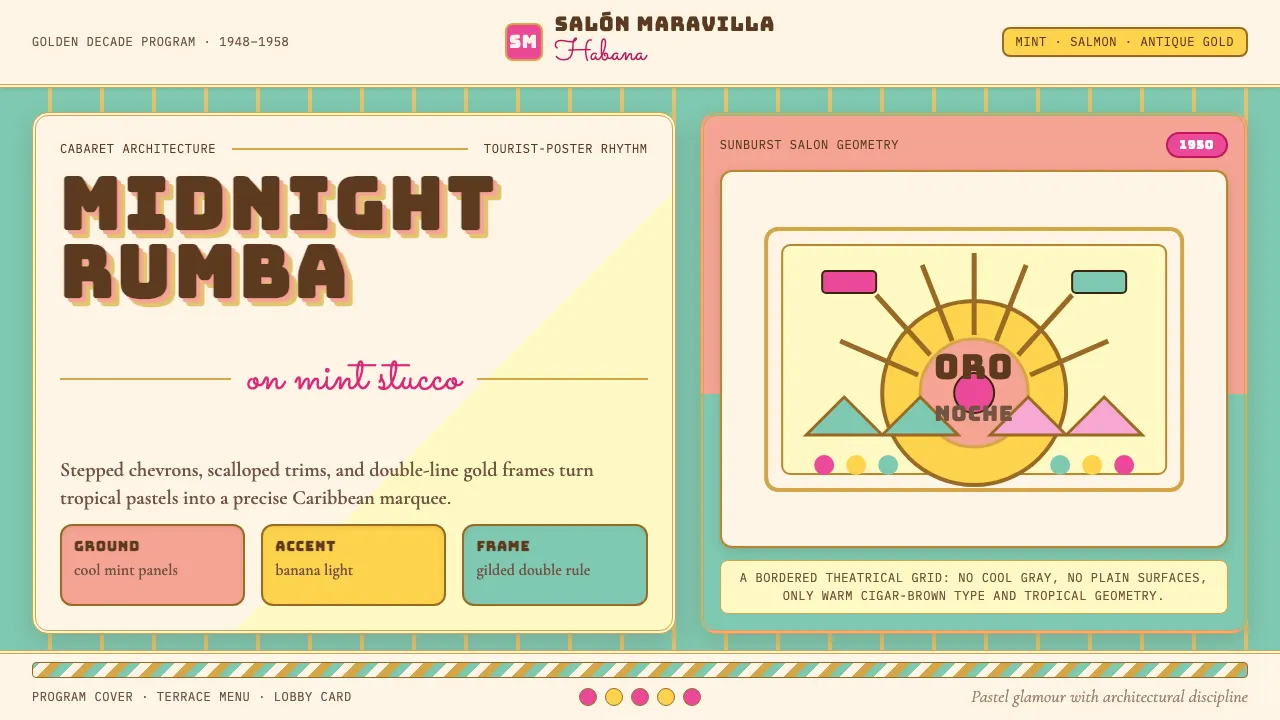
About Cuban Art Deco (Havana 1950)
Cuban Art Deco from 1950s Havana is the most chromatic, palm-touched variant of the Deco language ever produced. Hotel Nacional brochures, Bacardí Building facades, and Tropicana Cabaret program covers fused European geometric precision with tropical pastel saturation — mint, salmon, flamingo pink, banana yellow — creating a visual world that felt like a rumba rendered in architecture.
This design system captures that pre-Revolution Caribbean glamour: stepped chevrons, scalloped edges, sunburst motifs, and double-line gold borders set against alternating mint and salmon ground panels. Typography pairs monumental geometric display faces with cursive script flourishes, evoking cabaret marquees and tourist-poster lettering from Havana's golden decade.
- Origin
- Havana, Cuba
- Era
- 1930s–1959 (pre-Revolution), peak visual output 1948–1958
- Key figures
- Conrado Massaguer · Eladio Rivadulla · Esteban Rodríguez-Castells · Cabaret Tropicana visual identity team
- Movements
- Cuban Art Deco · Tropical Modernism · Caribbean tourism graphics
Cuban Art Deco (Havana 1950) design spec
Colors
Typography
The other 11 sections — buttons, cards, spacing, motion, techniques and more — open once you unlock. Download the DESIGN.md or send it to your AI in one click. Unlock once, yours forever.
Sign up nowStyles similar to Cuban Art Deco (Havana 1950)
Also inspired by design movements, with a close feel.
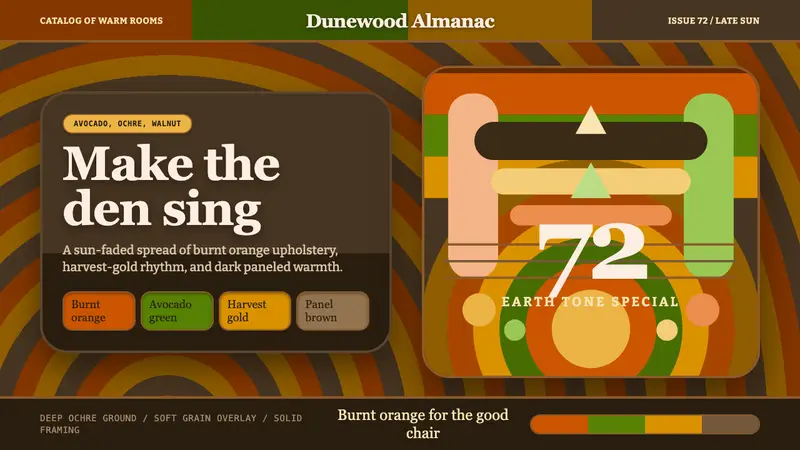 1970s Earth TonesWarm maximalism stays muddy. Bulbous slabs, avocado bands, and harvest-gold rings.
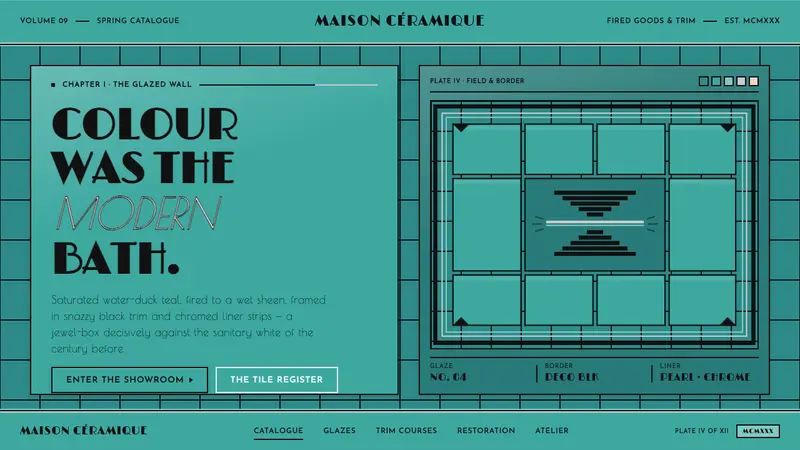 Art Deco Teal Bathroom (1930s)Colour was the modern bath. Water-duck teal glaze, snazzy black trim, Limelight Deco caps.
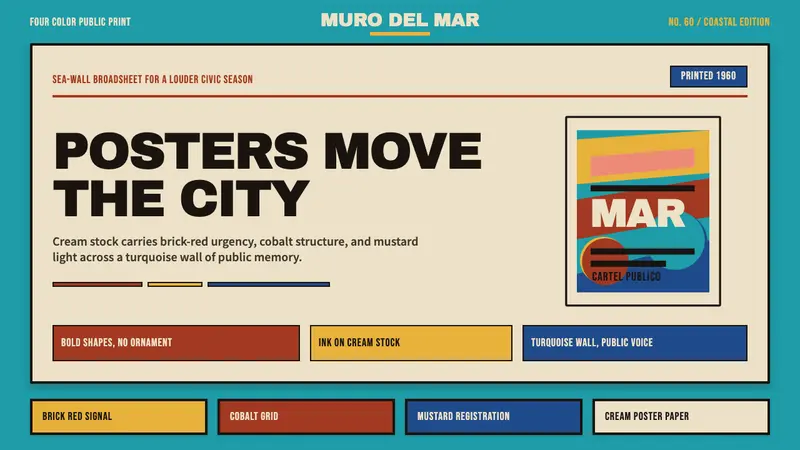 Cuban Malecón 1960 PosterPublic voice in flat ink. Turquoise wall, cream stock, brick red and cobalt bars.
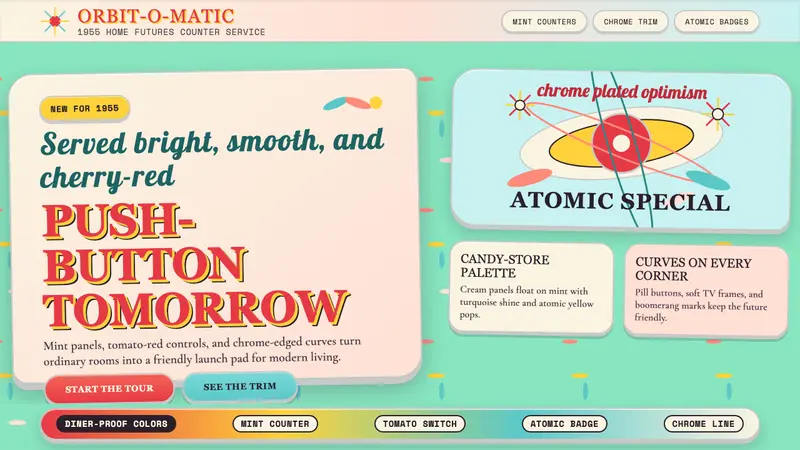 Populuxe Atomic AgeThe future grins. Mint Formica, tomato-red pills, Cooper Black, and atomic starbursts.