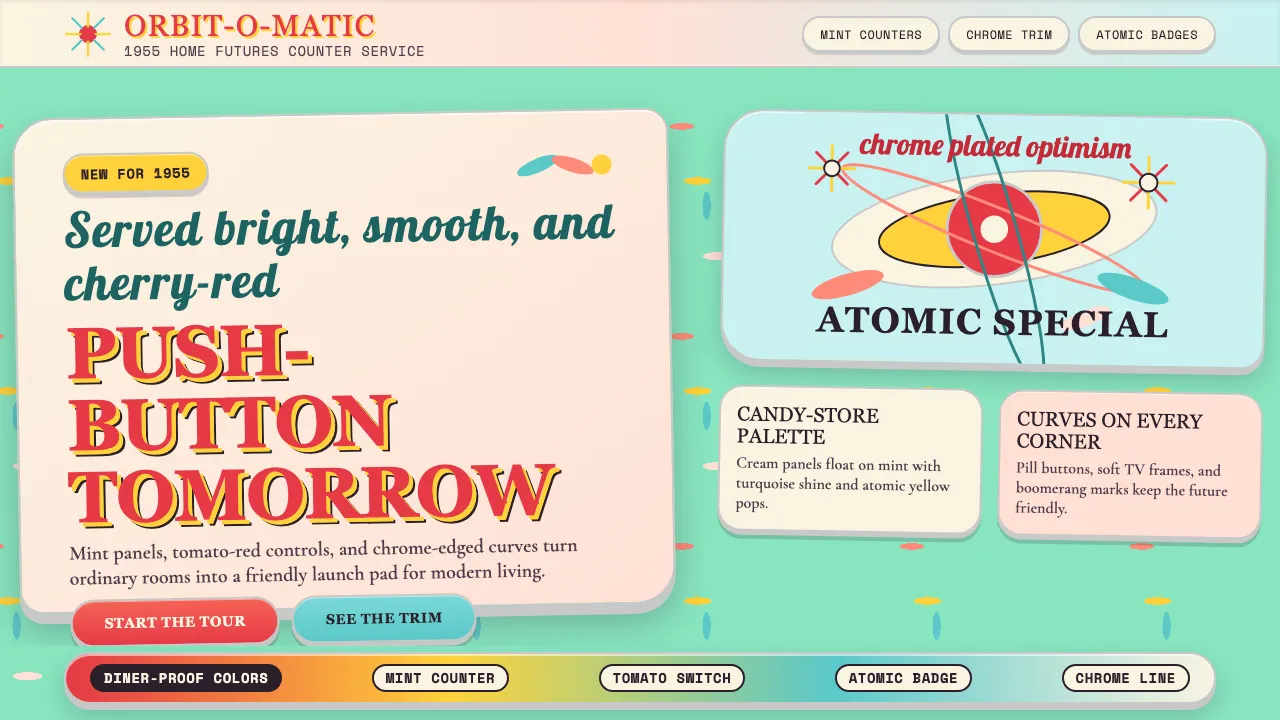
About Populuxe Atomic Age
Populuxe is the popular, commercial, exuberant sibling of Mid-Century Modern — the aesthetic of finned Bel Airs, googie diners, and Formica kitchens where the future had just arrived and it wore chrome. Mint-green and turquoise panels, coral and atomic-yellow accents, kidney-bean curves and 8-spoke starbursts, chunky Cooper Black shouting next to a Brush Script diner sign.
Every surface is colored, every corner is curved, every headline is optimistic. It is suburbia at its most confident: push-button futurism served with a cherry-topped milkshake.
- Origin
- North America — Detroit, Los Angeles, Levittown suburbs
- Era
- 1954–1964 American consumer culture (post-WWII boom); retro-named by Thomas Hine in 1986
- Key figures
- Raymond Loewy · Eero Saarinen · John Lautner · George Nelson
- Movements
- Populuxe · Googie architecture · Atomic Age
Populuxe Atomic Age design spec
Colors
Typography
The other 11 sections — buttons, cards, spacing, motion, techniques and more — open once you unlock. Download the DESIGN.md or send it to your AI in one click. Unlock once, yours forever.
Sign up nowStyles similar to Populuxe Atomic Age
Also inspired by design movements, with a close feel.
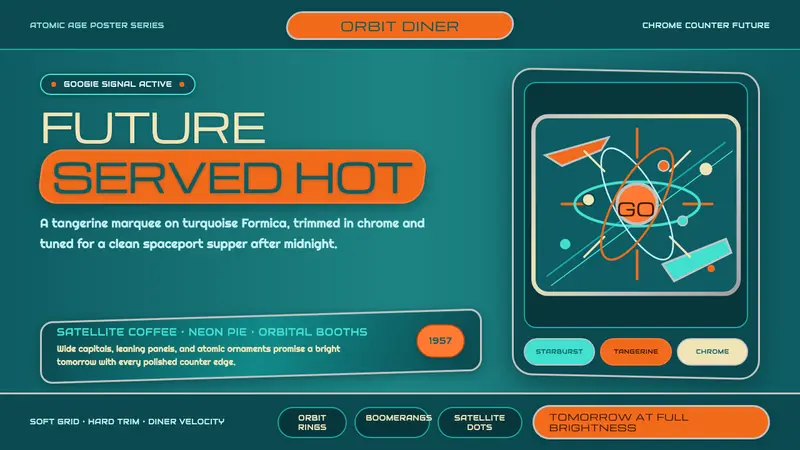 Atompunk / Raygun GothicTomorrow shines loud. Tangerine marquee type cuts through turquoise chrome geometry.
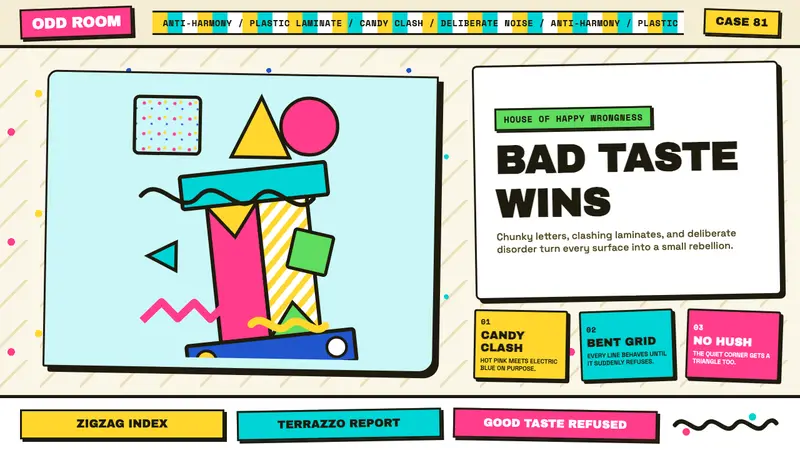 Memphis (Sottsass 1981)Joy weaponizes bad taste. Hot pink, turquoise, yellow and terrazzo specks break the grid.
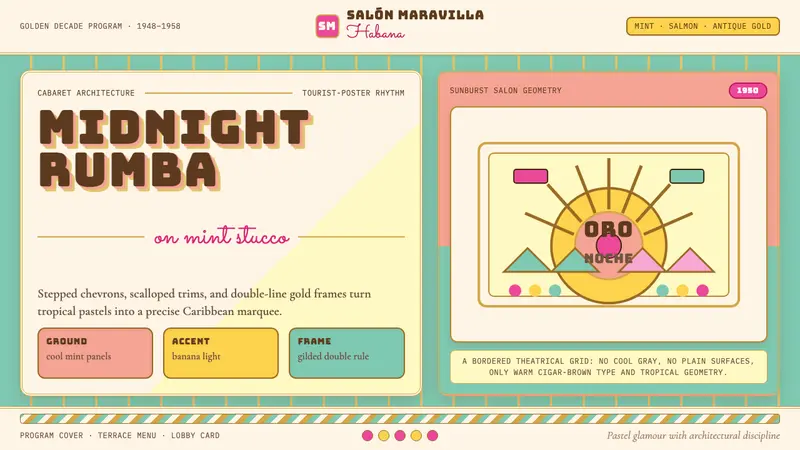 Cuban Art Deco (Havana 1950)Tropical Deco goes theatrical. Mint and salmon panels, gold double rules, Bungee marquee type.
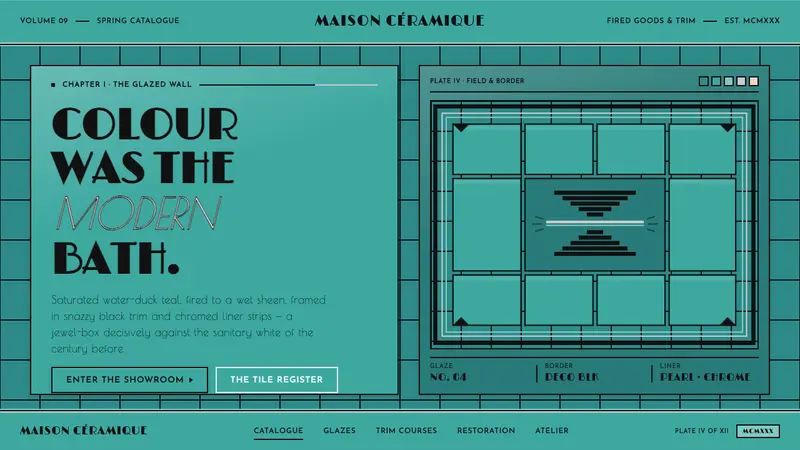 Art Deco Teal Bathroom (1930s)Colour was the modern bath. Water-duck teal glaze, snazzy black trim, Limelight Deco caps.