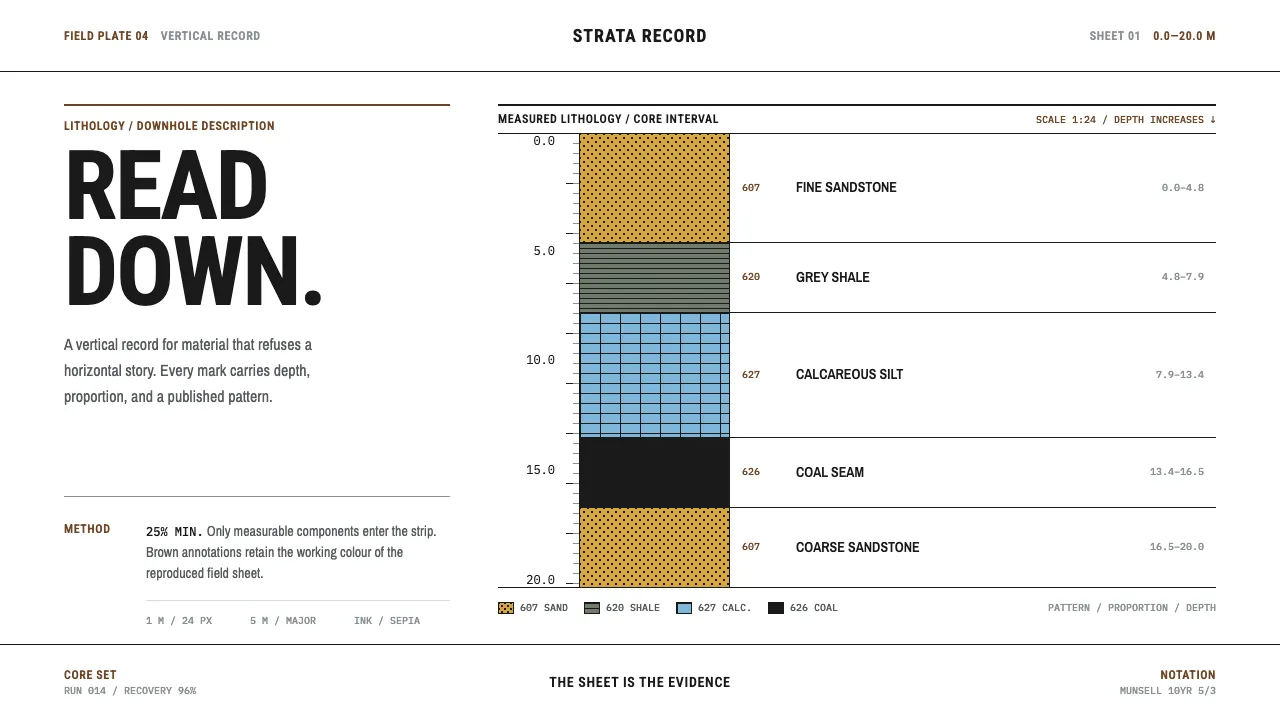
About Core Sample Log
A lithologic strip log draws the ground as a vertical object. A depth axis runs down one side, deepest at the bottom; beside it a graphic column carries FGDC Section 37 patterns — sandstone as stipple dots, shale as fine horizontal rules — inked flat black on white log stock, with only components at or above 25% abundance drawn, at width proportional to percentage.
The sheet is read next to the physical core: brown rock in 2–3 ft trays, wooden spacer blocks marking runs and core loss, run numbers written three times on every box. Brown is the working line colour because these plates were reproduced as sepia diazo for sixty years, and the tradition kept the colour of its own copies.
- Origin
- Global — USGS, AAPG and the international ocean-drilling programme
- Era
- 1950–1990 (standardised log symbology); sepia diazo reproduction from the 1920s on
- Key figures
- USGS geologic-mapping cartographers (FGDC Section 37) · IODP/ODP shipboard sedimentologists · Albert Munsell
- Movements
- Stratigraphy and sedimentology · Scientific ocean drilling (DSDP/ODP/IODP) · Petroleum well-log cartography
Core Sample Log design spec
Colors
Typography
The other 11 sections — buttons, cards, spacing, motion, techniques and more — open once you unlock. Download the DESIGN.md or send it to your AI in one click. Unlock once, yours forever.
Sign up nowStyles similar to Core Sample Log
Also inspired by science & nature, with a close feel.
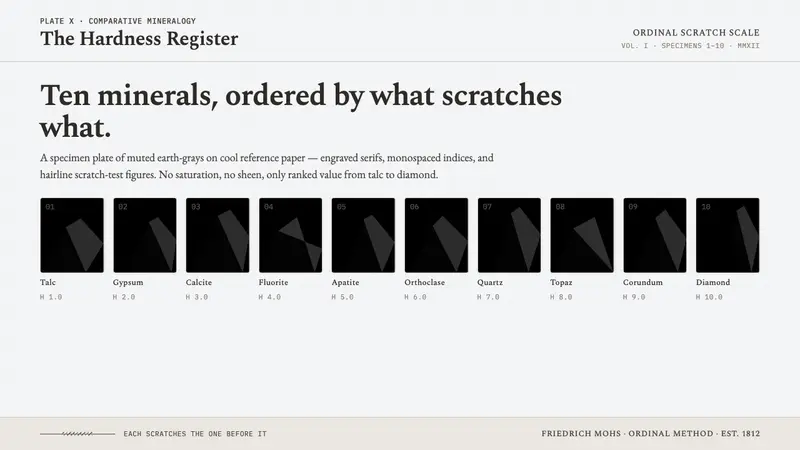 Mohs Hardness ScaleRanked by what scratches what. Ten mineral-gray chips on cool chart-white, engraved serifs.
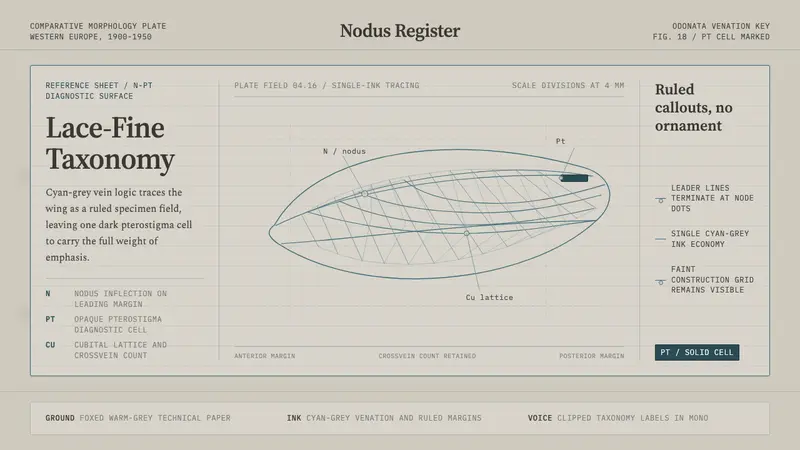 Dragonfly Wing VenationPrecision, nearly weightless. Cyan-grey veins rule a foxed paper taxonomy plate.
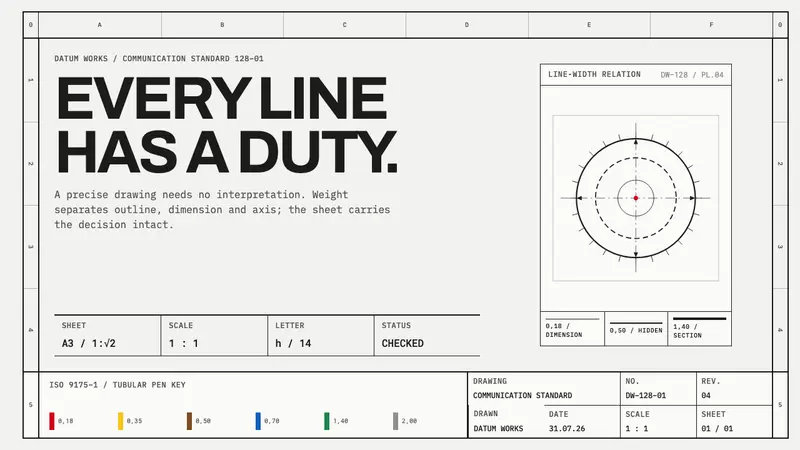 ISO Technical DrawingEvery line carries meaning. Near-black ruled geometry grades weight on cool tracing stock.
 Everest Expedition (1953)Quiet heroism, precisely measured. Ice-blue contours and mono data cross a snow-white field.