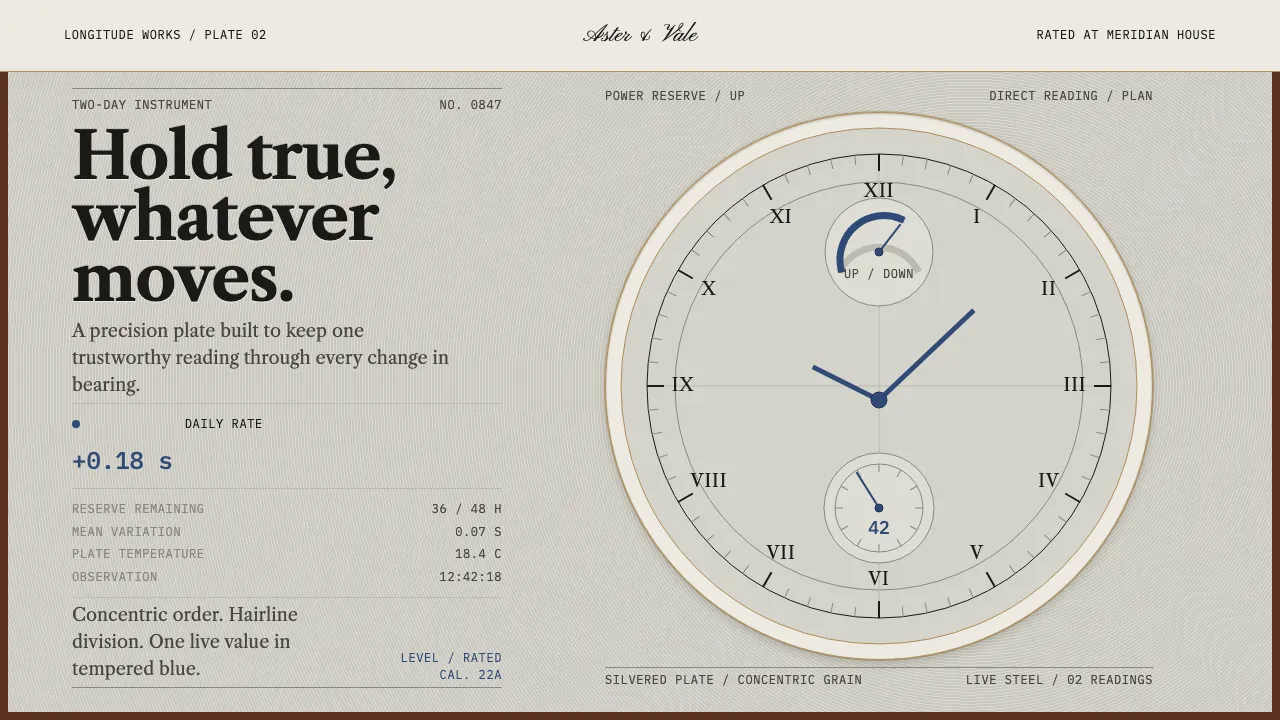
About Marine Chronometer
A two-day box marine chronometer is read from directly above: a silvered brass plate, engine-turned and black-filled, carrying Roman numerals, a subsidiary seconds dial at VI and an up-and-down power-reserve sector at XII. The movement hangs in gimbals inside a three-tier mahogany box so the instrument stays level, and therefore keeps reading, at sea.
This system takes that face as its whole grammar. Structure is concentric, division is hairline, colour is near-absent — except the heat-blued steel of the hands, the one saturated tone on the instrument, spent only where something is live.
- Origin
- London and Liverpool; later Boston and Lancaster, Pennsylvania, USA
- Era
- c.1780–1950 (spring detent settles the form in the 1780s; Hamilton Model 22 runs it through WWII)
- Key figures
- John Arnold · Thomas Earnshaw · Victor Kullberg · Parkinson & Frodsham
- Movements
- British precision horology · Board of Longitude trials · Kew Observatory rating
Marine Chronometer design spec
Colors
Typography
The other 11 sections — buttons, cards, spacing, motion, techniques and more — open once you unlock. Download the DESIGN.md or send it to your AI in one click. Unlock once, yours forever.
Sign up nowStyles similar to Marine Chronometer
Also inspired by science & nature, with a close feel.
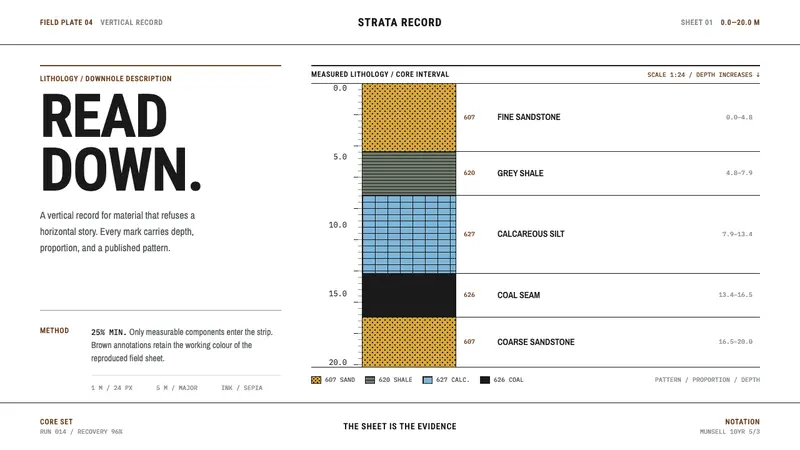 Core Sample LogRead the ground downward. Sepia rules and FGDC black patterns turn depth into evidence.
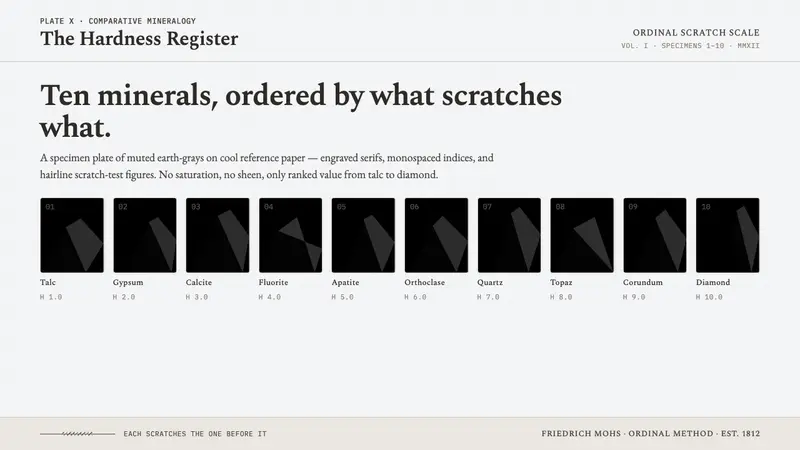 Mohs Hardness ScaleRanked by what scratches what. Ten mineral-gray chips on cool chart-white, engraved serifs.
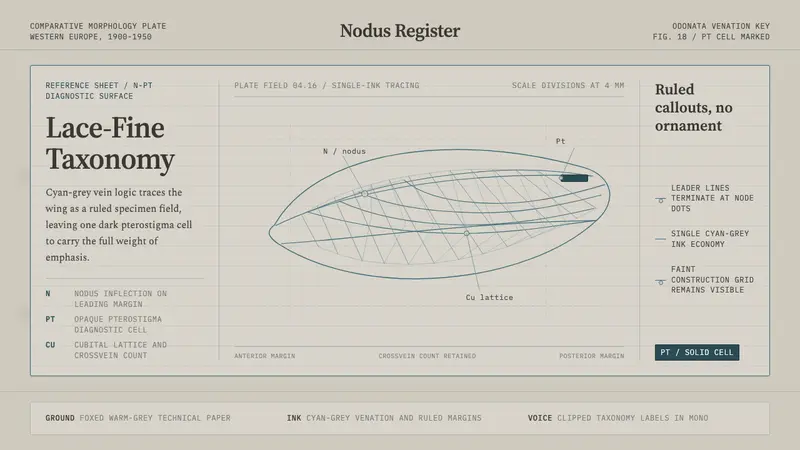 Dragonfly Wing VenationPrecision, nearly weightless. Cyan-grey veins rule a foxed paper taxonomy plate.
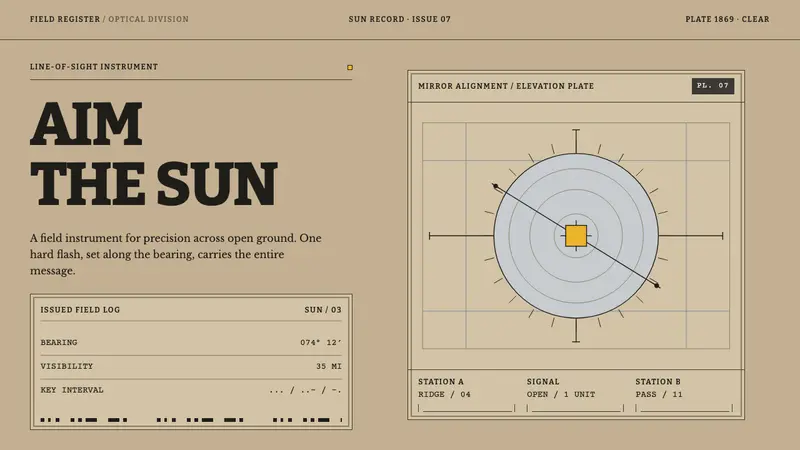 Heliograph SignallingAimed precision, not atmosphere. Khaki rules and Bitter slabs isolate one hard yellow flash.