About Brazilian Tropicália (1968)
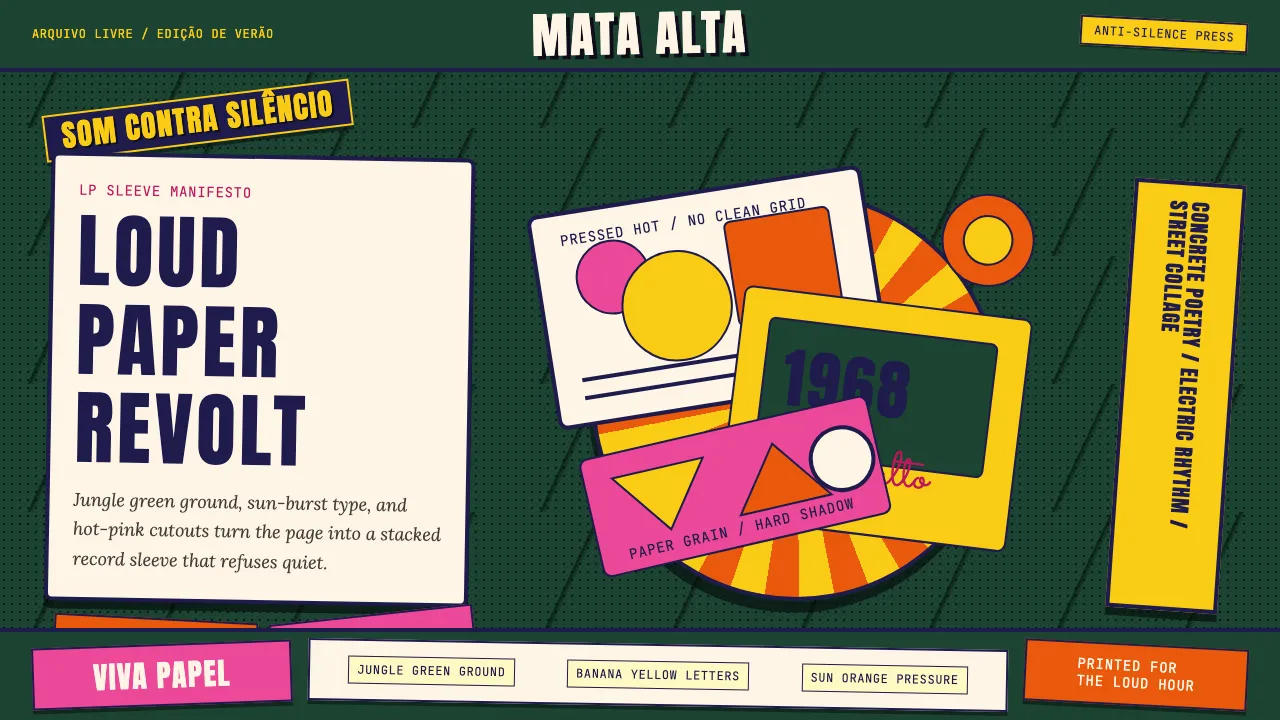
Brazilian Tropicália exploded onto the cultural scene in 1967–68 as a maximalist fusion of bossa nova, Afro-Brazilian rhythm, concrete poetry, and psychedelic protest art. Its visual language — saturated jungle greens, sun-orange bursts, hand-painted banana-yellow lettering, and photographic collage — became the face of resistance against military dictatorship.
This design system captures the LP-sleeve energy of Tropicália: heavy paper grain, collage composition over clean grids, and every color pushed to tropical saturation. It is deliberately anti-minimalist, echoing the movement's thesis that art must be loud, layered, and alive.
- Origin
- São Paulo, Salvador, Rio de Janeiro, Brazil
- Era
- 1967–1968 peak; broader movement through 1972
- Key figures
- Caetano Veloso · Gilberto Gil · Hélio Oiticica · Os Mutantes
- Movements
- Tropicália · Brazilian counter-culture · Cinema Novo
Brazilian Tropicália (1968) design spec
Colors
Typography
The other 11 sections — buttons, cards, spacing, motion, techniques and more — open once you unlock. Download the DESIGN.md or send it to your AI in one click. Unlock once, yours forever.
Sign up nowStyles similar to Brazilian Tropicália (1968)
Also inspired by design movements, with a close feel.
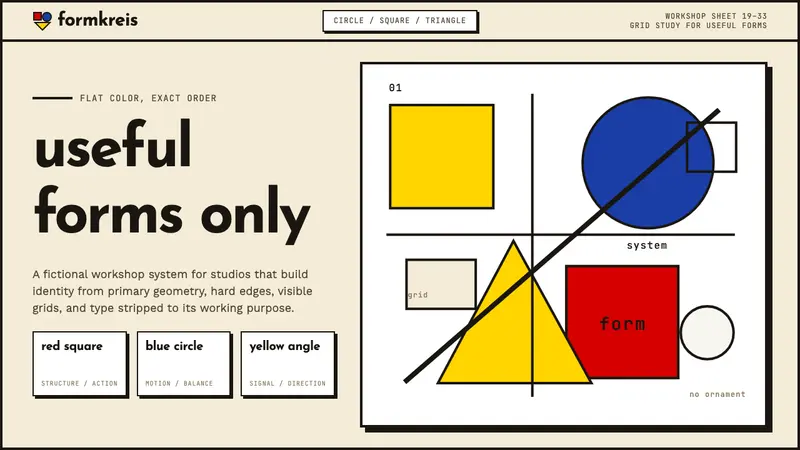 Bauhaus WeimarForm follows revolution. Primary red-blue-yellow on cream, hard shadows, no ornament — pure form.
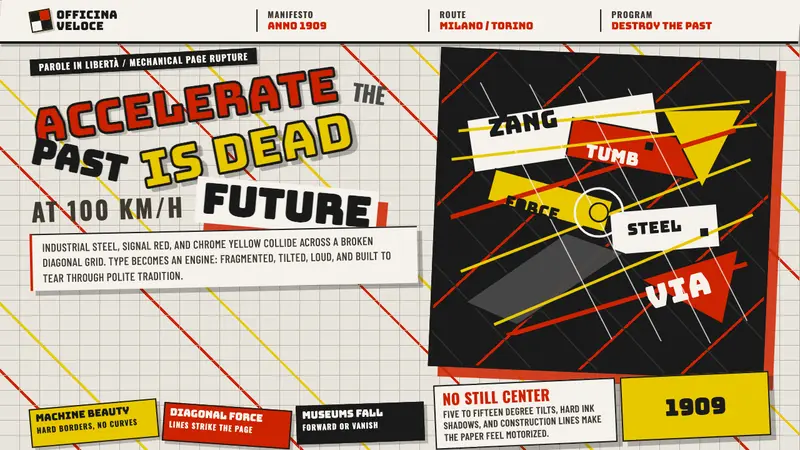 Italian Futurism (Marinetti 1909)Speed murders tradition. Signal red and chrome yellow slash a broken diagonal grid.
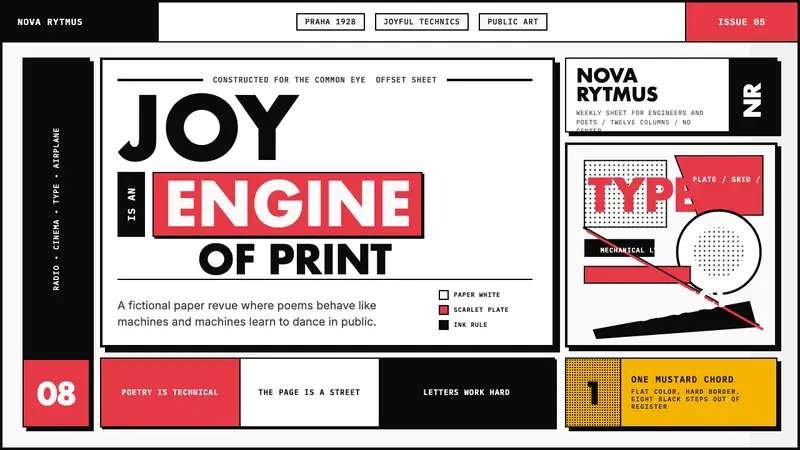 Czech Devětsil Avant-GardeJoy is engineered. Scarlet ink blocks and rotated sans type collide on an asymmetric grid.
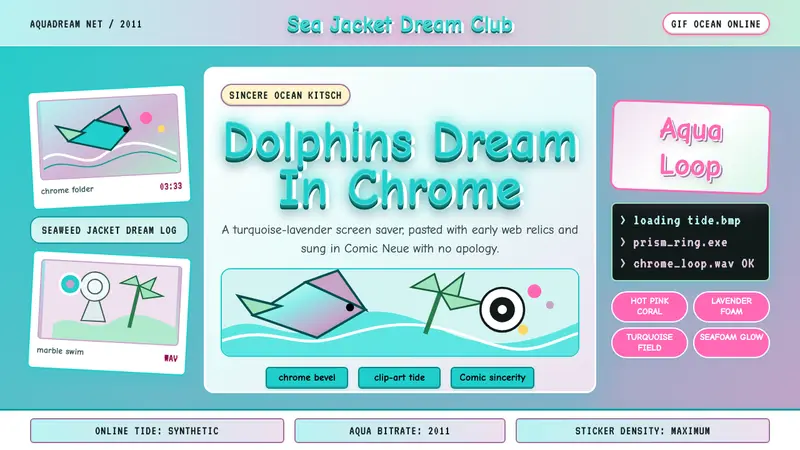 Seapunk 2011Sincere ocean kitsch. Turquoise gradients, Comic Neue chrome, and clip-art dolphins collide.