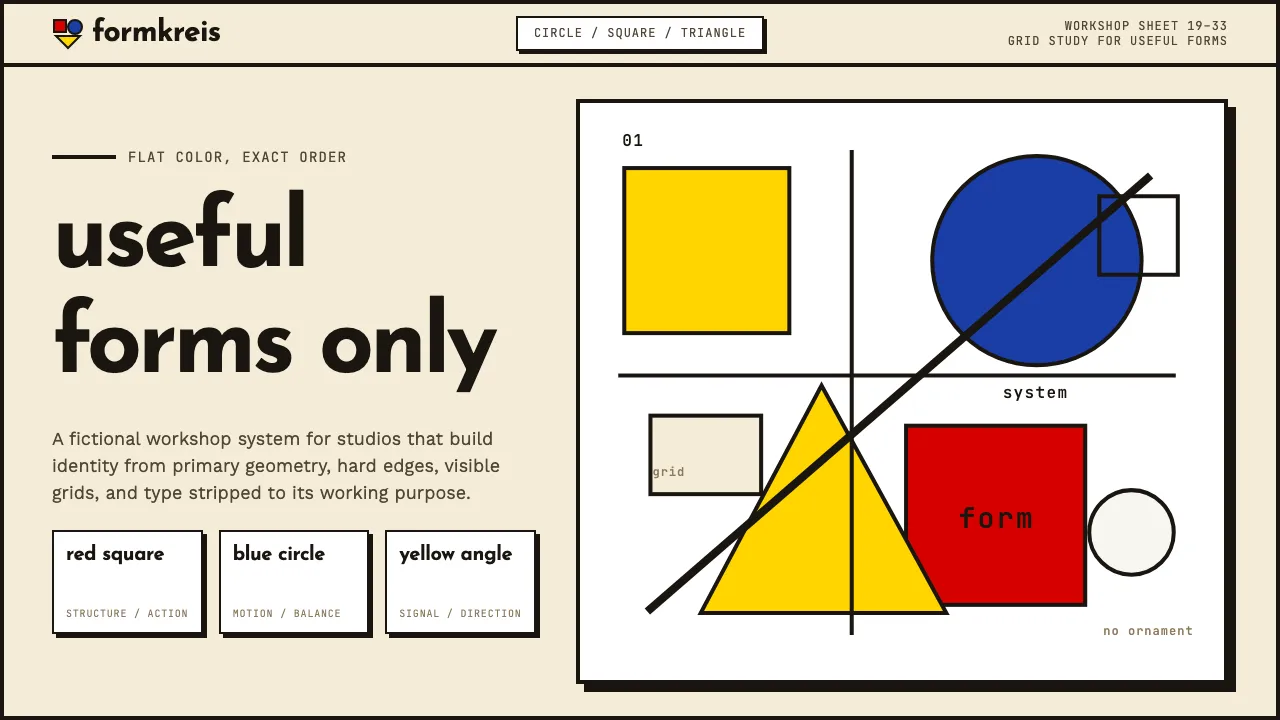
About Bauhaus Weimar
The Bauhaus school, founded by Walter Gropius in 1919 Weimar, fused fine art, craft, and industrial production into a single discipline. Its visual language — geometric primitives, primary colors, and unadorned sans-serif type — rejected ornament in favor of functional clarity.
This design system distills that philosophy into digital tokens: bold red, blue, and yellow on cream paper; Josefin Sans headings stripped of capitals; hard-edged shadows without blur; and asymmetric grids governed by the circle, square, and triangle.
- Origin
- Weimar, Dessau, Berlin — Germany
- Era
- 1919–1933
- Key figures
- Walter Gropius · László Moholy-Nagy · Wassily Kandinsky · Herbert Bayer
- Movements
- Modernism · Functionalism · De Stijl-adjacent
Bauhaus Weimar design spec
Colors
Typography
The other 11 sections — buttons, cards, spacing, motion, techniques and more — open once you unlock. Download the DESIGN.md or send it to your AI in one click. Unlock once, yours forever.
Sign up nowStyles similar to Bauhaus Weimar
Also inspired by design movements, with a close feel.
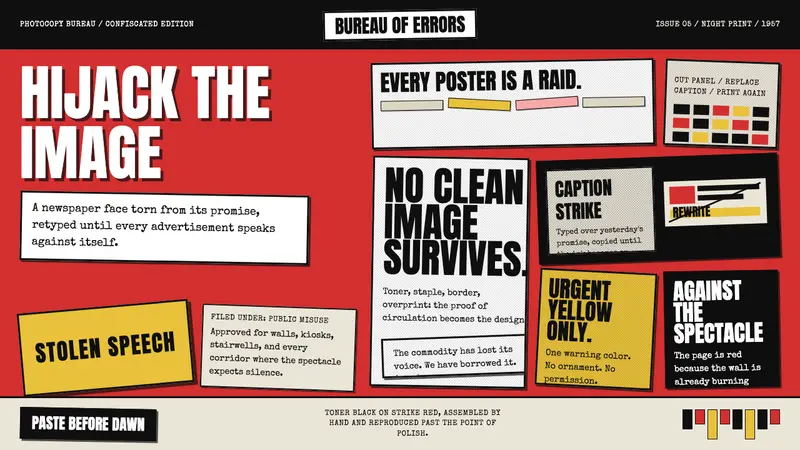 Situationist Détournement (1957)Contraband urgency. Strike red, toner black, and jagged comic panels make theory look stolen.
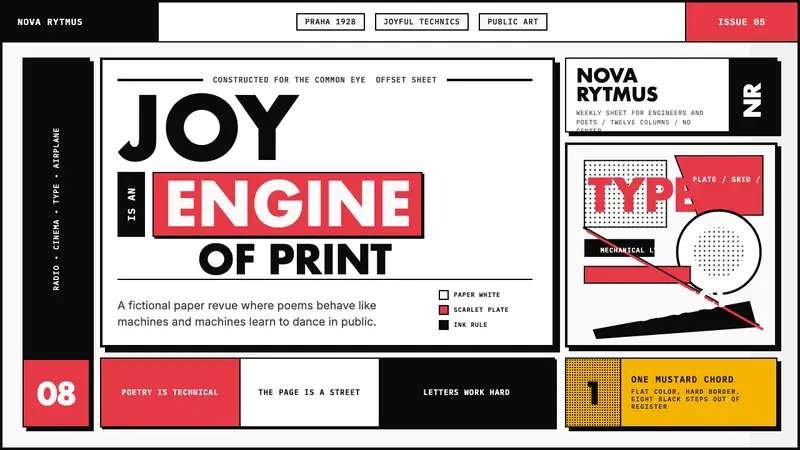 Czech Devětsil Avant-GardeJoy is engineered. Scarlet ink blocks and rotated sans type collide on an asymmetric grid.
 Italian Futurism (Marinetti 1909)Speed murders tradition. Signal red and chrome yellow slash a broken diagonal grid.
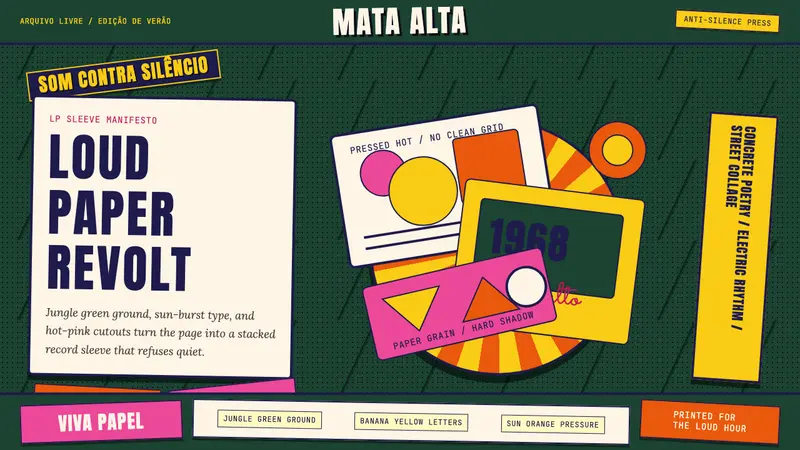 Brazilian Tropicália (1968)Art must be loud. Jungle green, banana yellow Anton type, and hard-shadow collage erupt.