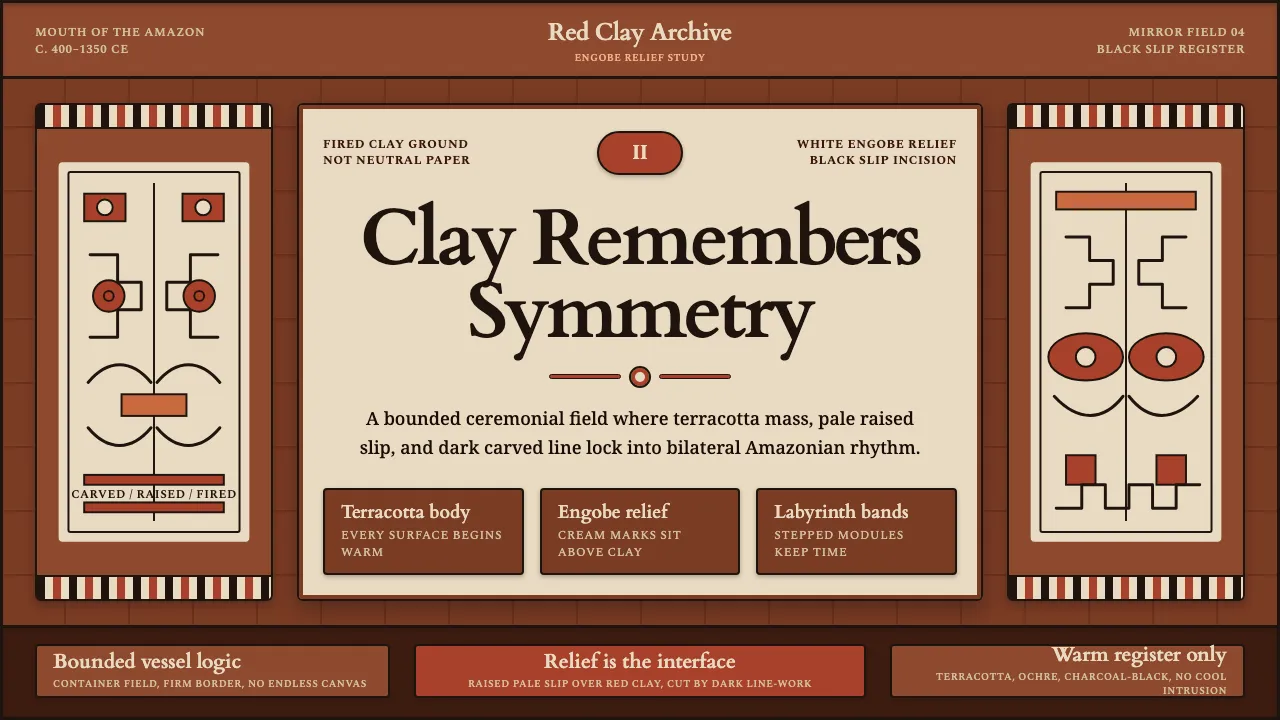
About Marajoara Amazon Ceramic
A thousand years before European contact, potters on Marajó Island — a landmass the size of Switzerland sitting where the Amazon meets the Atlantic — fired some of the most technically and artistically sophisticated ceramics in the pre-Columbian Americas. Funerary urns, ritual vessels and figurines were built from dense terracotta clay, coated in a pale engobe, then carved and painted with obsessive bilateral symmetry: coiled serpents, staring disembodied eyes, whisker-like scrolls and stepped labyrinth bands. This design system treats that fired red-brown clay body as the literal ground of every surface — never a neutral page, always the warm mass of the material itself — with white engobe and black slip line-work sitting on top as carved, raised relief, exactly as they do on the original vessels.
- Origin
- Marajó Island, mouth of the Amazon River, Brazil
- Era
- Marajoara culture, c. 400–1350 CE
- Key figures
- Marajoara Indigenous potters (culture-level attribution) · Amazonian mound-builder lineages of Marajó
- Movements
- Pre-Columbian Amazonian ceramics · Incised and painted relief pottery
Marajoara Amazon Ceramic design spec
Colors
Typography
The other 11 sections — buttons, cards, spacing, motion, techniques and more — open once you unlock. Download the DESIGN.md or send it to your AI in one click. Unlock once, yours forever.
Sign up nowStyles similar to Marajoara Amazon Ceramic
Also inspired by crafts & folk art, with a close feel.
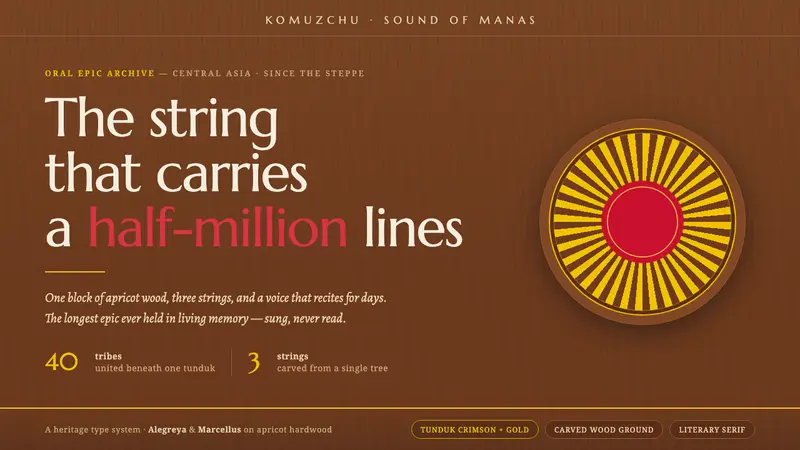 Kyrgyz Komuz & Manas EpicWarmth carved from apricot wood. Crimson-and-gold tunduk sun-rays on dark grain, in literary serif.
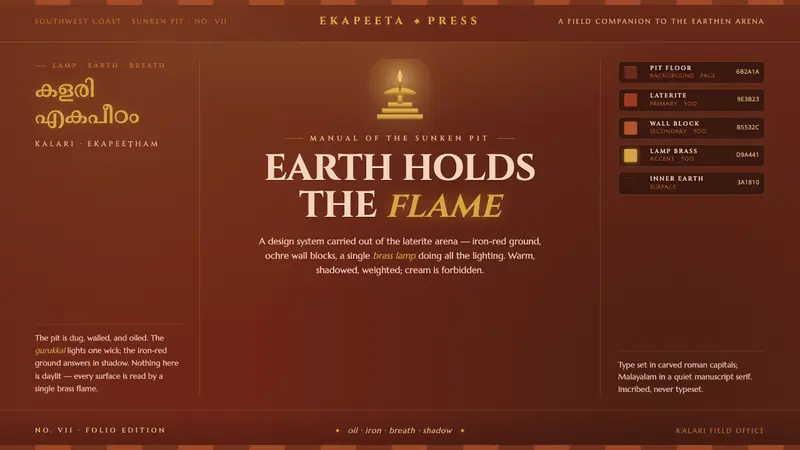 Kalaripayattu Kalari ArenaEarth holds the flame. Iron-red laterite, ochre wall blocks, a single brass lamp lighting all.
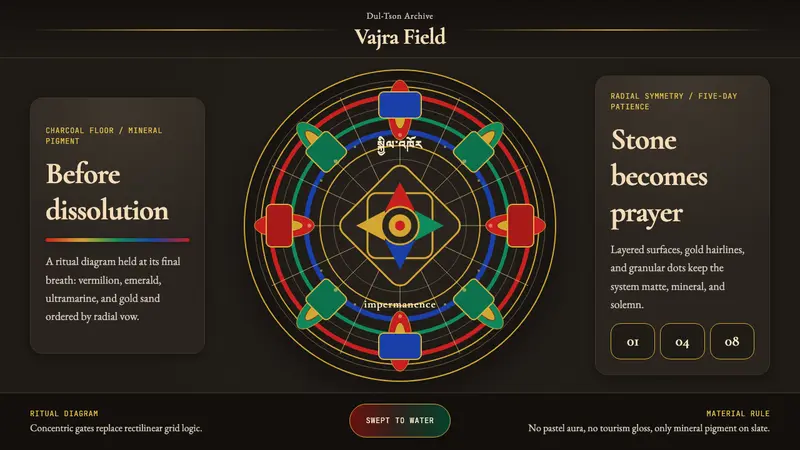 Tibetan Vajrayana Sand MandalaSolemn impermanence. Vermilion, emerald, ultramarine and gold orbit on charcoal.
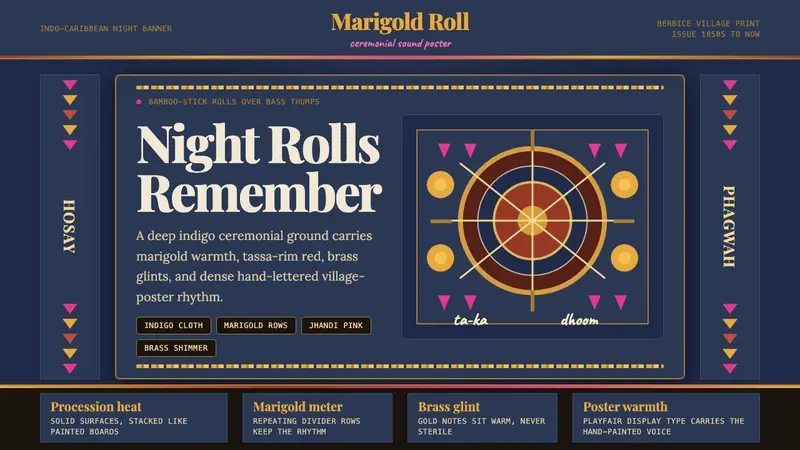 Guyanese Tassa DrumCeremony carries the beat. Indigo banners, Playfair type, and marigold rows glow.