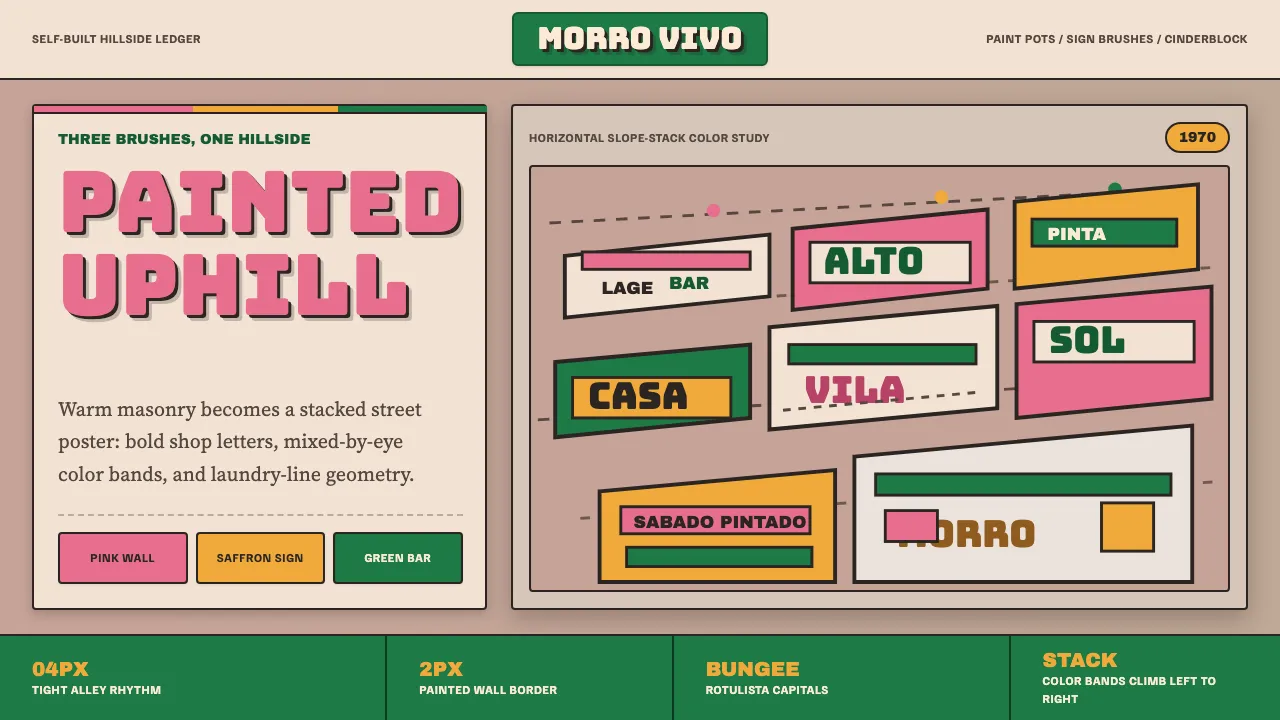
About Brazilian Favela Rocinha 1970s
Rocinha climbed a São Conrado hillside one cinderblock at a time — no architect, no zoning, just Saturday-afternoon paint pots and a rotulista's three brushes. By the 1970s it housed 100,000 people in a vertical tapestry of pink, saffron, and Antarctica-green facades, every surface a canvas for hand-lettered bar signs and soccer-club shields.
This design system captures that honest informal urbanism: raw masonry warmth as the ground tone, hand-painted stripe headers in mixed-by-eye colors, and the rotulista's bold lettering discipline that turned every botequim wall into a typographic statement.
- Origin
- Rocinha, Rio de Janeiro, Brazil (São Conrado / Gávea slope)
- Era
- 1930s squatter origin; self-built visual peak ~1970–1979
- Key figures
- Genival Cassiano dos Santos · Tião Santos · Carlos Nelson Ferreira dos Santos · Janice Perlman
- Movements
- Self-built urbanism (autoconstrução) · Rotulista hand-lettering · Brazilian botequim signage
Brazilian Favela Rocinha 1970s design spec
Colors
Typography
The other 11 sections — buttons, cards, spacing, motion, techniques and more — open once you unlock. Download the DESIGN.md or send it to your AI in one click. Unlock once, yours forever.
Sign up nowStyles similar to Brazilian Favela Rocinha 1970s
Also inspired by architecture & places, with a close feel.
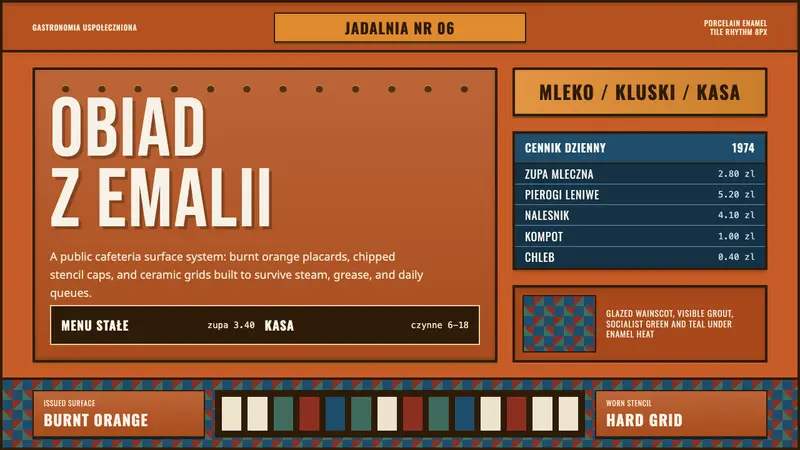 Polish Milk Bar (PRL)State-issued warmth. Burnt orange enamel, stencil caps, and hard tile grids.
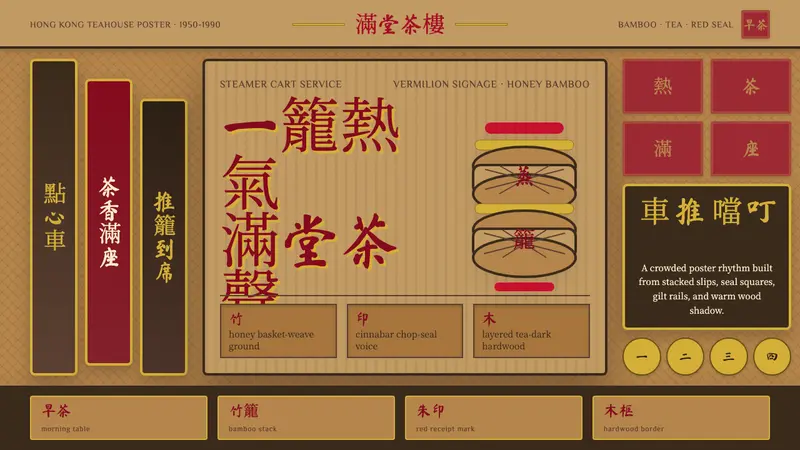 Dim Sum CartWarm clutter sings. Vermilion seals, bamboo weave, and brush type stack like a teahouse cart.
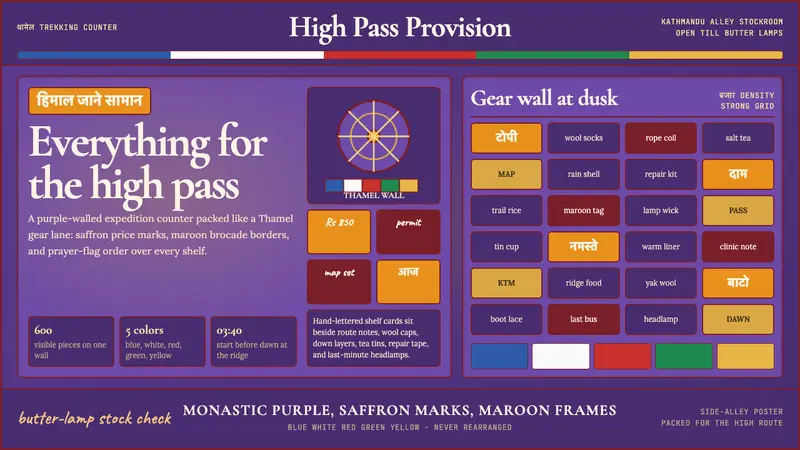 Kathmandu Thamel TrekkingSacred clutter sells the climb. Purple walls, saffron type, prayer-flag bands pack every inch.
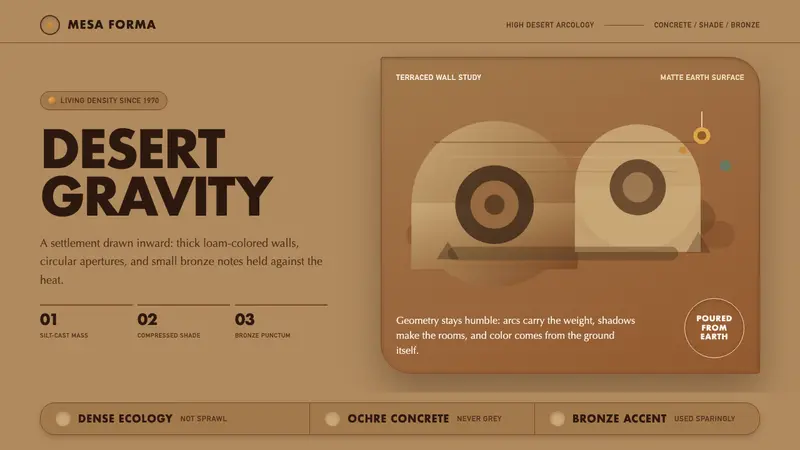 Arcosanti ArcologyArchitecture becomes desert. Ochre concrete, circular apertures, and bronze accents hold the shade.