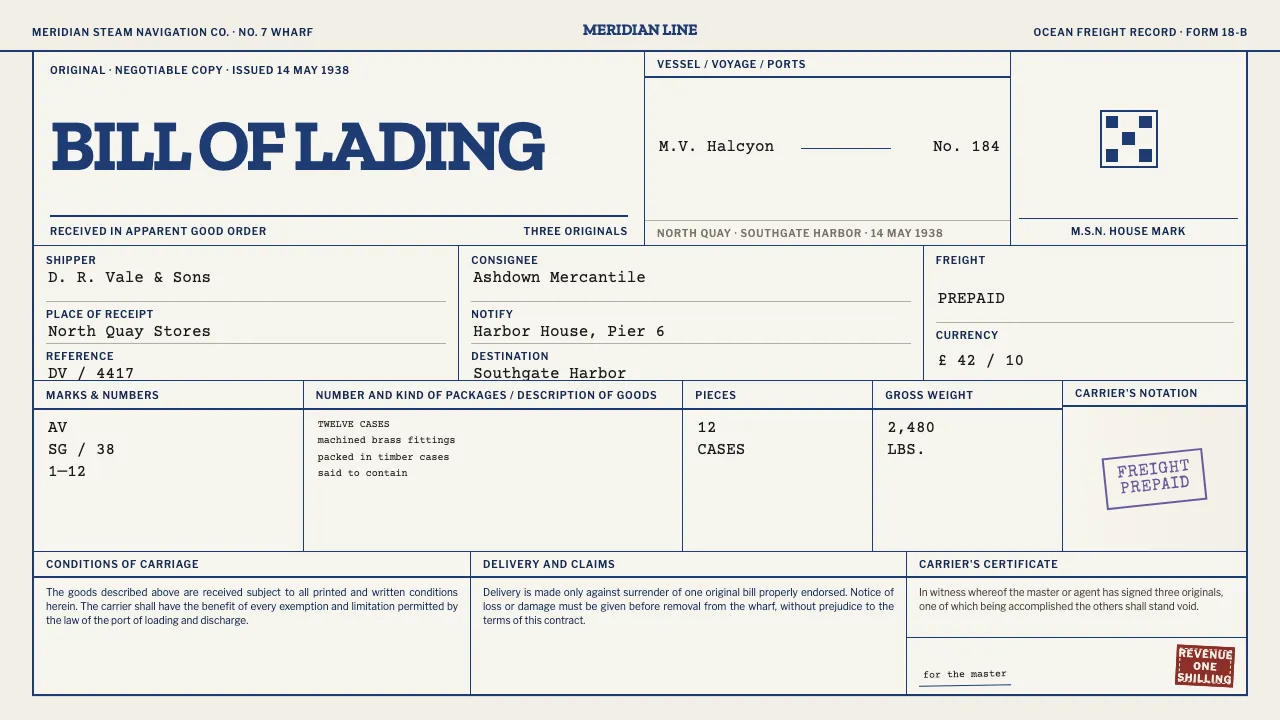
About Bill of Lading
A bill of lading was never designed to be looked at. It was a legal instrument printed to fill a sheet: an engraved house crest, a rule-boxed table of shipper and consignee and marks and numbers, and clause blocks set so small they were never meant to be read. Then the clerk fed it into an Underwood.
What survives is not one layout but four, stacked out of register — engraved blue print, purple stamp ink, typewriter black, a red revenue stamp gummed over the lot. This system rebuilds that stack: dense ruling, agate legal text, monospace fill that lands slightly off the printed line.
- Origin
- Transatlantic and Pacific steamship trade — American and British lines
- Era
- 1900–1950 (Uniform Bill of Lading Act 1916; ICC forms in 49 CFR Part 1035)
- Key figures
- Interstate Commerce Commission · Cunard Line · Matson Navigation Company · Dollar Steamship Line
- Movements
- commercial job printing · engraved letterpress forms · American form design
Bill of Lading design spec
Colors
Typography
The other 11 sections — buttons, cards, spacing, motion, techniques and more — open once you unlock. Download the DESIGN.md or send it to your AI in one click. Unlock once, yours forever.
Sign up nowStyles similar to Bill of Lading
Also inspired by print & type, with a close feel.
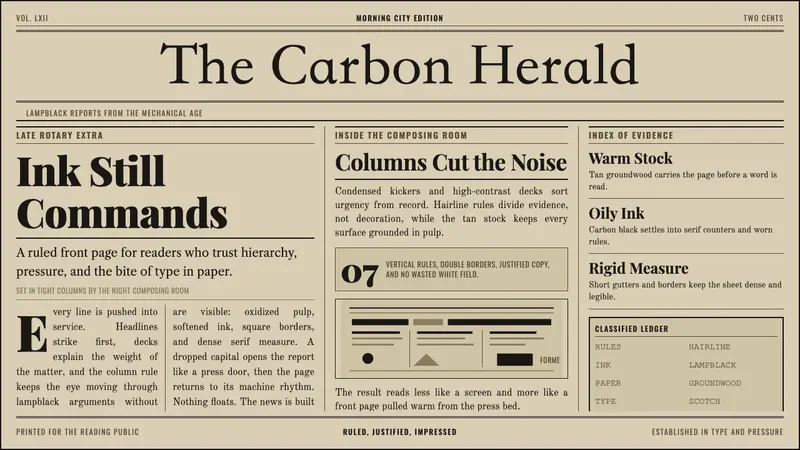 Broadsheet LetterpressAuthority in ink. Lampblack serif decks lock into tan paper with strict ruled columns.
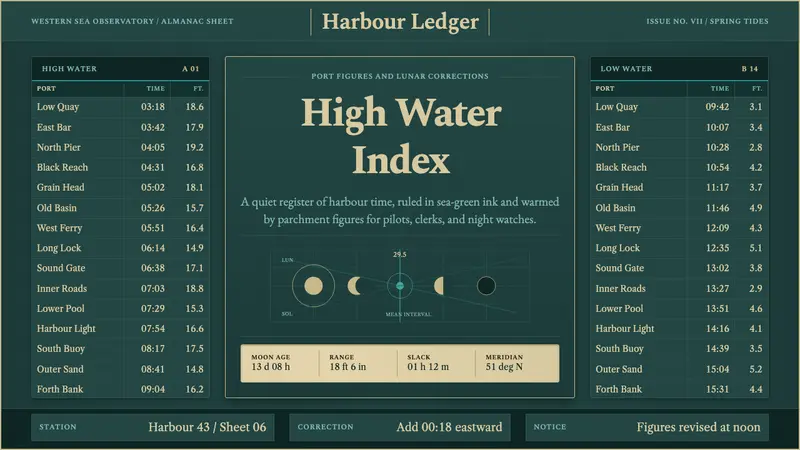 Tide Table AlmanacData becomes ornament. Deep teal grids and parchment serif figures carry a calm tide-table voice.
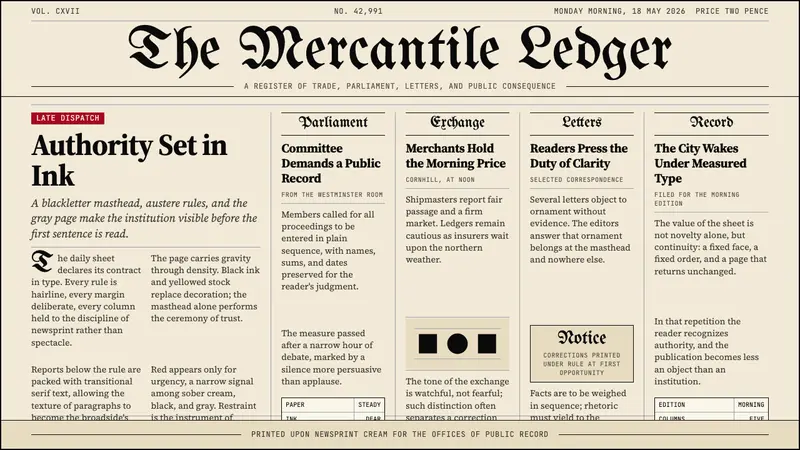 Gothic Blackletter Newspaper Masthead (1700)Authority in ink. Blackletter masthead, cream newsprint, and hairline columns.
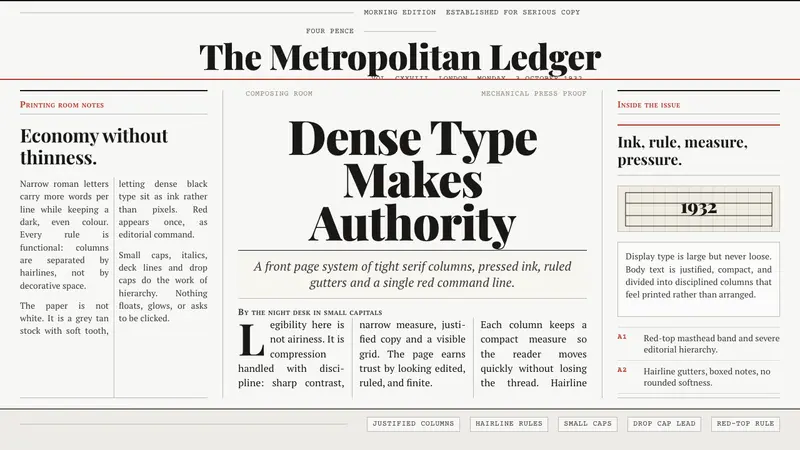 Times New Roman by MorisonAuthority under pressure. Dense black serif columns on grey-tan newsprint, ruled in red.