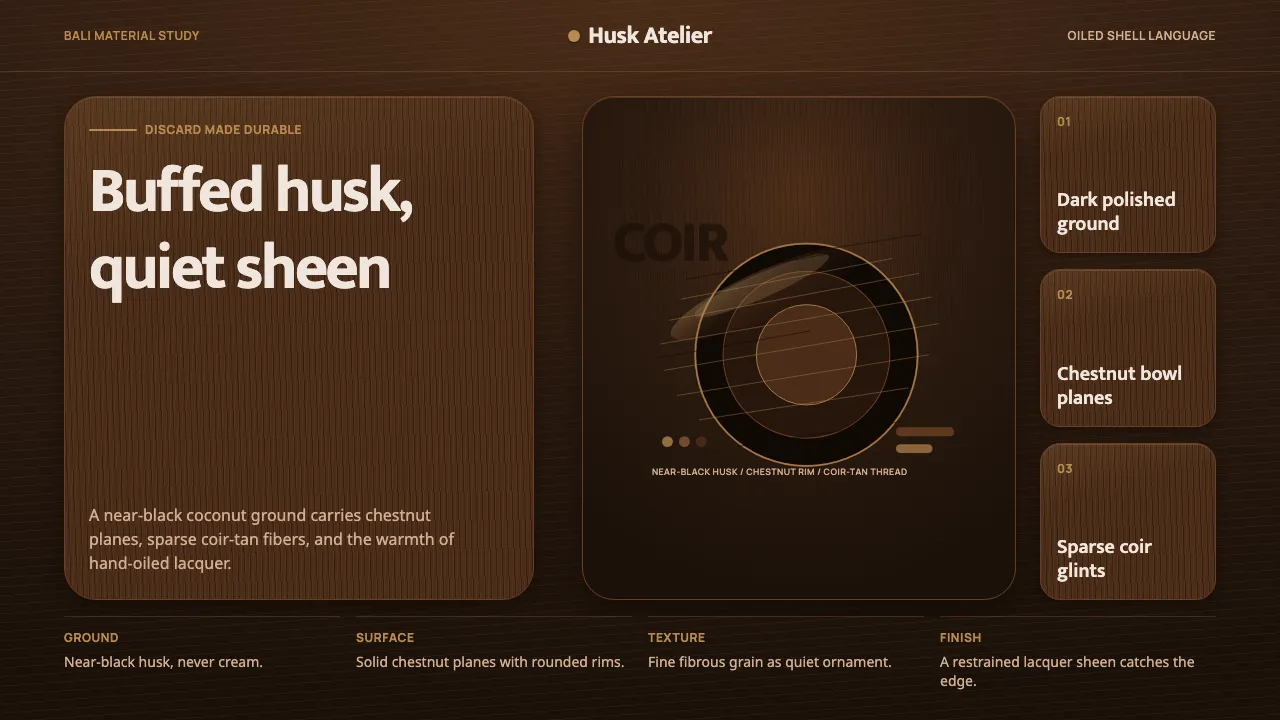
About Balinese Coconut Shell
Balinese coconut-shell craft turns a discarded husk into bowls, buttons, and lacquerware. Sanded and oiled or clear-lacquered, the shell reveals a near-black-to-chestnut surface threaded with fibrous coir grain. The ground is always the dark polished husk — never cream — with a natural sheen that catches light along its rounded, bowl-like silhouettes.
This design system distills that material into a digital language: a near-black husk page, chestnut surfaces, and a single fibrous coir-tan accent used sparingly, all carrying clean, eco, modern type and the buffed warmth of hand-oiled shell.
- Origin
- Southeast Asia — Bali, Indonesia
- Era
- 1990–2010 (Balinese eco-craft revival; current artisanal lacquerware ~2000s)
- Key figures
- Balinese coconut-shell artisans · Balinese lacquerware makers
- Movements
- Balinese eco/natural-material craft · Coconut-shell carving · Coconut-shell lacquerware
Balinese Coconut Shell design spec
Colors
Typography
The other 11 sections — buttons, cards, spacing, motion, techniques and more — open once you unlock. Download the DESIGN.md or send it to your AI in one click. Unlock once, yours forever.
Sign up nowStyles similar to Balinese Coconut Shell
Also inspired by crafts & folk art, with a close feel.
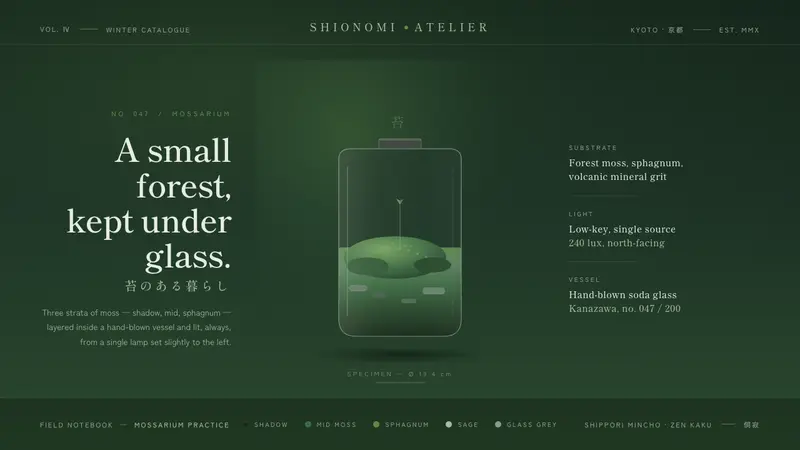 Moss TerrariumWabi-sabi, kept under glass. Layered moss greens on shadow ground, mincho serifs, one soft lamp.
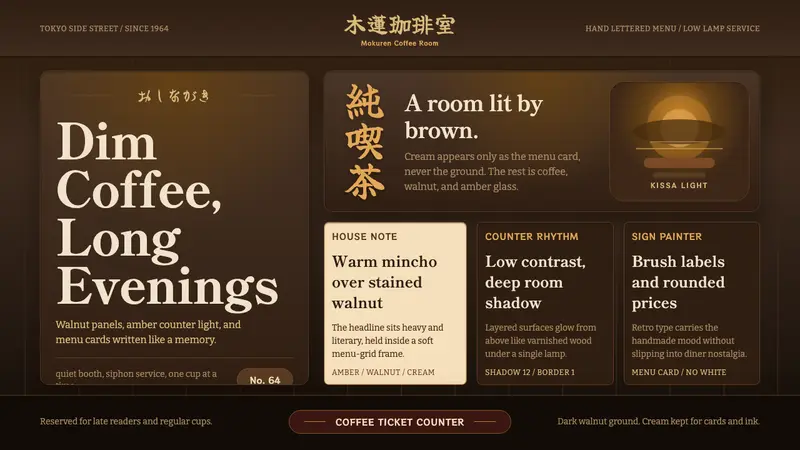 Shōwa KissatenDimness is the luxury. Walnut browns, amber glow, and Mincho type frame a menu-grid room.
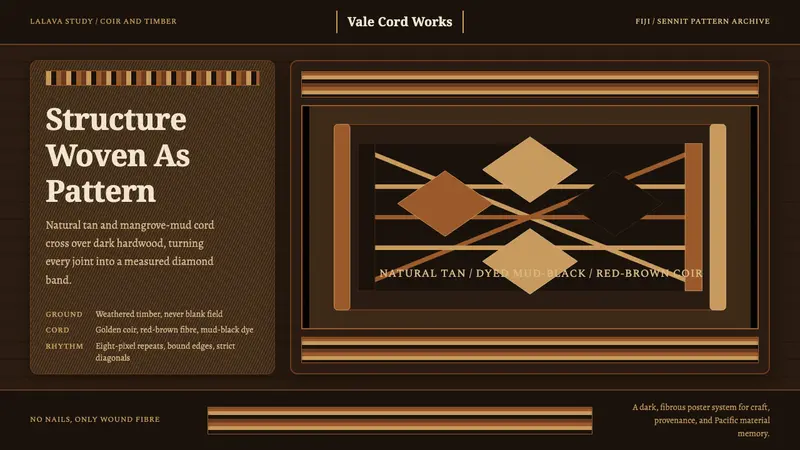 Fijian Magimagi LashingStructure becomes ornament. Tan coir diamonds bind mud-black timber in a strict woven grid.
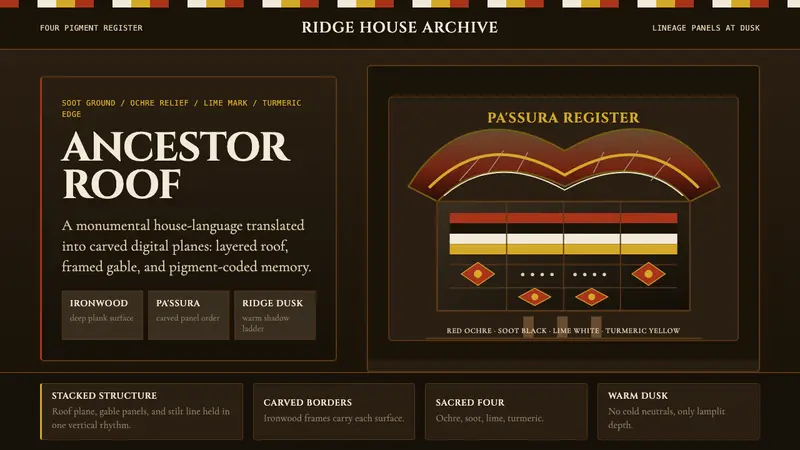 Torajan Tongkonan (Boat-Roof House)Ancestral dusk, carved in color. Soot black frames ochre, lime white, and turmeric bands.