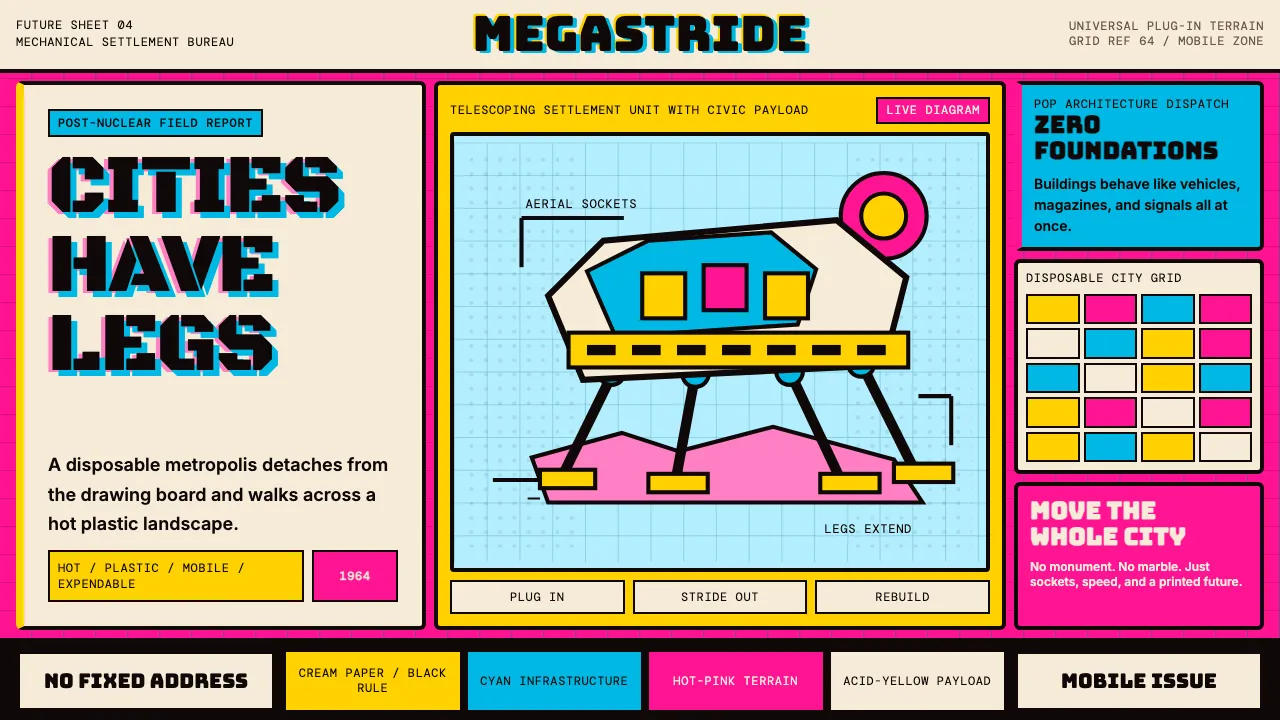
About Archigram Walking City (1964)
Archigram's Walking City is architecture as comic-book prophecy — giant reptilian-mechanical structures striding across post-nuclear landscapes on telescoping legs, drawn by Ron Herron in 1964 for the most radical architectural collective Britain ever produced. The aesthetic is hot, plastic, mobile, expendable.
This system channels the Archigram magazine's pop-art collage density: simultaneous saturated colors, chunky futuristic display type, heavy black borders, and the conviction that buildings should walk and cities should be disposable.
- Origin
- London, England
- Era
- 1961–1974 (Archigram collective); Walking City proposition 1964
- Key figures
- Peter Cook · Ron Herron · Warren Chalk · Dennis Crompton
- Movements
- British post-war architectural avant-garde · 1960s pop-architecture · comic-book-architecture visual tradition
Archigram Walking City (1964) design spec
Colors
Typography
The other 11 sections — buttons, cards, spacing, motion, techniques and more — open once you unlock. Download the DESIGN.md or send it to your AI in one click. Unlock once, yours forever.
Sign up nowStyles similar to Archigram Walking City (1964)
Also inspired by art & artists, with a close feel.
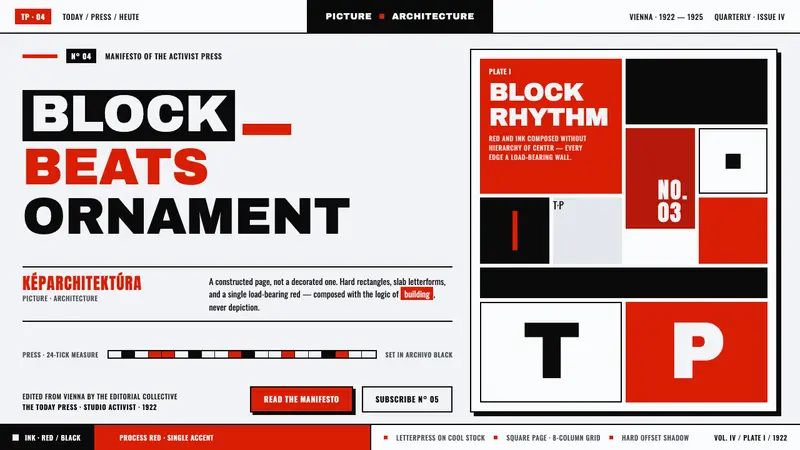 Lajos Kassák MA ConstructivismPage as building, not picture. Red and ink slab-sans blocks set asymmetrically on printed white.
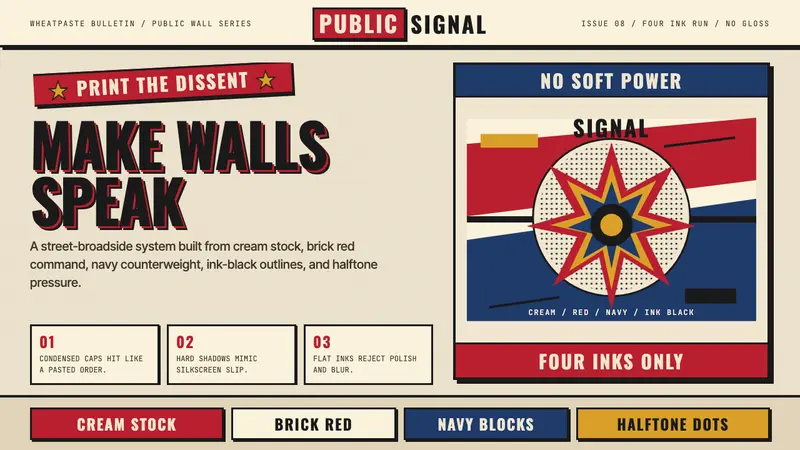 Shepard Fairey OBEYSilkscreen propaganda shouts. Cream paper, brick red, navy blocks, halftone grit.
 April Greiman HybridResolution becomes material. Bitmap type and process magenta collide on a broken grid.
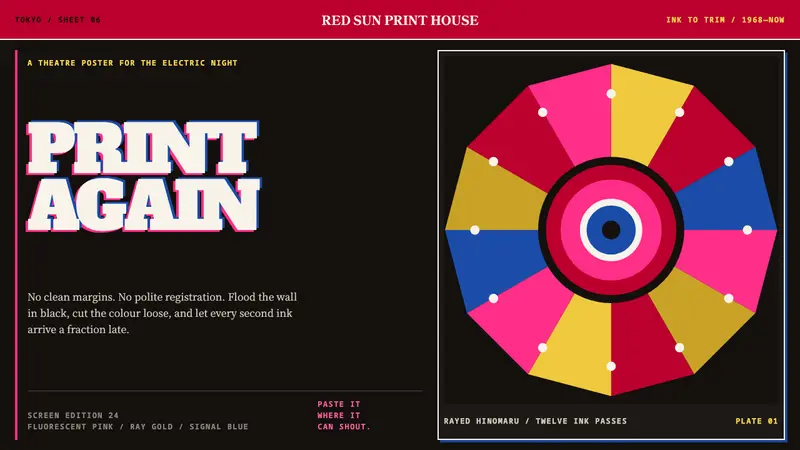 Tadanori YokooPrints against polite order. Fluorescent pink cuts through black with a rayed gold sun.