About Nuristani Carved Cedar
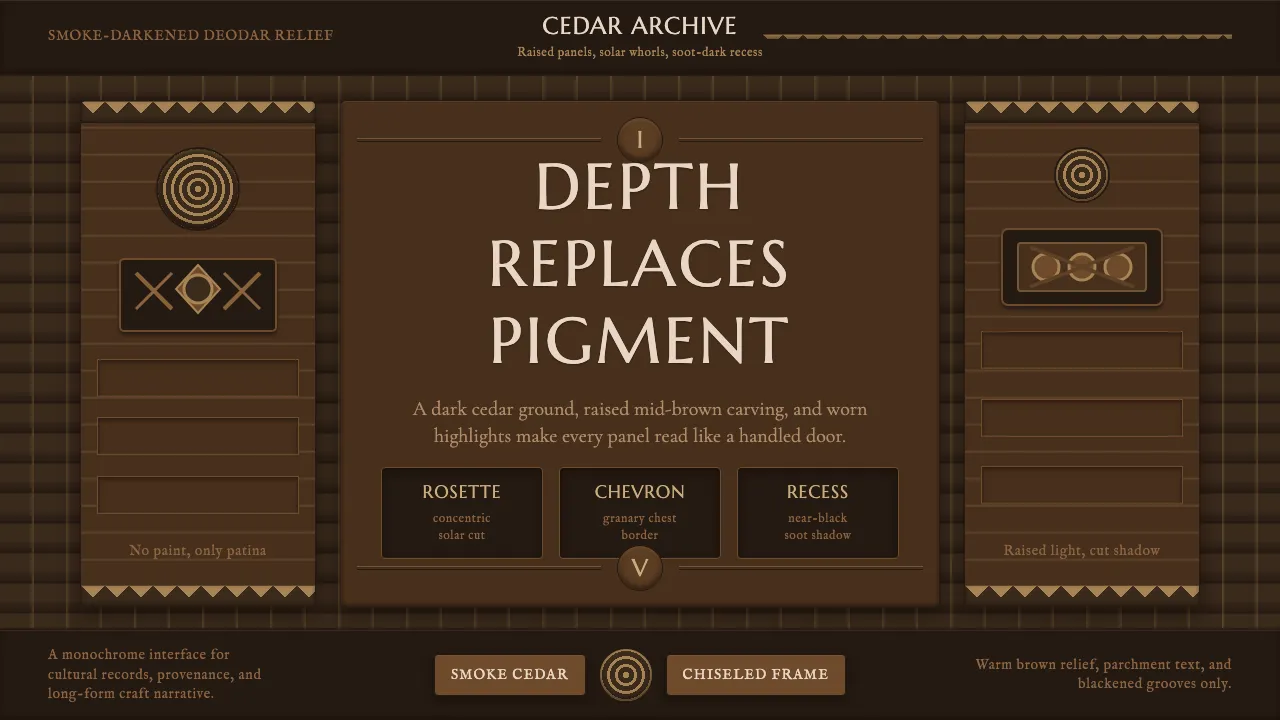
In the high valleys of Kafiristan, before the 1896 conversion, anonymous Kafir master carvers covered deodar-cedar columns, doors, and granary chests in deep-relief rosettes, solar discs, chevrons, and ibex-head finials. The wood was never painted — its only color is the warm brown patina of smoke-darkened cedar, with worn highlights catching the raised carving and near-black shadow pooling in the recesses.
This system translates that monochrome woodcraft into a dark, tactile interface: a smoke-aged cedar ground, mid-brown carved surfaces, and chiseled raised-panel borders that read as door and chest frames — depth and grain instead of pigment and gloss.
- Origin
- Nuristan, north-eastern Afghanistan, Hindu Kush (formerly Kafiristan)
- Era
- pre-1900 (pre-Islamic Kafir / Kafiristan period, before the 1896 conversion)
- Key figures
- anonymous Kafir/Nuristani master woodcarvers · Turquoise Mountain craft researchers · ethnographic collectors of Kafiristan ancestor figures
- Movements
- Nuristani/Kafir vernacular architecture · Kafiristan ancestor-figure carving · pre-Islamic Hindu Kush relief woodcraft
Nuristani Carved Cedar design spec
Colors
Typography
The other 11 sections — buttons, cards, spacing, motion, techniques and more — open once you unlock. Download the DESIGN.md or send it to your AI in one click. Unlock once, yours forever.
Sign up nowStyles similar to Nuristani Carved Cedar
Also inspired by crafts & folk art, with a close feel.
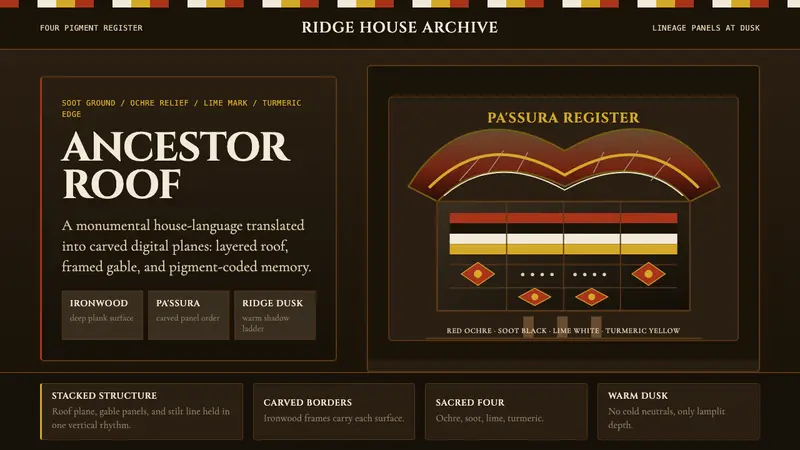 Torajan Tongkonan (Boat-Roof House)Ancestral dusk, carved in color. Soot black frames ochre, lime white, and turmeric bands.
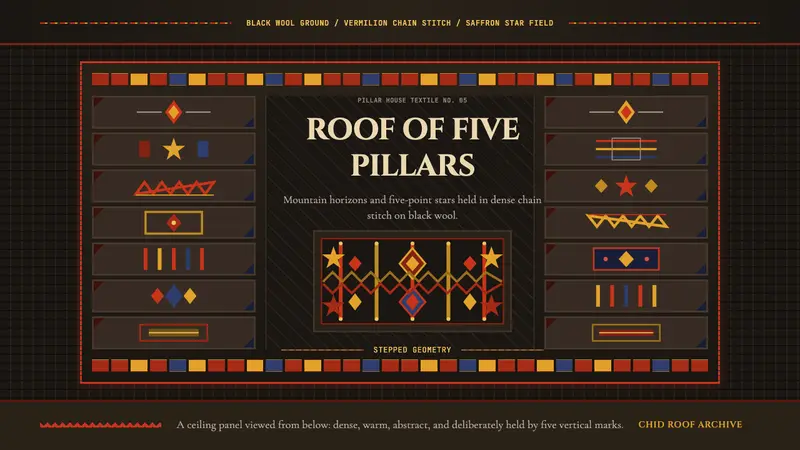 Tajik Pamir Needlework (Chid Roof)Cosmos stitched into wool. Vermilion diamonds and saffron stars hold a five-pillar grid.
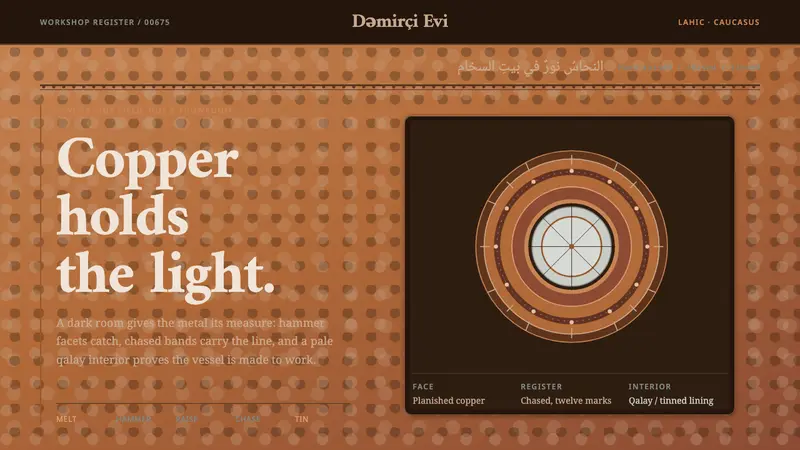 Lahic CoppersmithCopper becomes light. Soot-black bands, Amiri type, hammer facets and tin reveal the hand.
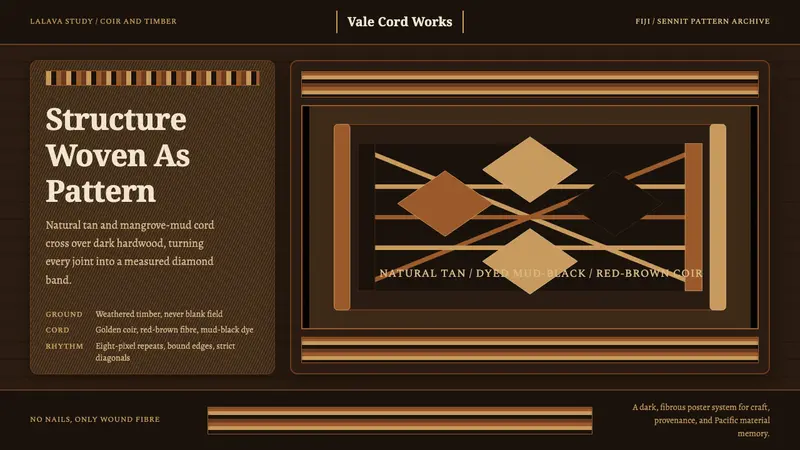 Fijian Magimagi LashingStructure becomes ornament. Tan coir diamonds bind mud-black timber in a strict woven grid.