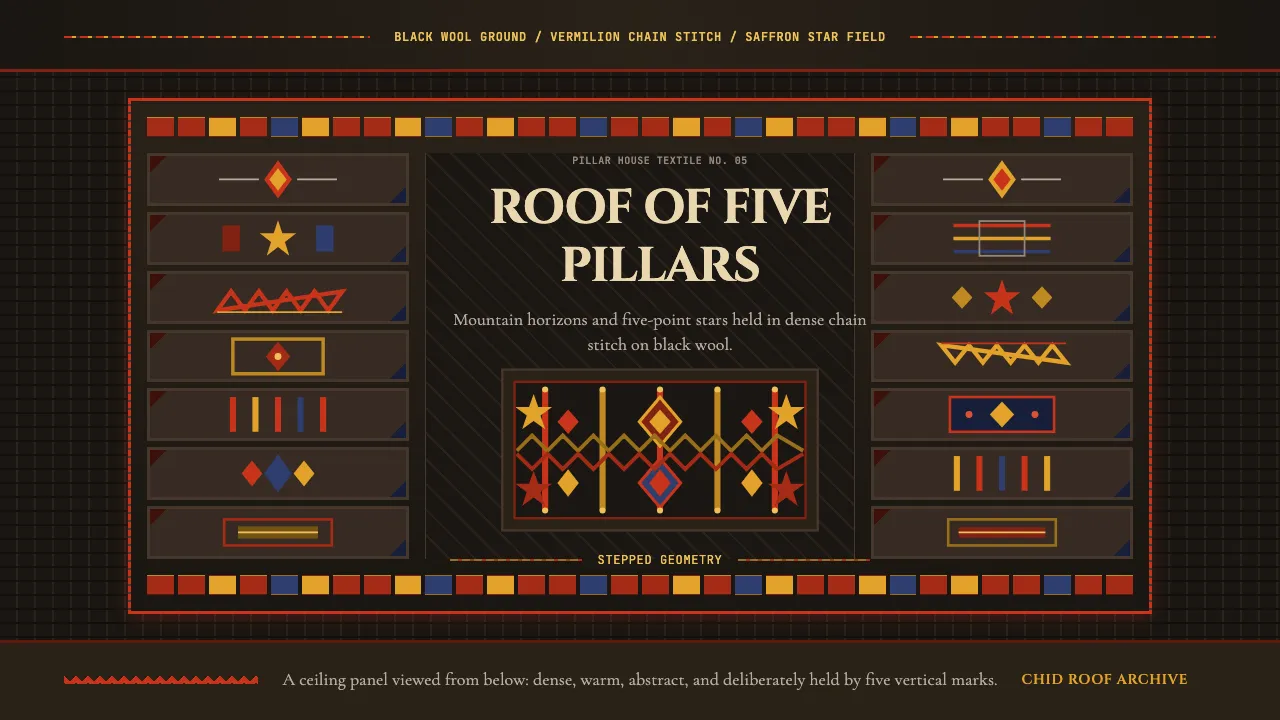
About Tajik Pamir Needlework (Chid Roof)
In the high valleys of Gorno-Badakhshan, Pamiri women embroider dense chain-stitch panels to drape across the chid — the five-pillar central room that is both home and cosmos. Each pillar represents one of the Five Holy Ones; each embroidered panel maps mountain horizons and cosmological stars onto black wool.
This design system translates that tradition into interface: a dark wool ground, vermilion and saffron chain-stitch geometry, stepped zigzags instead of smooth curves, and typography rooted in carved wooden beams. Everything reads like a ceiling panel viewed from below — dense, warm, abstract, and structurally deliberate.
Learn more about the Tajik Pamir Needlework (Chid Roof) style
- Origin
- Tajikistan, Gorno-Badakhshan Autonomous Oblast — Khorog, Wakhan, Shughnan, Bartang valleys
- Era
- 19th–20th century (peak 1880–1960 pre-collectivization)
- Key figures
- Mikhail Andreev · Sayfullo Abdulloev · Hermann Kreutzmann
- Movements
- Central Asian suzani tradition · Pamiri Ismaili material culture · Wakhi textile school
Tajik Pamir Needlework (Chid Roof) design spec
Colors
Typography
The other 11 sections — buttons, cards, spacing, motion, techniques and more — open once you unlock. Download the DESIGN.md or send it to your AI in one click. Unlock once, yours forever.
Sign up nowStyles similar to Tajik Pamir Needlework (Chid Roof)
Also inspired by crafts & folk art, with a close feel.
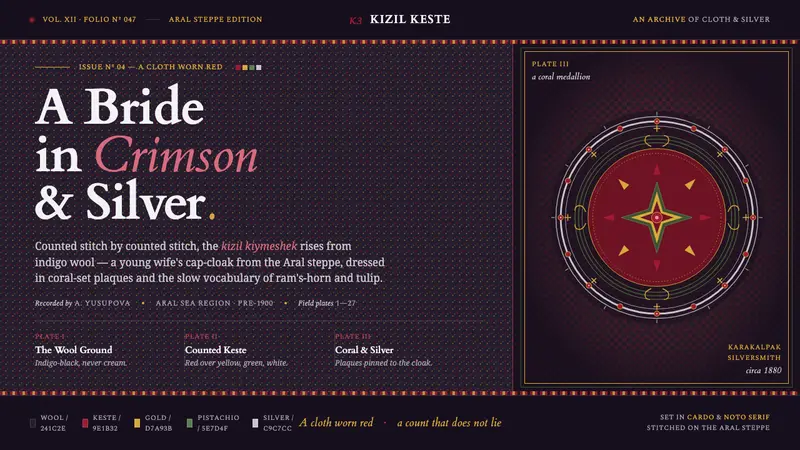 Karakalpak Kimeshek DressA cloth worn red. Crimson keste cross-stitch on indigo wool, set with silver-and-coral jewelry.
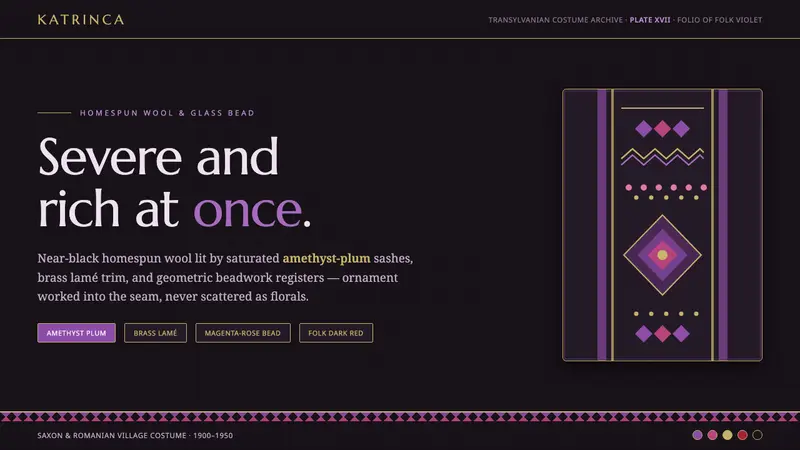 Romanian Folk VioletSevere and rich at once. Near-black homespun wool lit by amethyst-plum and brass beadwork bands.
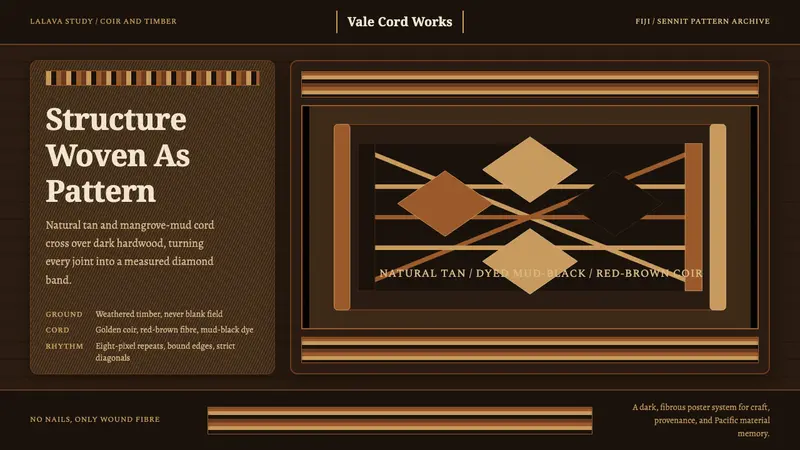 Fijian Magimagi LashingStructure becomes ornament. Tan coir diamonds bind mud-black timber in a strict woven grid.
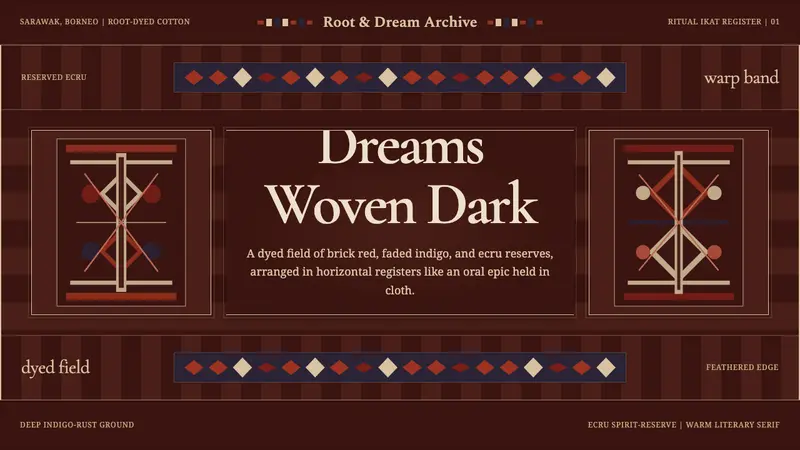 Iban Pua KumbuSacred cloth logic. Indigo-rust bands, ecru reserves, and blurred ikat edges carry it.