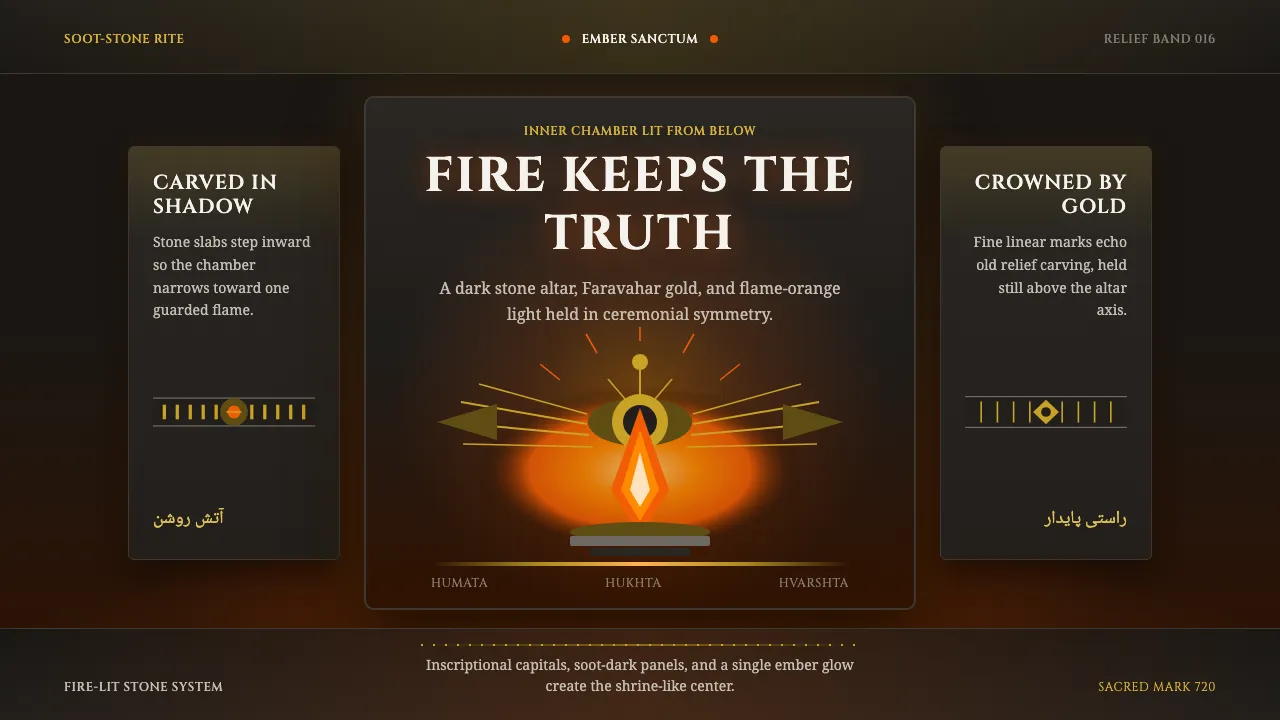
About Zoroastrian Fire Temple
Zoroastrian Fire Temple is the visual language of an eternal flame kept in stone darkness. Warm flame-orange burns against soot-dark sanctum walls, while the winged Faravahar — the emblem of ancient Persia — presides above the altar in carved-stone symmetry.
It draws on the Atash Behram sacred fires of Yazd and the Parsi agiaries of Mumbai, on Achaemenid relief bands and the radial glow of fire seen in a darkened inner chamber. Inscriptional serif capitals carry the gravity of carved stone; everything else recedes into shadow so the flame can speak.
- Origin
- Persia/Iran (Yazd, Pars) and the Parsi diaspora (Gujarat, Mumbai)
- Era
- pre-1900 (Achaemenid Persia onward; Yazd Atash Behram still burning)
- Key figures
- Zarathustra · Achaemenid Persia · Parsi dasturs
- Movements
- Zoroastrianism · Achaemenid relief art · fire-temple ritual
Zoroastrian Fire Temple design spec
Colors
Typography
The other 11 sections — buttons, cards, spacing, motion, techniques and more — open once you unlock. Download the DESIGN.md or send it to your AI in one click. Unlock once, yours forever.
Sign up nowStyles similar to Zoroastrian Fire Temple
Also inspired by crafts & folk art, with a close feel.
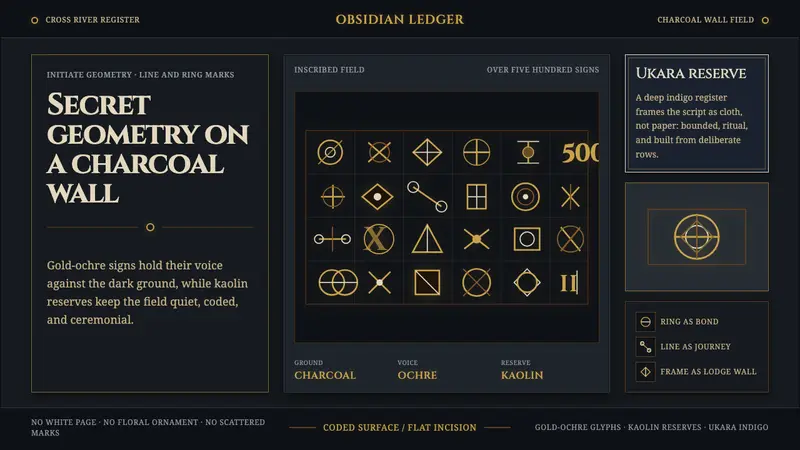 Nsibidi Script Cross RiverSecrecy glows in ochre. Ring-line glyphs sit on charcoal with kaolin and indigo reserves.
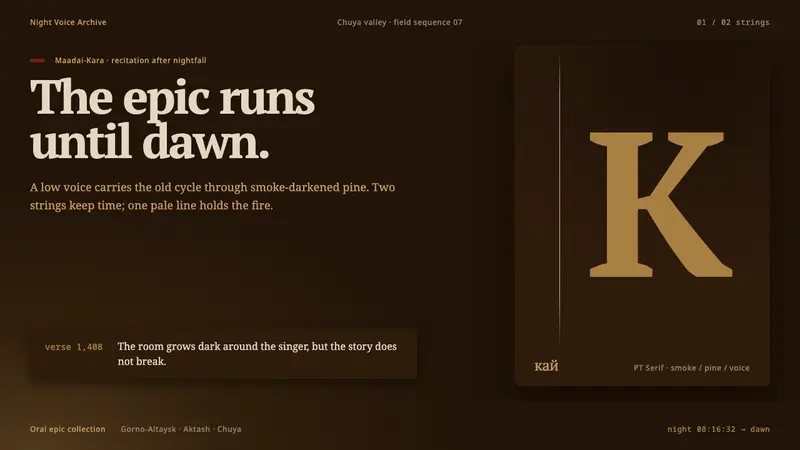 Altai Kai EpicEpic voice burns until dawn. Smoke-brown layers meet one pale string and a single dull red.
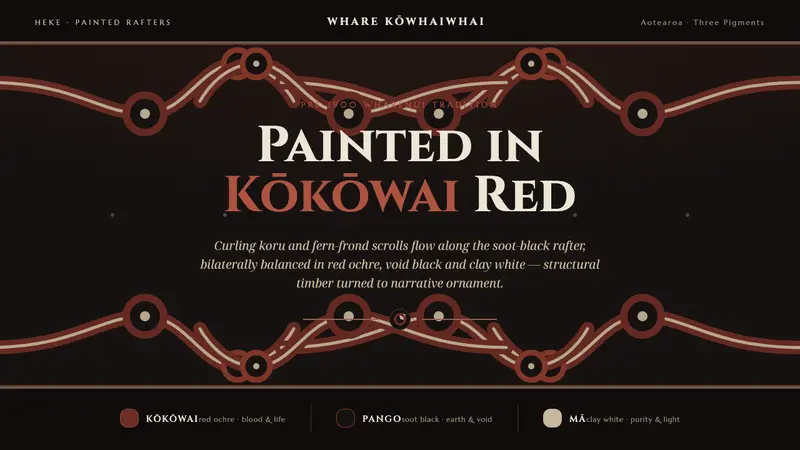 Māori Kōwhaiwhai RafterPainted timber, not pixels. Kōkōwai-red koru scrolls in mirrored balance on black, cut in Cinzel.
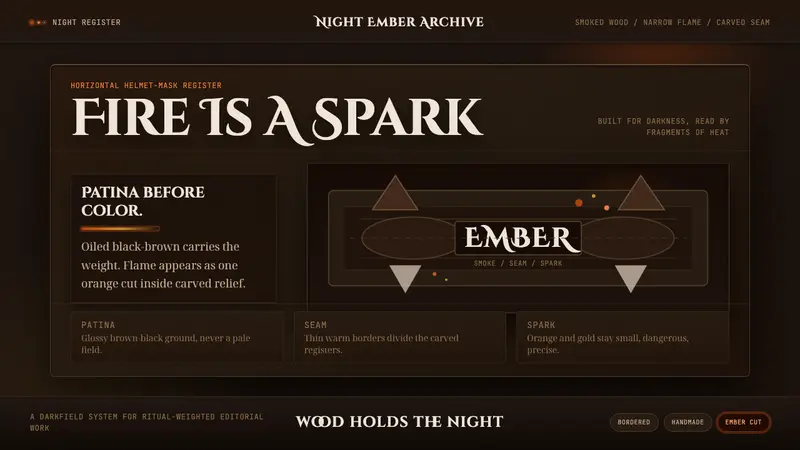 Senufo Firespitter MaskRitual darkness has heat. Smoked wood tones hold back tiny orange-gold sparks.