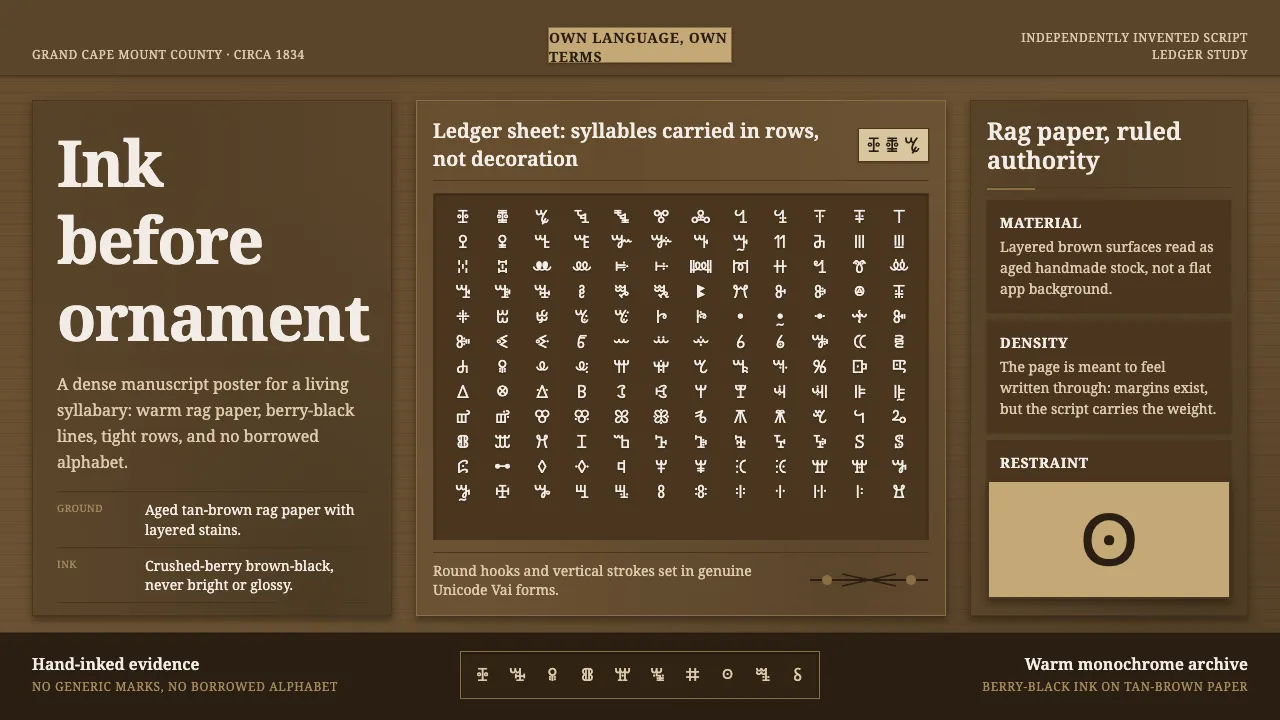
About Vai Syllabary Liberia
In 1834, Momolu Duwalu Bukele of the Vai people in what is now Grand Cape Mount County, Liberia, set down a script born from a dream and a people's need to write their own language on their own terms. The result, the Vai syllabary, stands as one of the vanishingly few writing systems invented from scratch in the modern era — not adapted from Arabic or Latin, but built glyph by glyph out of round hooks and vertical strokes.
This design system channels the physical object a Vai manuscript actually is: a sheet of handmade rag paper gone warm tan-brown with age, packed edge to edge with tight rows of syllable characters inked in crushed-berry brown-black. It favors density over whitespace, ink over gloss, and the authority of a real, still-living script over decorative approximation.
- Origin
- Grand Cape Mount County, Liberia
- Era
- invented circa 1834; script tradition runs through the early 20th century
- Key figures
- Momolu Duwalu Bukele
- Movements
- Indigenous African writing systems · Independently invented modern scripts
Vai Syllabary Liberia design spec
Colors
Typography
The other 11 sections — buttons, cards, spacing, motion, techniques and more — open once you unlock. Download the DESIGN.md or send it to your AI in one click. Unlock once, yours forever.
Sign up nowStyles similar to Vai Syllabary Liberia
Also inspired by print & type, with a close feel.
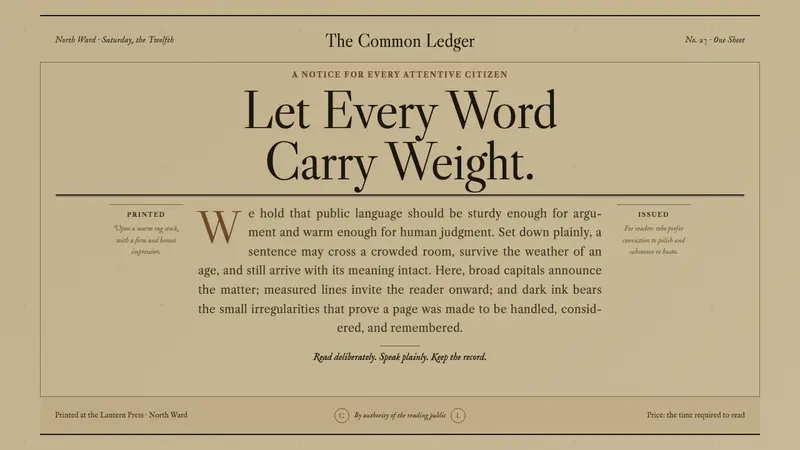 Caslon English Text SerifWarm authority, pressed into paper. Caslon capitals and engraved rules command an amber-grey sheet.
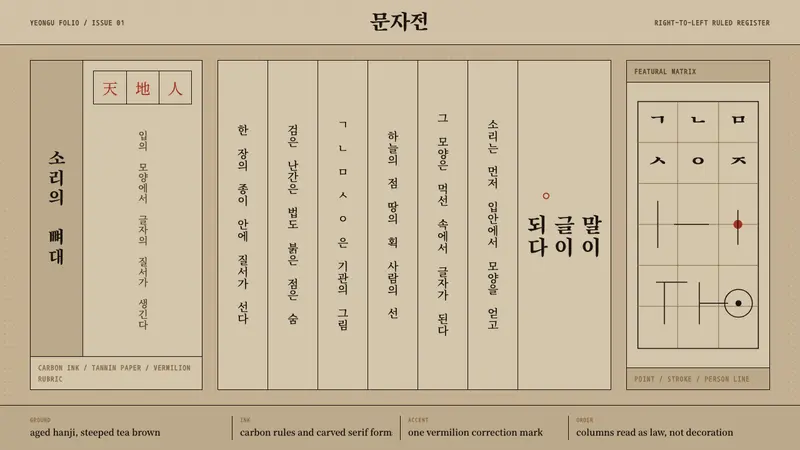 Hangul 訓民正音Ink obeys the grid. Carbon rules, vertical Myeongjo columns, and rare vermilion marks.
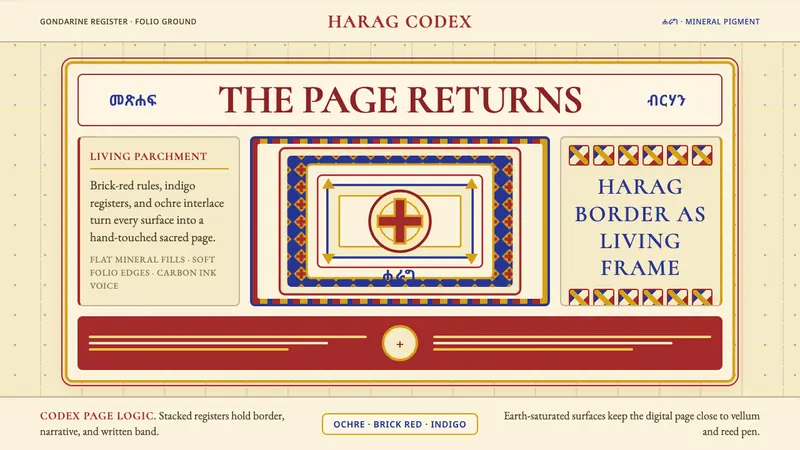 Ethiopian Orthodox ManuscriptSacred page, alive. Brick red, indigo, and ochre harag borders frame a staring icon.
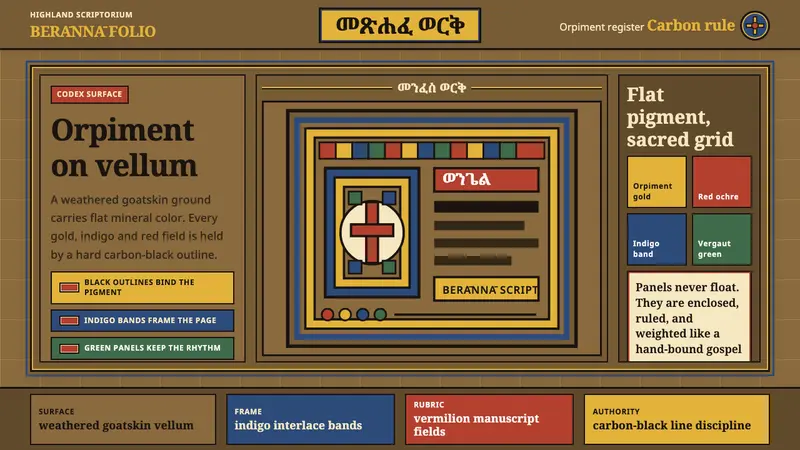 Ethiopian Ge'ez GospelSacred color held in line. Orpiment gold and indigo panels sit on weathered vellum.