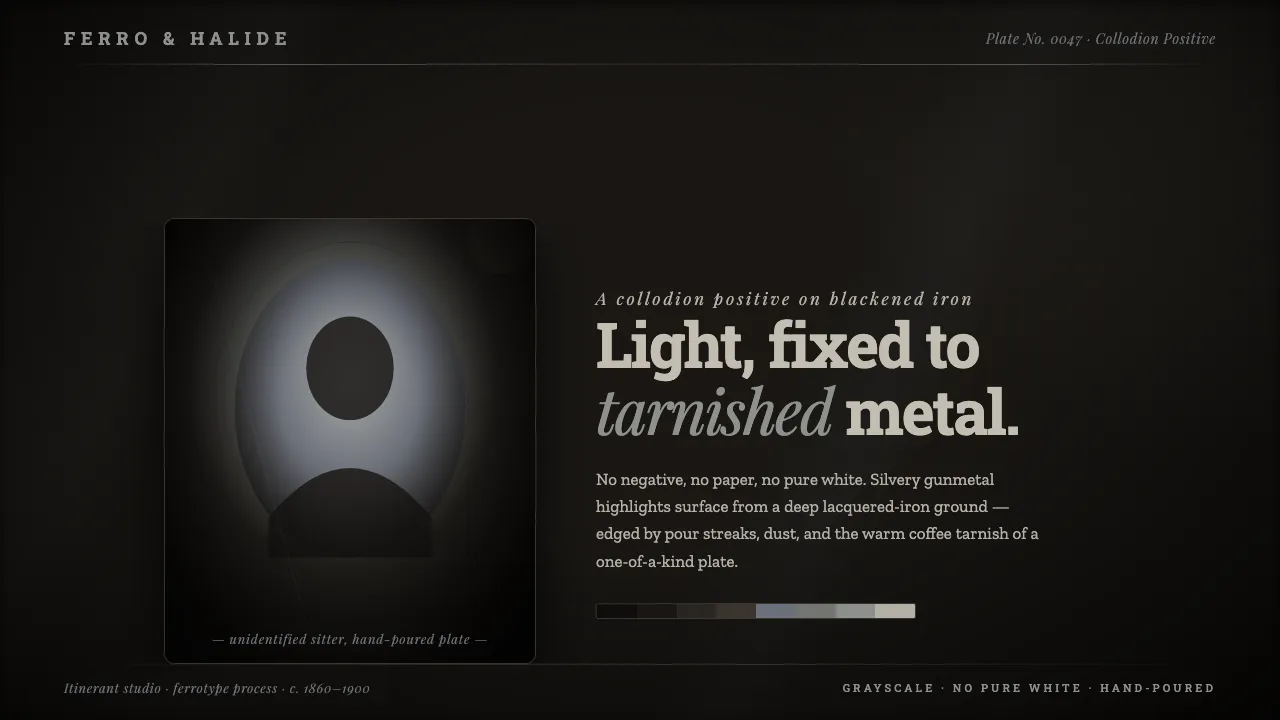
About Tintype Wet Plate
The tintype is a positive photograph fixed directly onto a blackened, japanned iron plate — a one-of-a-kind object with no negative, no print, no paper. From roughly 1860 to 1900, itinerant studios and Civil War field photographers made millions of them. The image is pure grayscale with no clipped white: silvery gunmetal highlights rise out of a deep, near-black metallic ground, edged by chemical pour streaks and bromide artifacts.
This system translates that wet-plate materiality to screen — a lacquered-iron substrate, gunmetal light, warm coffee-toned tarnish, and the honest scratches, dust, and vignettes of a hand-poured plate.
- Origin
- North America (itinerant studios and Civil War field photography)
- Era
- c. 1853–1900 (ferrotype/tintype era; collodion positive process)
- Key figures
- Hamilton Smith · Adolphe-Alexandre Martin
- Movements
- Wet-plate collodion photography · Ambrotype / tintype studio portraiture
Tintype Wet Plate design spec
Colors
Typography
The other 11 sections — buttons, cards, spacing, motion, techniques and more — open once you unlock. Download the DESIGN.md or send it to your AI in one click. Unlock once, yours forever.
Sign up nowStyles similar to Tintype Wet Plate
Also inspired by print & type, with a close feel.
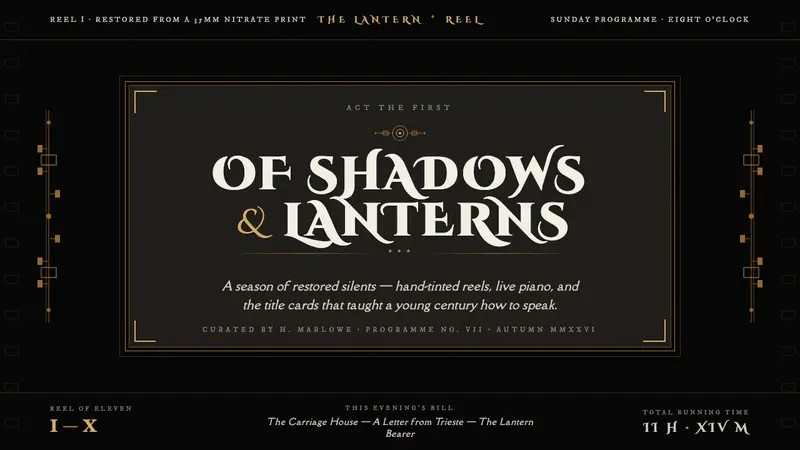 Silent Film IntertitleThe screen darkens, words appear. Warm off-white serif on jet-black film, framed in muted gilt.
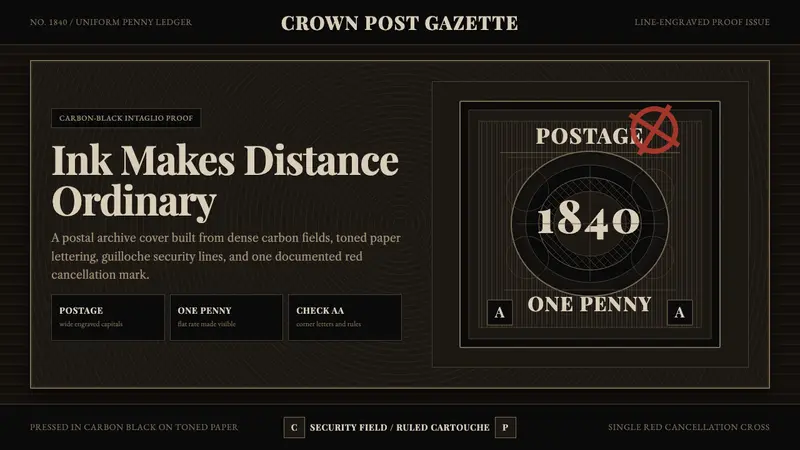 Penny Black StampBlack carries authority. Guilloche lines, Victorian serifs, and one red cross feel engraved.
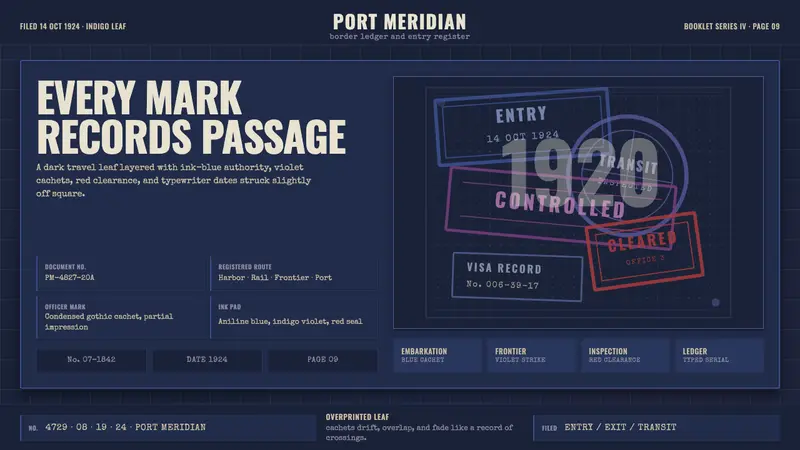 Vintage Passport StampsInk remembers passage. Indigo leaf, blue-violet cachets, red seal, typewriter serials.
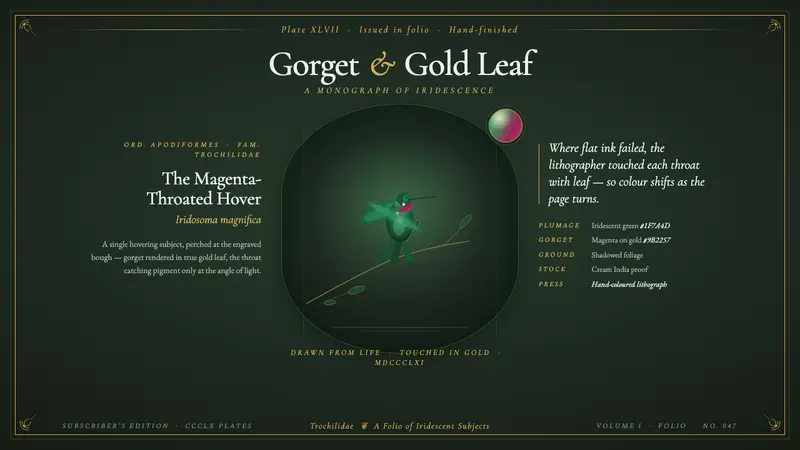 Gould Hummingbird PlateVictorian ornithology, jewel-grade. Green plumage on shadowed foliage, gorgets in gold leaf.