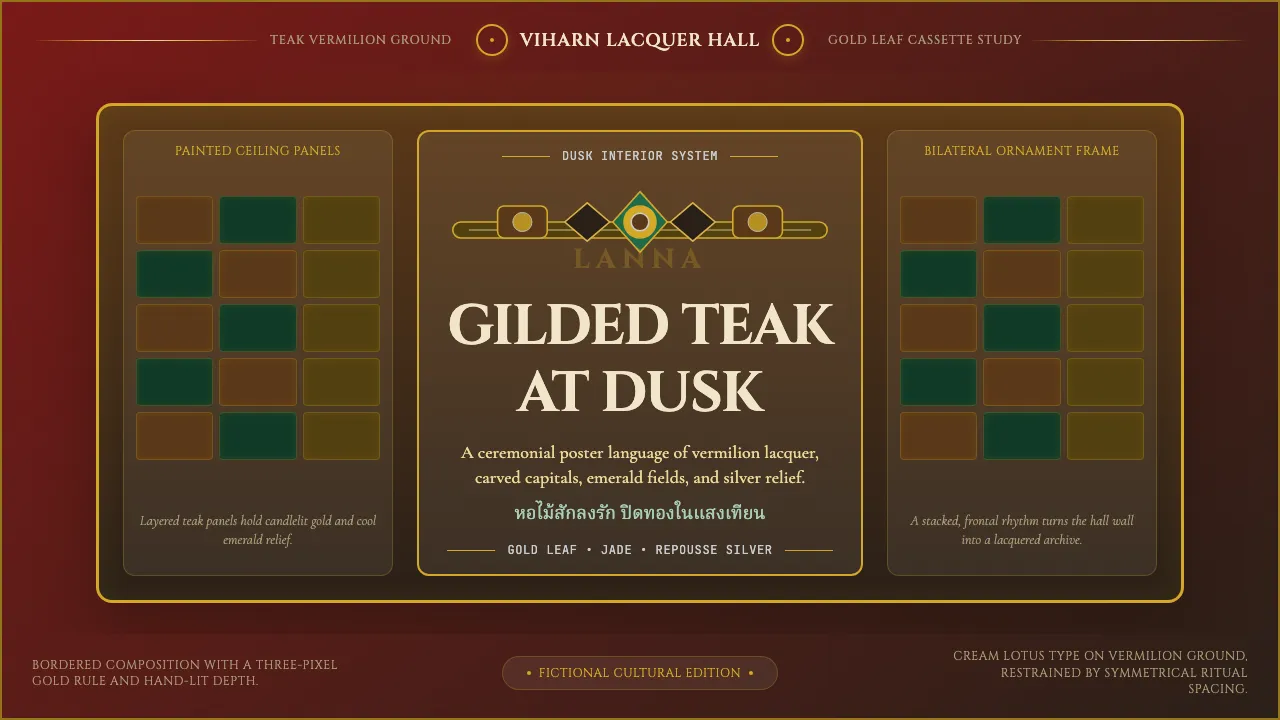
About Thai Lanna Tai Yai Temple
Lanna Tai Yai temple architecture is the most layered roof-tier tradition in upland mainland Southeast Asia. From King Mengrai's founding of Chiang Mai in 1296 through Khruba Sriwichai's early-twentieth-century restorations, the Lanna viharn — with its stacked triple-gabled roofs, golden chofa finials, and polychrome ceiling cassettes — became the definitive visual expression of northern Thai Buddhism.
This design system captures the interior atmosphere of a Lanna temple hall at dusk: deep teak-vermilion lacquer as the ground, gold-leaf painted panels for accent and hierarchy, emerald jade fields for secondary emphasis, and repoussé-silver chedi plating for cool contrast. Every surface feels hand-lacquered, gilded, and lit by candlelight.
- Origin
- Chiang Mai, Chiang Rai, Mae Hong Son, Lampang, Lamphun (Thailand); Shan State (Myanmar)
- Era
- Lanna Kingdom 1296–1558; Tai Yai continuum; revival under Khruba Sriwichai 1900s–1939
- Key figures
- King Mengrai · Khruba Sriwichai · Donald K. Swearer · Hans Penth
- Movements
- Lanna kingdom Buddhism · Tai Yai / Shan vernacular temple · lacquer-and-gold mural tradition
Thai Lanna Tai Yai Temple design spec
Colors
Typography
The other 11 sections — buttons, cards, spacing, motion, techniques and more — open once you unlock. Download the DESIGN.md or send it to your AI in one click. Unlock once, yours forever.
Sign up nowStyles similar to Thai Lanna Tai Yai Temple
Also inspired by architecture & places, with a close feel.
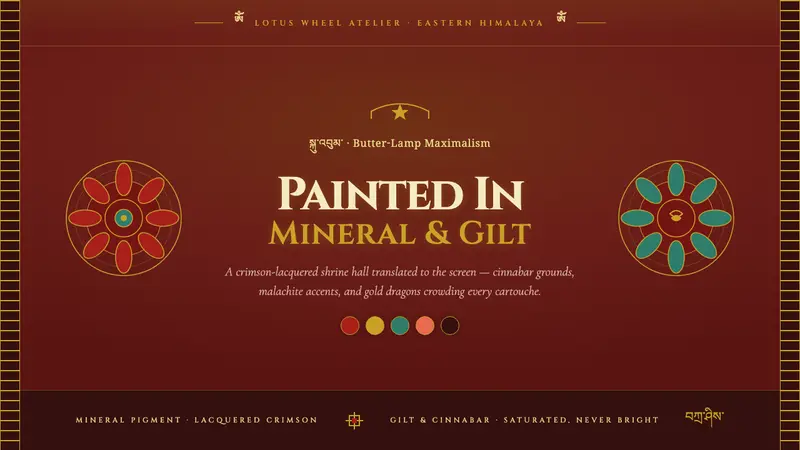 Sikkim Monastery MuralsButter-lamp maximalism. Cinnabar ground, gilt cartouche borders, mandala symmetry, Cinzel caps.
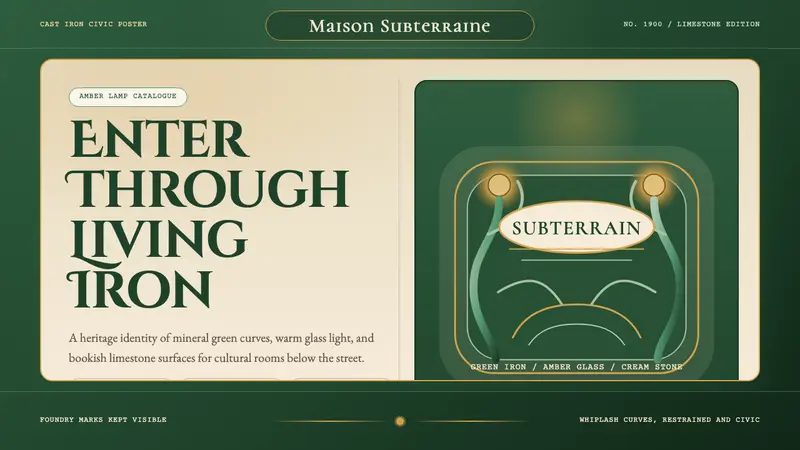 Paris Metro Guimard (1900)Civic sculpture, softly lit. Metro green ironwork frames amber glow and limestone type.
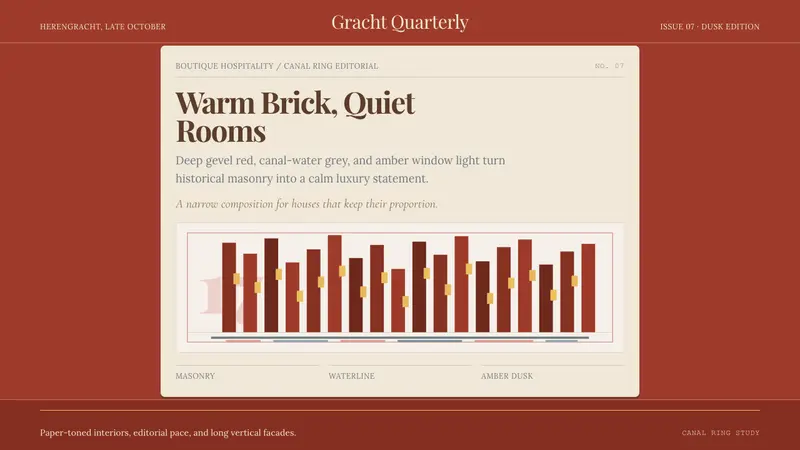 Amsterdam Canal HouseQuiet luxury in brick and cream. Playfair serif, narrow columns, amber window light.
 Jordanian Petra Rose NabataeanGeology feels monumental. Crevice umbra, rose strata, and Cinzel capitals carve the page.