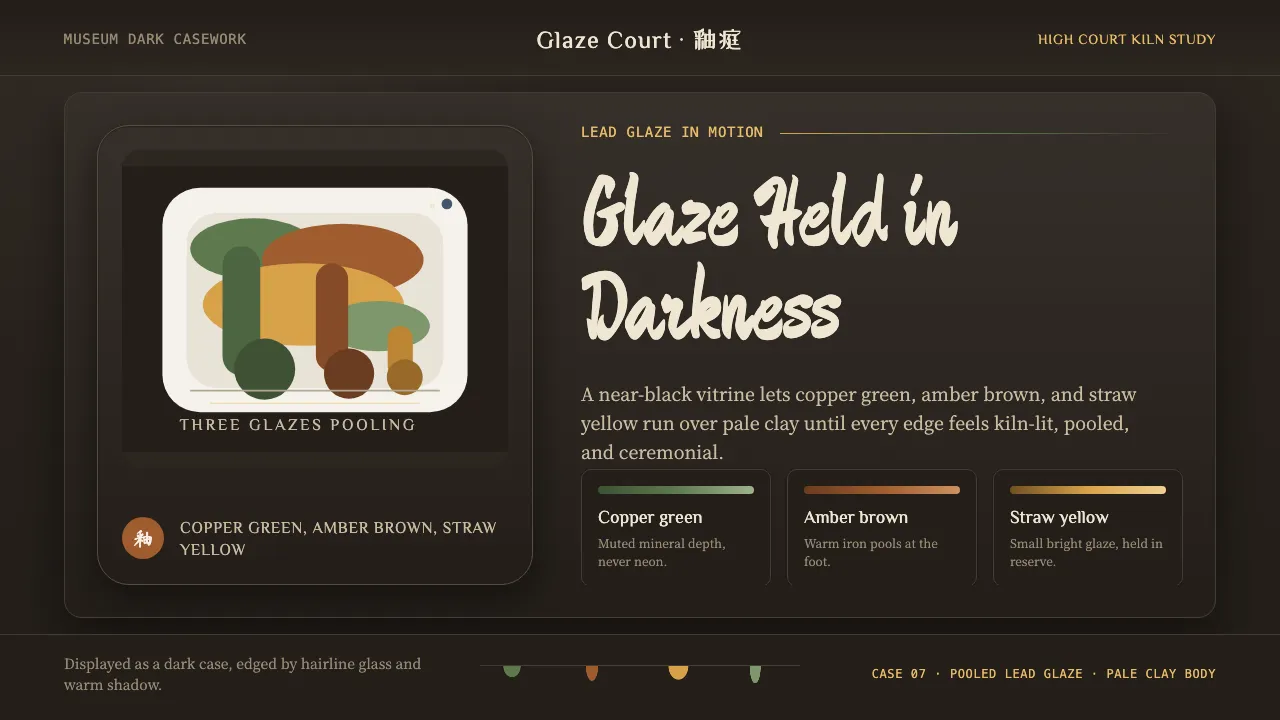
About Tang Sancai 唐三彩
Tang sancai is a glaze in motion. On a buff, near-white earthenware body — a glazed horse, a laden camel, a full-figured court lady in Central-Asian dress — copper-green, amber-brown, and straw-yellow lead glazes were brushed on, then left to run and pool in the kiln until the colours bled into one another over the pale clay.
This system stages those figures the way a museum does: against deep, light-swallowing casework, not paper-white. The page ground is a warm near-black; panels are lit vitrine surfaces; the three glazes drip and pool as accents, with the uncoloured cream glaze used only as a small, bright highlight.
- Origin
- Chang'an / Luoyang and the Central Plains, China; East Asia
- Era
- Tang dynasty, 7th–8th century (High Tang); pre-1900 funerary ceramics
- Key figures
- Tang court and aristocratic tomb-figure patrons · Imperial-kiln Silk-Road artisans · Anonymous sancai potters
- Movements
- Sancai lead-glaze ceramics · Tang funerary mingqi tradition · Cosmopolitan hufeng court taste
Tang Sancai 唐三彩 design spec
Colors
Typography
The other 11 sections — buttons, cards, spacing, motion, techniques and more — open once you unlock. Download the DESIGN.md or send it to your AI in one click. Unlock once, yours forever.
Sign up nowStyles similar to Tang Sancai 唐三彩
Also inspired by crafts & folk art, with a close feel.
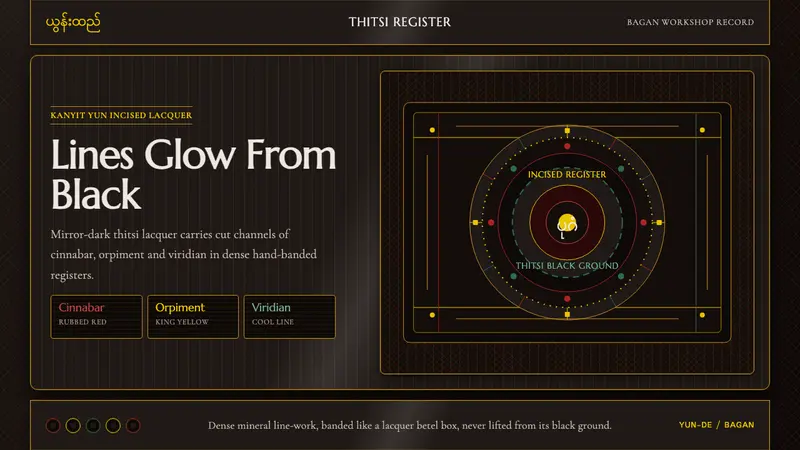 Burmese Yun LacquerwareLacquer glows in cut lines. Cinnabar, orpiment and viridian band a mirror-black grid.
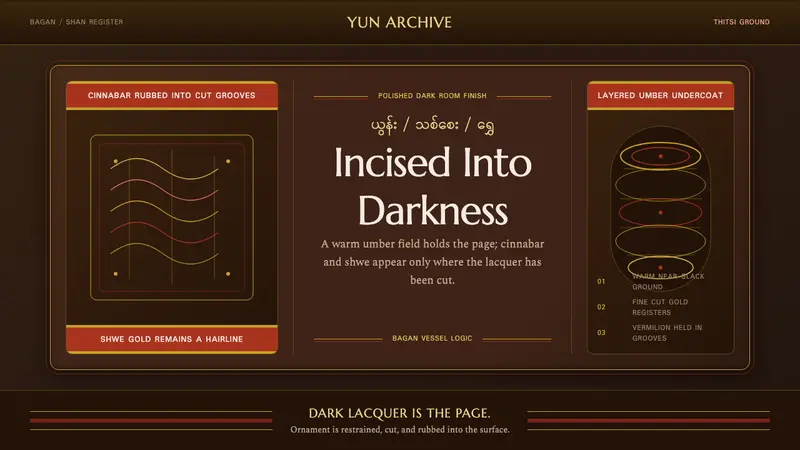 Burmese Shan Lacquer BrownDark lacquer leads. Cinnabar bands and shwe hairlines cut across a warm umber field.
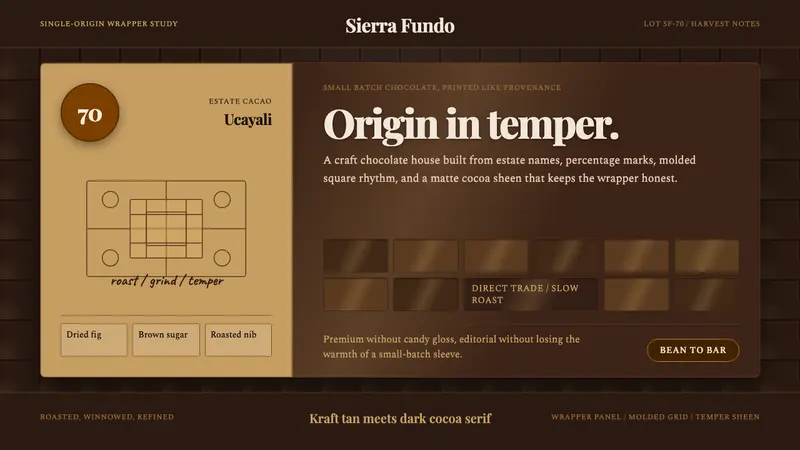 Bean-to-Bar ChocolateOrigin tastes tactile. Cocoa serif, kraft panel, and molded squares carry the story.
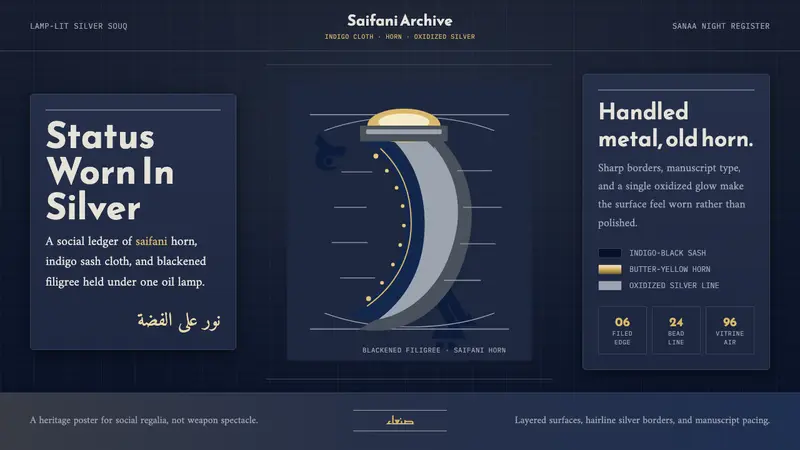 Yemeni Jambiya Curved DaggerLamp-lit status. Indigo-black fields, butter-yellow horn, and silver filigree borders.