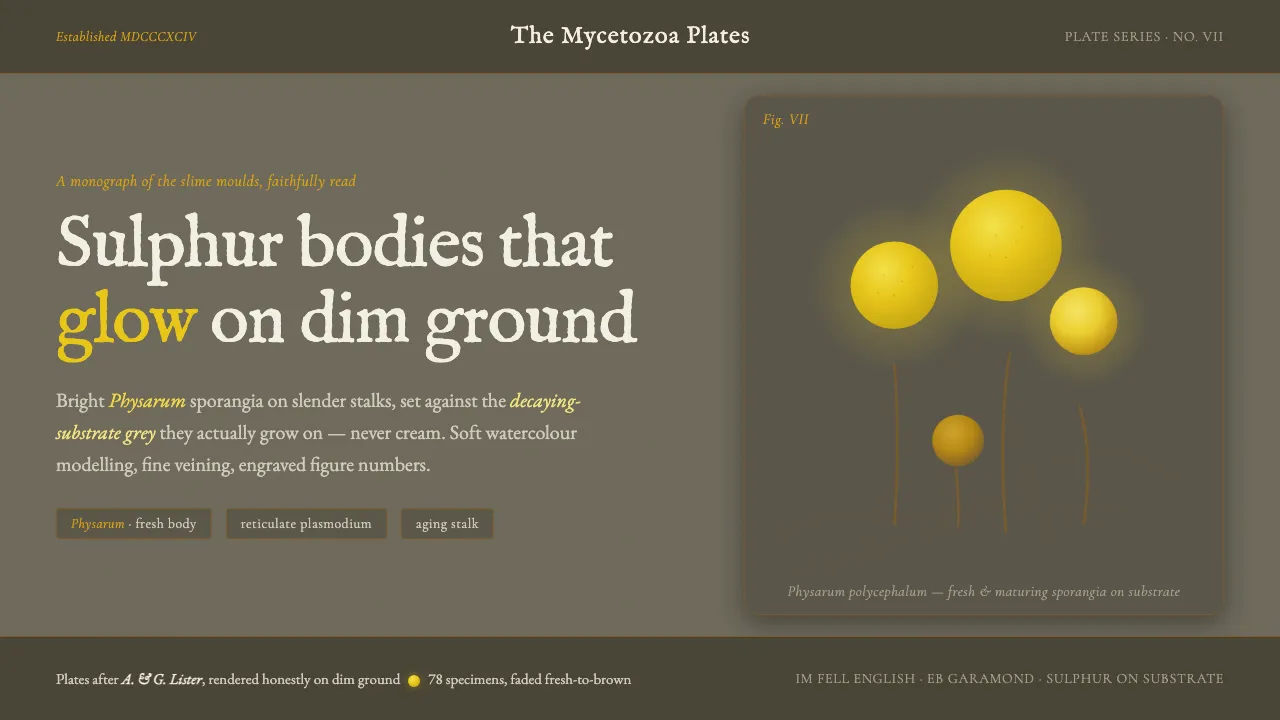
About Slime Mold Plasmodium (Lister Plate)
Arthur and Gulielma Lister's *A Monograph of the Mycetozoa* (1894) gathered 78 hand-painted plates of slime moulds — bright sulphur-yellow Physarum sporangia on slender stalks, reticulate plasmodium veins, life-stage sequences fading from fresh yellow to aging brown.
This design system reads those plates honestly: glowing yellow set against the dim decaying-substrate grey the organisms actually grow on, not on cream. Soft watercolour modelling, fine veining linework, and engraved figure numbers carry the period naturalist's hand into the interface.
Learn more about the Slime Mold Plasmodium (Lister Plate) style
- Origin
- Western Europe — Britain
- Era
- 1894 monograph; editions into the early 1900s (visual reference 1900–1950)
- Key figures
- Arthur Lister · Gulielma Lister
- Movements
- Victorian/Edwardian scientific monograph illustration · Mycetozoa taxonomy · Natural-history watercolour plate engraving
Slime Mold Plasmodium (Lister Plate) design spec
Colors
Typography
The other 11 sections — buttons, cards, spacing, motion, techniques and more — open once you unlock. Download the DESIGN.md or send it to your AI in one click. Unlock once, yours forever.
Sign up nowStyles similar to Slime Mold Plasmodium (Lister Plate)
Also inspired by science & nature, with a close feel.
 Tide Pool (Intertidal)Feels like field notes after rain. Literary serif in basalt black, algal green, and violet.
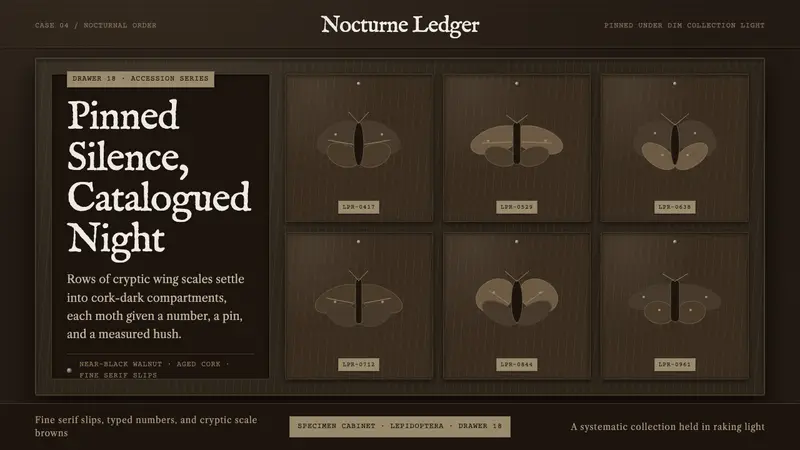 Lepidoptera DrawerDark, ordered hush. Walnut ground, IM Fell type, cork slips, and gridded moth geometry.
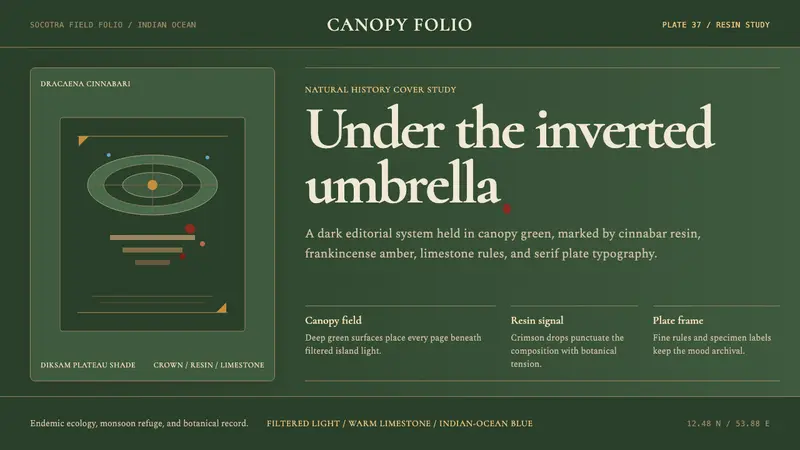 Yemeni Socotra Dragon's Blood TreeCanopy shade holds the page. Resin red, amber rules, and serif specimen framing.
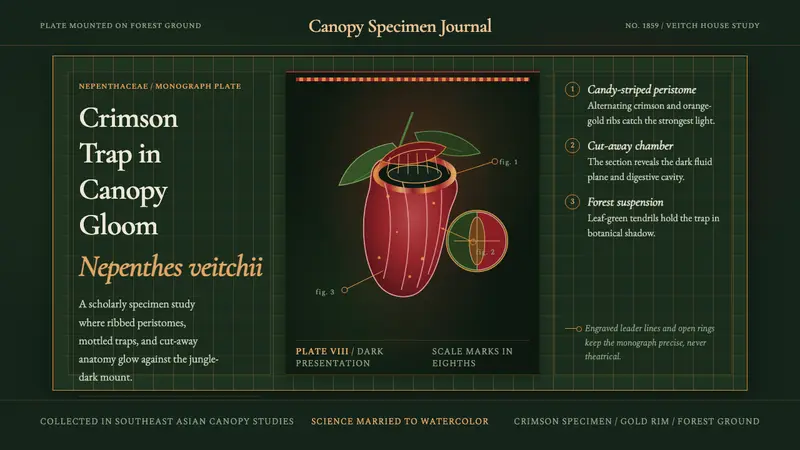 Carnivorous Pitcher Plant PlateBotanical danger glows. Crimson traps and gold rims float on jungle-dark green.