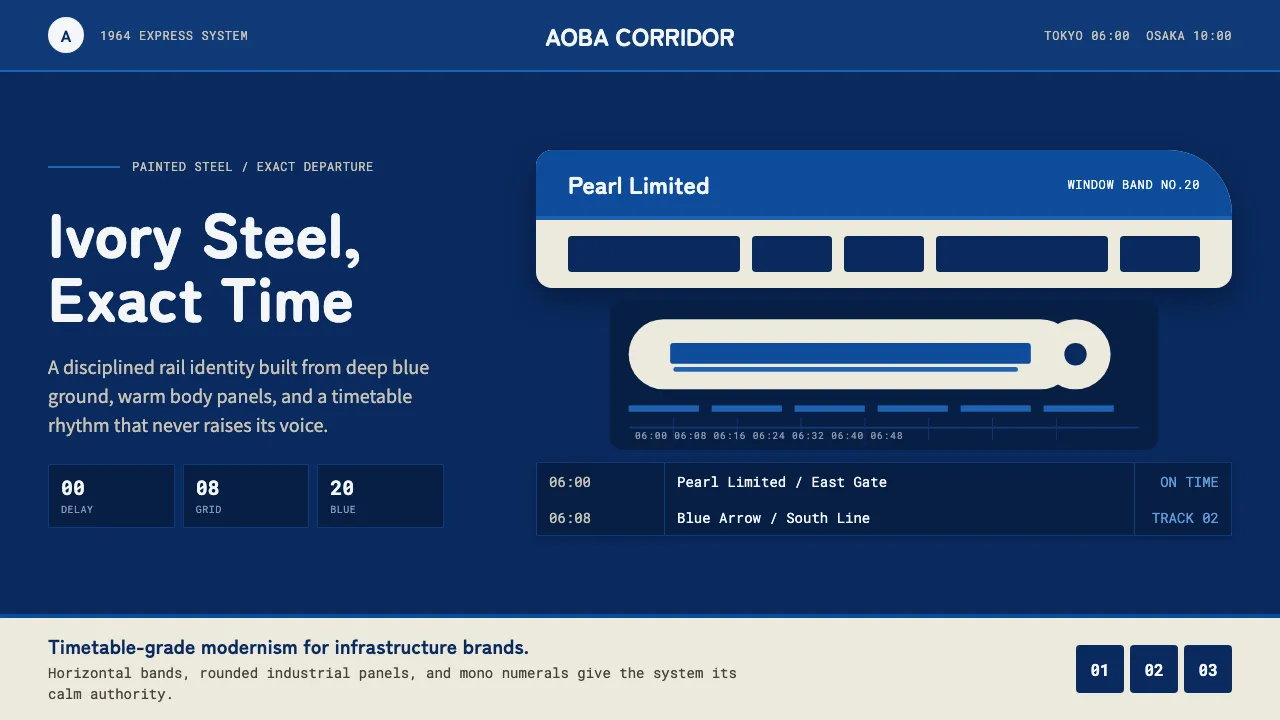
About Shinkansen Bullet
On 1 October 1964, days before the Tokyo Olympics, the 0 Series Shinkansen opened the Tokaido line and became the emblem of postwar Japan. Its language is restrained and exact: a warm ivory-white painted-steel body, a deep JNR "Bullet Blue No.20" window band and lower stripe, the rounded nose set against Mt Fuji. This system carries that discipline — clean steel, bold blue, and the quiet authority of timetable accuracy.
- Origin
- Japan, Tokaido corridor (Tokyo–Osaka)
- Era
- 1950–1990; the 0 Series introduced 1 October 1964
- Key figures
- Japanese National Railways (JNR) · Shinji Sogo · Hideo Shima
- Movements
- Postwar Japanese modernism · Industrial design · Transport infrastructure as national symbol
Shinkansen Bullet design spec
Colors
Background
Surface
Primary
Secondary
Accent
Text
Typography
Zen Kaku Gothic NewHeadings
Noto Sans JPBody
Roboto MonoMono
Unlock for 1 credit
The other 11 sections — buttons, cards, spacing, motion, techniques and more — open once you unlock. Download the DESIGN.md or send it to your AI in one click. Unlock once, yours forever.
Sign up nowHave an account? Sign in
Styles similar to Shinkansen Bullet
Also inspired by brands & products, with a close feel.
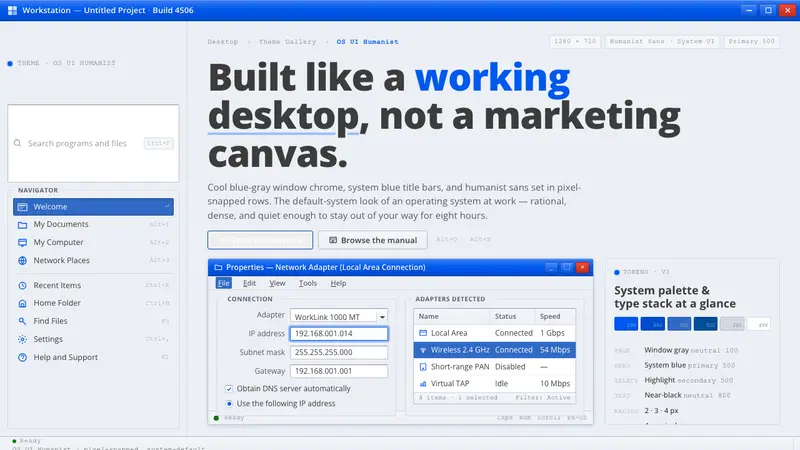 OS UI HumanistBuilt like a working desktop, not a brand. Window-gray ground, system-blue chrome, humanist sans.
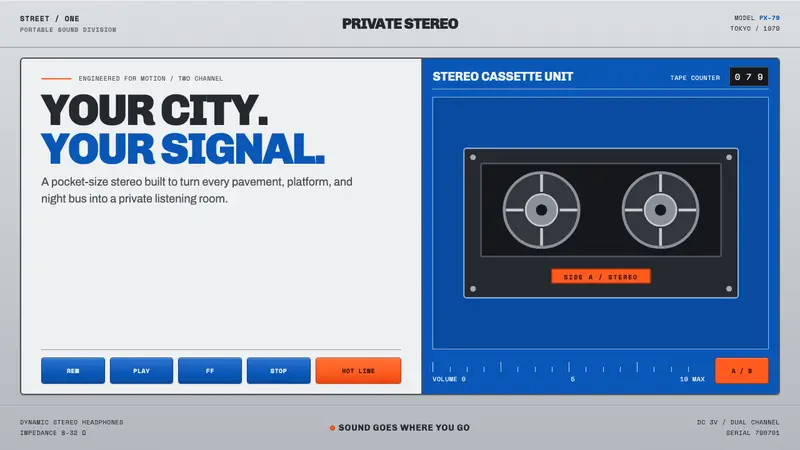 Sony Walkman (1979)The street turns private. Cobalt panels, silver grain and orange controls make sound portable.
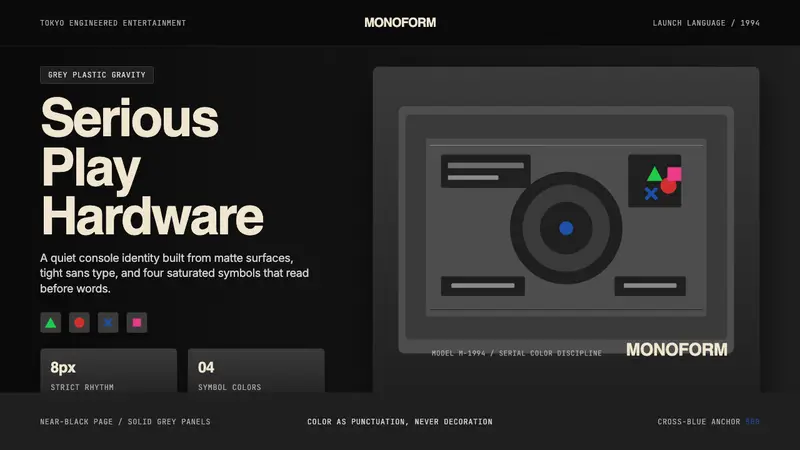 PlayStation (1994 Original)Quiet power, engineered. Grey plastic and four saturated symbols punctuate tight sans type.
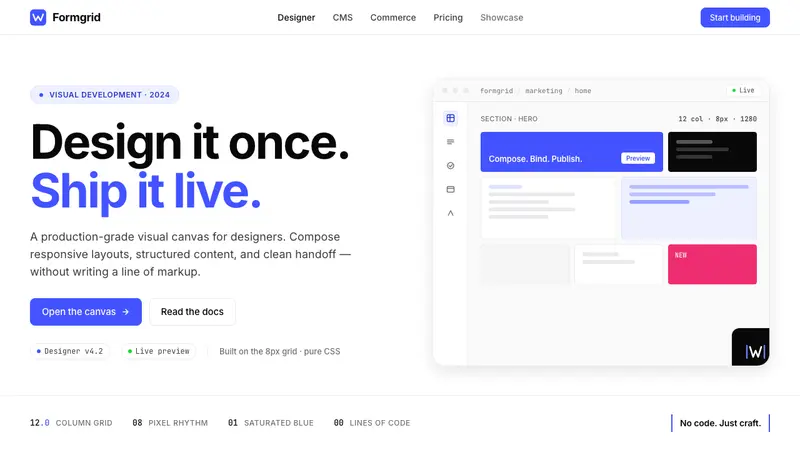 Webflow No-CodeA designer's tool, dressed like one. Saturated electric cobalt on pure white, Inter at tight tracking, abstract block-grid mockups.