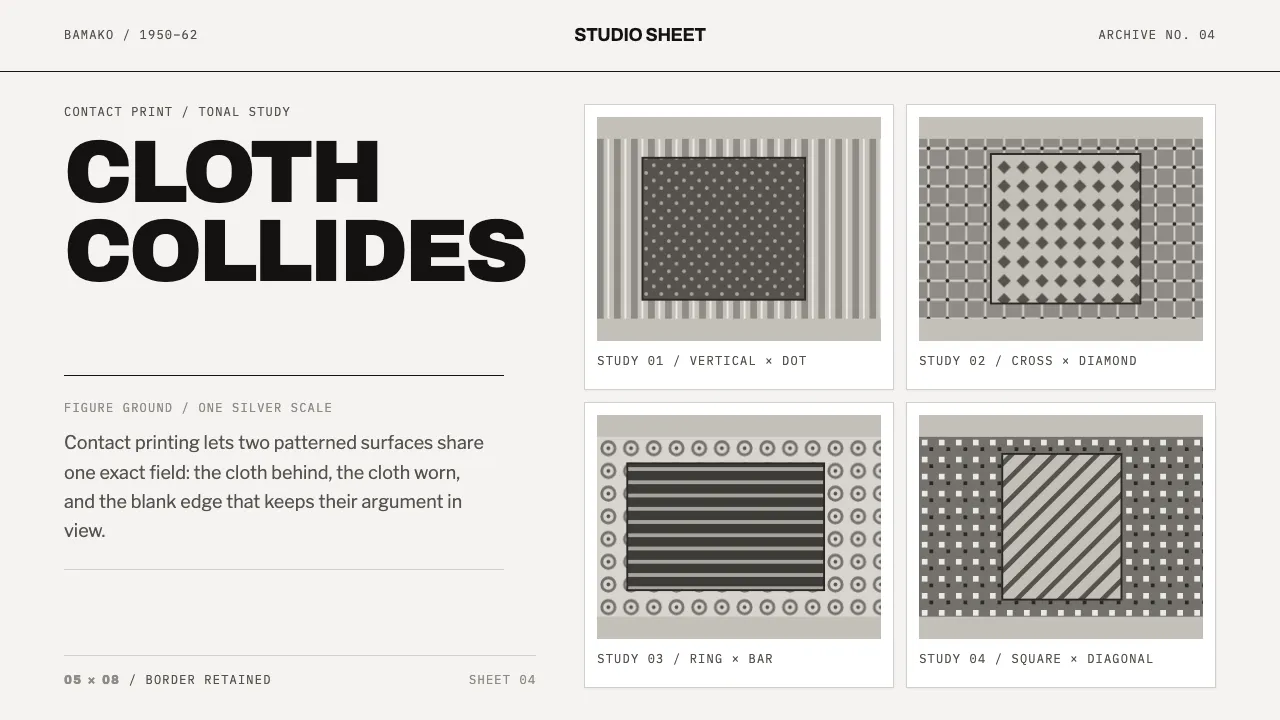
About Seydou Keïta Portraits
Between 1948 and 1962, in a studio behind the Bamako prison, Seydou Keïta made the portraits that still define West African modernity. A large-format camera meant contact prints, not enlargements: small glossy gelatin-silver sheets about 5 × 8 inches, each with a white margin all the way round.
The frame is never empty. Keïta hung patterned cloth behind every sitter and changed it every few years, so a patterned boubou stands against a patterned backdrop and the two figure-grounds argue. A radio, a scooter, a wristwatch, a fountain pen. The system takes that argument as its structure.
- Origin
- Bamako, Mali (then French Sudan, French West Africa)
- Era
- studio active 1948–1962; the contact-print aesthetic belongs to the 1950s
- Key figures
- Seydou Keïta · Adrien Frutiger · Roger Excoffon
- Movements
- West African studio portraiture · post-war French West African modernity · mid-century Swiss and French type design
Seydou Keïta Portraits design spec
Colors
Typography
The other 11 sections — buttons, cards, spacing, motion, techniques and more — open once you unlock. Download the DESIGN.md or send it to your AI in one click. Unlock once, yours forever.
Sign up nowStyles similar to Seydou Keïta Portraits
Also inspired by art & artists, with a close feel.
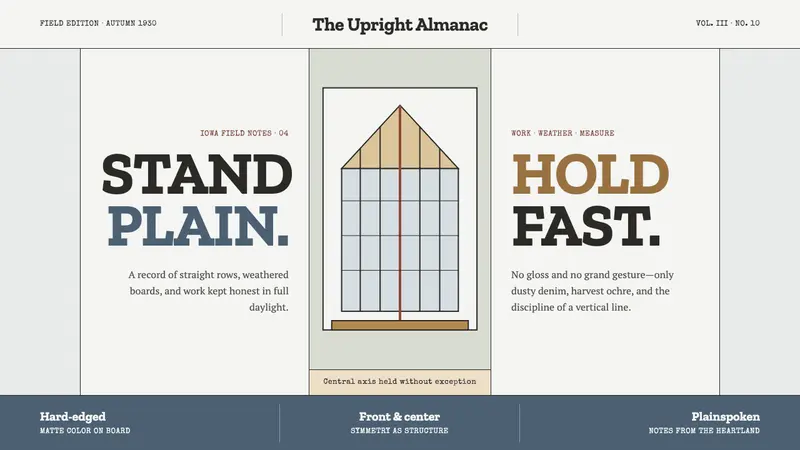 Grant Wood American Gothic (1930)Plainness stands firm. Dusty denim and ochre align on a strict central axis.
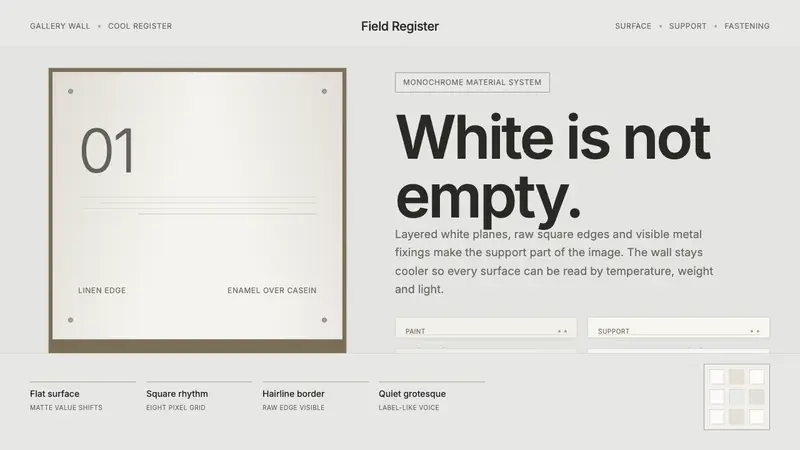 Robert Ryman White PaintingWhite becomes material. Cool grey wall, raw edges and metal fasteners expose each layer.
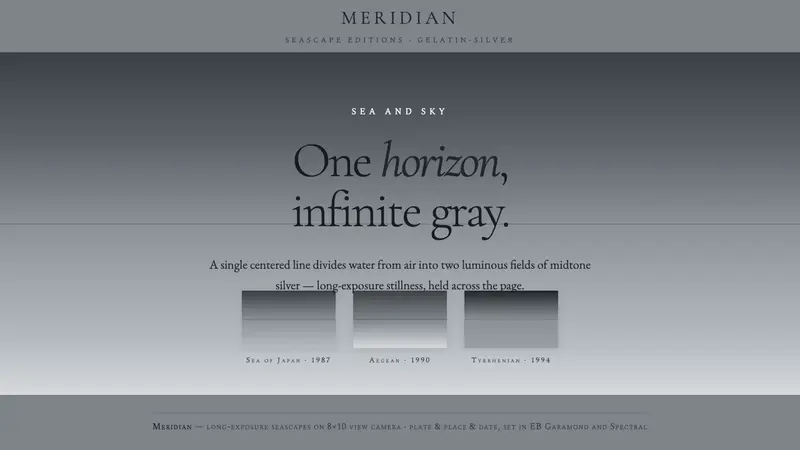 Sugimoto SeascapesTime, held still. A centered hairline horizon splits luminous neutral gray into sea and sky.
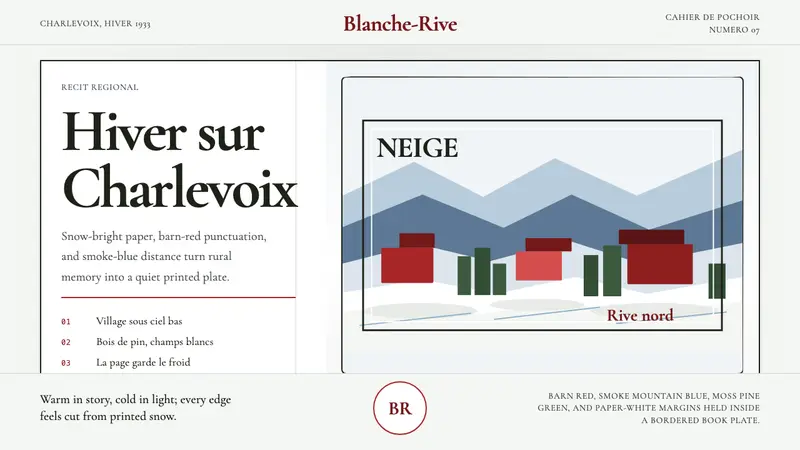 Quebec Clarence Gagnon Folk NaïfWinter bites softly. Barn red and smoke blue pochoir fields sit on snow-white paper.