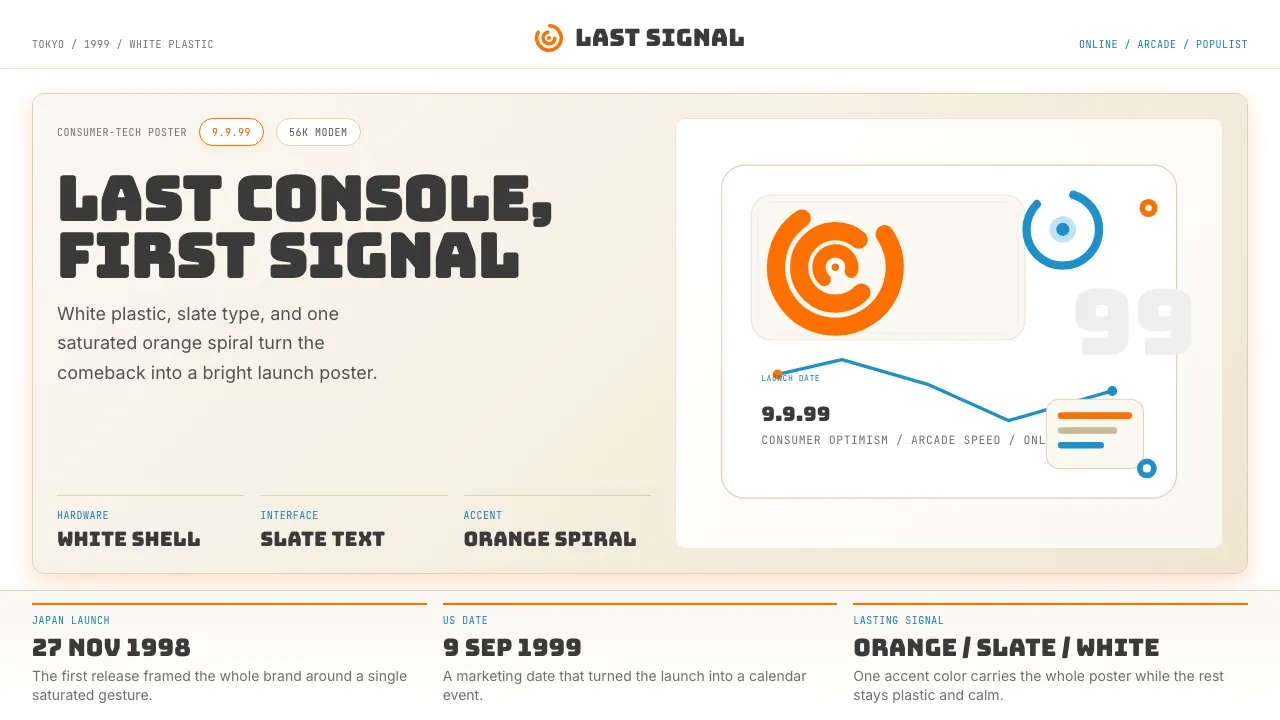
About Sega Dreamcast (1999)
Sega Dreamcast (1999) is the last-console moment of Sega — a saturated orange spiral logo set against white-plastic hardware, the canonical Y2K tech-cool of the late 1990s. Released into a market that wasn't quite ready for it, the Dreamcast launched online gaming, VMU memory cards, and a wave of arcade-feel titles (Sonic Adventure, Crazy Taxi, Shenmue, Jet Set Radio) that still echo in retro-gaming culture.
The visual language is disciplined populism: pure white plastic surfaces, deep slate UI text, and one saturated orange that does all the heavy lifting. Cyan-blue accents nod to the Dreamcast cable and online-era marketing; cream paper backgrounds reference the original box art. It is consumer-cheerful and tech-confident, never refined-luxury.
- Origin
- Tokyo, Japan; global gaming-console market
- Era
- 1998 launch (Japan) / 1999 (US); discontinued 2001; ongoing cult following
- Key figures
- Hayao Nakayama · Bernie Stolar · Hidekazu Yukawa
- Movements
- 1990s console gaming · Y2K tech aesthetic · Sega last-console mythology
Sega Dreamcast (1999) design spec
Colors
Typography
The other 11 sections — buttons, cards, spacing, motion, techniques and more — open once you unlock. Download the DESIGN.md or send it to your AI in one click. Unlock once, yours forever.
Sign up nowStyles similar to Sega Dreamcast (1999)
Also inspired by brands & products, with a close feel.
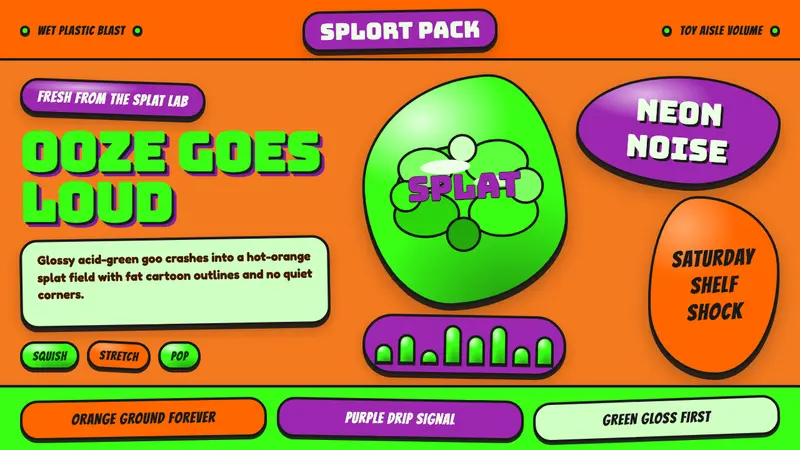 Mattel Gak Slime (Nickelodeon 1992)Wet, neon, loud. Acid green gloss smashes through hot orange splats and purple drips.
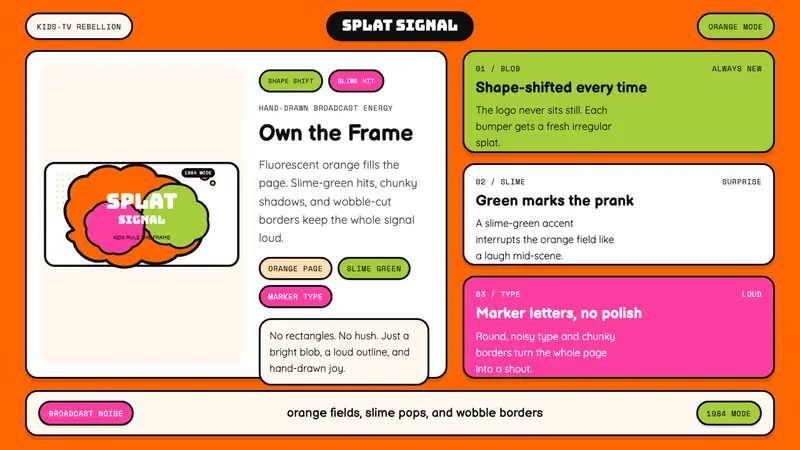 Nickelodeon Orange Splat (1984)Kids own the screen. Orange fields, slime-green pops, and wobble borders do the shouting.
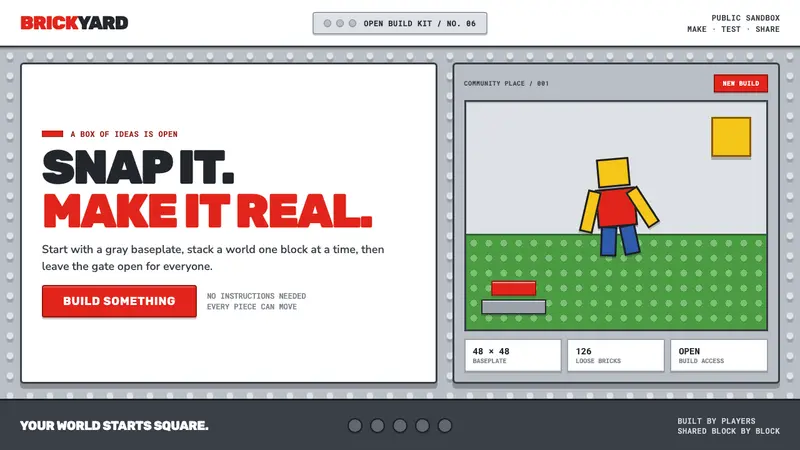 Roblox (2006)Play begins with a click. Fire-engine red cuts through a hard-edged gray stud grid.
 Marvel Comics (Kirby Era)Populist color hits hard. Red-blue-yellow panels, black rules, and halftone dots.