About Scottish Tartan
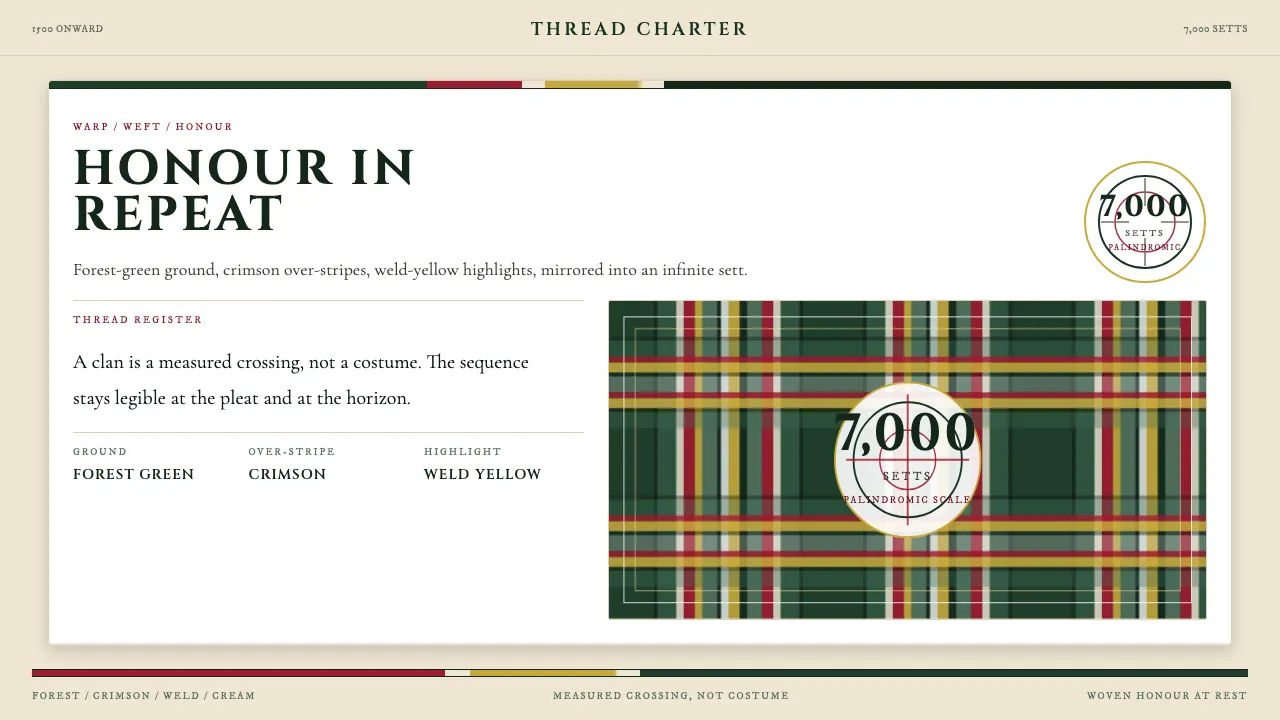
Scottish tartan is the world's most systematic warp-and-weft identity protocol — a Highland tradition of weaving wool in interlocking colored stripes whose specific sequences encode clan, region, and rank. Over 7,000 official setts are catalogued in the Lyon King of Arms register.
The aesthetic says every clan's identity is one repeating mathematical sequence of crossed colored threads, and the same sequence builds infinite scale. Forest-green grounds, crimson over-stripes, weld-yellow highlights, all kilt-pleated and repeated to the horizon.
- Origin
- Scottish Highlands, Lowlands, and Borders; now globally licensed
- Era
- 1500 onward; Dress Act ban 1746–1782; revival 1822 under George IV; modern Scottish Register of Tartans est. 2009
- Key figures
- Wilsons of Bannockburn · Sir Walter Scott · James Logan · Sobieski Stuart brothers
- Movements
- Highland clan culture · Victorian Highland romanticism · Scottish Register of Tartans
Scottish Tartan design spec
Colors
Typography
The other 11 sections — buttons, cards, spacing, motion, techniques and more — open once you unlock. Download the DESIGN.md or send it to your AI in one click. Unlock once, yours forever.
Sign up nowStyles similar to Scottish Tartan
Also inspired by crafts & folk art, with a close feel.
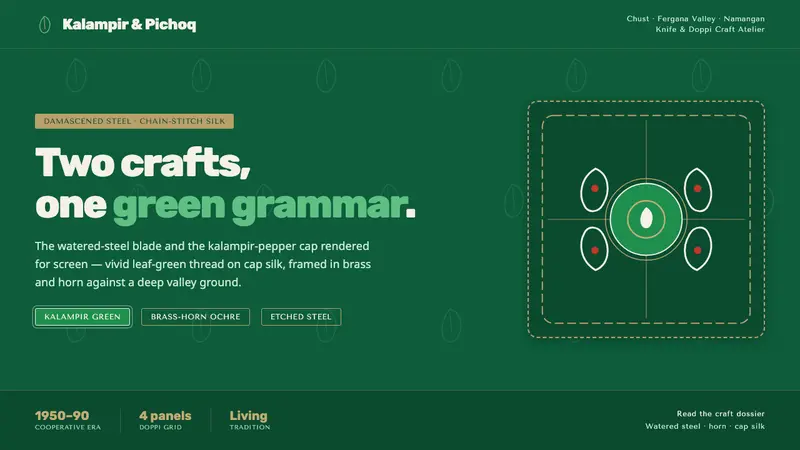 Chust Pichak Knife CraftTwo crafts, one green grammar. Vivid kalampir chain-stitch on cap silk, brass-framed on deep green.
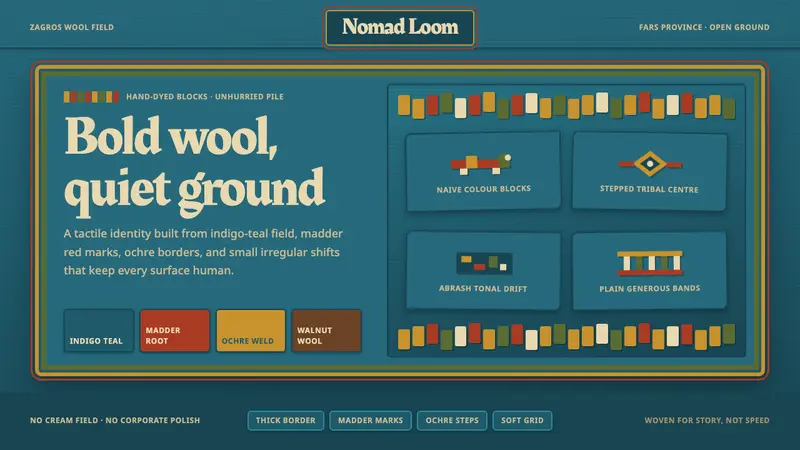 Persian Gabbeh RugBold wool, quiet ground. Indigo-teal field, ochre borders, madder block motifs.
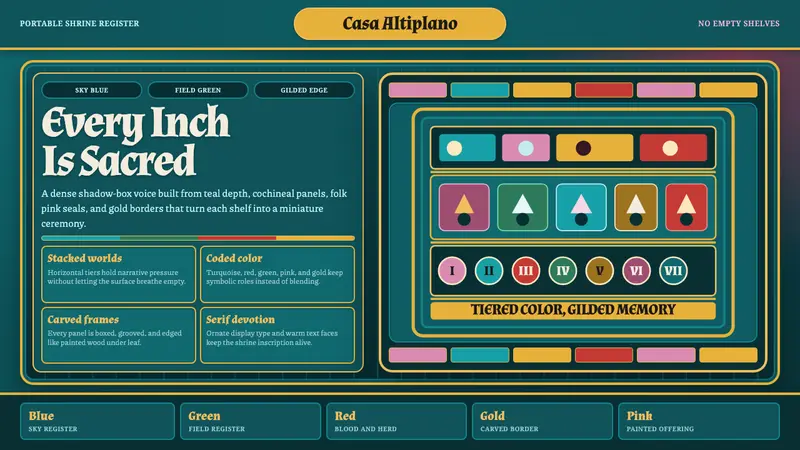 Ayacucho Retablo BoxSacred density. Deep teal shelves pack turquoise, cochineal, folk pink, and gold.
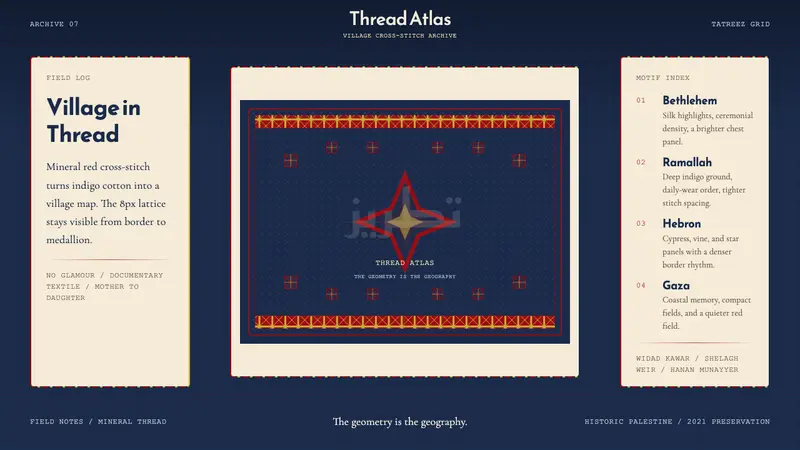 Palestinian Tatreez Cross-StitchMemory in thread. Red cross-stitch on indigo cotton, built on an 8px grid.